
Reviewed · SUNSET TOURS
Sharing Trip to Angkor Temple with sunset
Angkor rewards early starts and sturdy shoes. This $19 shared day tour from Siem Reap gives you a practical way to see Angkor Wat, Angkor Thom, Bayon, and Ta Prohm without arranging transport or a guide yourself. I like the hotel pickup and drop-off, plus the steady supply of cold water and wet wipes, which matters during an eight-hour day in Cambodia’s heat.
I also like the route’s range. You move from Angkor Wat’s vast religious architecture to Bayon’s famous stone faces, then into the tree-covered ruins of Ta Prohm before sunset. The main catch is the walking: one verified booking described roughly 10 kilometers on foot, with limited shade and few proper breaks. This is not a gentle sightseeing loop.
In This Review
- Key points at a glance
- What the $19 price really covers
- Starting at Angkor Wat before the heat builds
- Entering Angkor Thom through the Southern Gate
- Bayon’s 216 stone faces and crowded galleries
- Baphuon, Phimeanakas, and the royal terraces
- Lunch is a welcome pause, but bring extra cash
- Ta Prohm after lunch, roots, moss, and movie fame
- Sunset and the long return to Siem Reap
- Guide quality, group pace, and practical comfort
- Who should book this Angkor day?
- FAQ
- Is hotel pickup and drop-off included?
- How much does the tour cost?
- How long does the experience last?
- Which temples are included?
- Is an English-speaking guide included?
- Are drinks provided?
- What should I wear to the temples?
- Can I cancel the booking?
- Should you book this Angkor tour?
Key points at a glance
- Angkor Wat begins the day: Spend about two and a half hours at Cambodia’s national symbol and the world’s largest religious monument.
- Bayon gives the tour its most memorable faces: The temple’s 216 stone faces and detailed galleries are best understood with a guide.
- The walking is serious: Expect long outdoor stretches, dusty paths, steps, heat, and limited shade.
- Ta Prohm supplies the movie moment: Tree roots and moss-covered stones create the day’s most atmospheric stop.
- The price is low, but not all-inclusive: The $19 fee covers transport, guide, insurance, fuel, parking, water, and wipes, while the $37 temple pass and roughly $7 to $10 lunch cost extra.
What the $19 price really covers
At first glance, $19 for a full day around Angkor looks like a bargain. It is, provided you remember that the major extra cost is the temple ticket. The one-day Angkor pass costs $37 per person, and lunch is not included. Add the tour price, temple entry, and a typical $7 to $10 meal, and your actual day costs about $63 to $66 before any personal spending.
That still compares well with arranging a car, driver, and English-speaking guide separately. The tour price includes an air-conditioned vehicle, licensed guide, driver, fuel, toll roads, parking, travel insurance, cold water, and wet wipes. Hotel pickup and return are also included, so you avoid bargaining for transport in Siem Reap.
The word sharing matters. This is presented as a group experience, with the chance to make a new friend during the day. The description also uses the phrase private trip, but the pickup, group language, and shared format suggest you should not book this expecting a fully exclusive vehicle unless the operator confirms that directly.
Free cancellation up to 24 hours before the activity and reserve-now, pay-later terms make the booking fairly flexible. The practical point is simple: confirm your hotel name and address, then plan for the separate ticket and lunch costs.
More sunset tours:
- Angkor Wat Sunrise or Sunset Tour with Guide from Siem Reap
★ 5.0 · 12,109 reviews - Siem Reap: Angkor Wat: Small-Group Sunrise or Sunset Tour
★ 5.0 · 9,444 reviews - Sunset tour of Kampong Phluk stilts home village on the Tonle Sap
★ 5.0 · 4,865 reviews
Starting at Angkor Wat before the heat builds
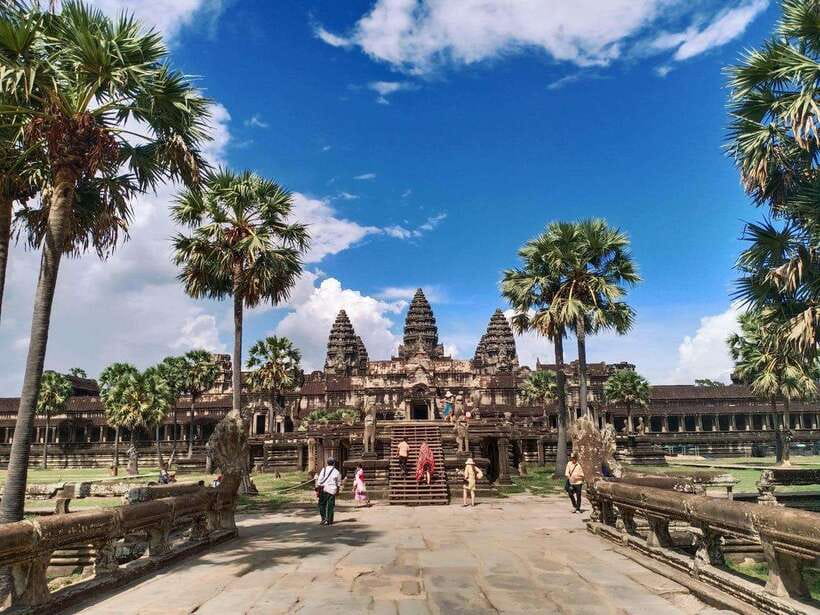
The day begins with pickup in the lobby of your Siem Reap hotel, followed by about 15 minutes in the van to Angkor Wat. An early departure is strongly in your interest. The monuments are outdoors, the sun gets hard, and the paths can become busy as the morning goes on.
Angkor Wat deserves the longest first stop, with about two and a half hours scheduled. That gives you time to walk across the approach, examine the galleries, and take in the famous towers and moats without racing from one photo point to another.
The temple began as a Hindu monument and later became Buddhist. That change is part of what makes the site so useful as an introduction to Angkor: you are not just looking at old stone, but at a place shaped by changing religious practice and Khmer civilization.
I would use this first stop to listen closely to the guide. A good explanation helps you understand why the temple was built, how its carvings fit into the wider religious world, and what you are seeing beyond the familiar postcard view. The guide also helps point out useful angles for photographs.
Do not treat the opening stop as a relaxed stroll. You will walk on dusty paths and spend much of the time in direct sun. Wear closed shoes with a firm sole, carry water, and cover your shoulders and knees. A hat, sunscreen, sunglasses, and a long-sleeved shirt will make the morning easier.
Entering Angkor Thom through the Southern Gate
After Angkor Wat, the van takes you to Tonle Om Gate, better known as Angkor Thom’s Southern Gate. The scheduled visit lasts about 20 minutes, but it gives you an important sense of scale.
Angkor Thom was an enormous fortified city. Its laterite walls rise about eight meters and enclose an area measuring roughly three kilometers by three kilometers. A moat still surrounds the site, and crossing through the gate makes the old city feel like more than a collection of isolated temples.
This is a good place to pause for photographs and hear how the gate fits into the city’s defensive and symbolic design. The entrance is not merely a doorway to Bayon. It sets up the idea of a planned royal center protected by walls, water, and monumental entrances.
The short stop can feel rushed if you want a long photography session. I would have your camera ready before leaving the vehicle and save the longer pauses for Bayon and the later temples.
Bayon’s 216 stone faces and crowded galleries
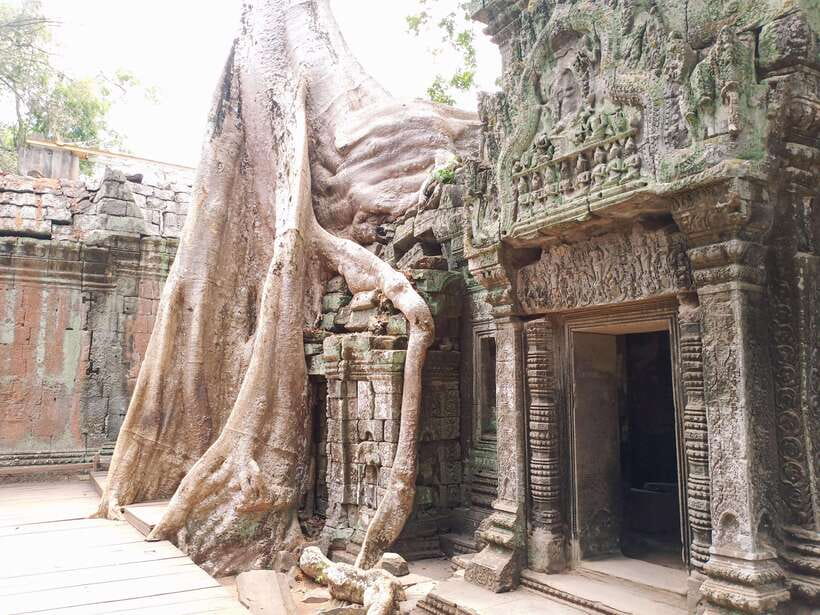
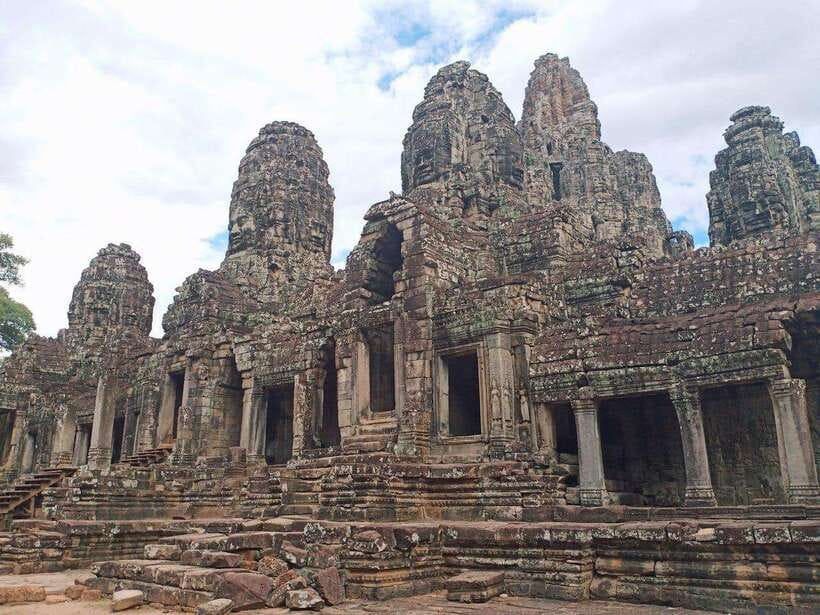
Bayon receives about an hour and a half, and that is time well spent. This is likely the day’s most rewarding stop for anyone who enjoys carved detail and unusual architecture.
The temple is known for its 216 enigmatic faces, which look out from its towers in different directions. Their expressions change with the light and your position, so your guide’s advice on where to stand can save you from taking the same photograph as everyone else.
Bayon’s galleries also carry extensive carvings. Look beyond the faces and you will find scenes that help explain Khmer society, conflict, religion, and daily life. This is where a guide earns the fee. Without context, Bayon can seem like a maze of stone towers. With clear explanations, the carvings become easier to read.
Expect uneven surfaces and narrow passages. The site demands more walking than its compact appearance suggests. Take the chance to drink water before moving on, since the next stops continue through exposed courtyards and old stone paths.
A few more trips worth weighing up
- Siem Reap: Angkor Wat 2-Day Tour with Sunrise and Sunset
★ 4.9 · 4,429 reviews - Siem Reap: Full-Day Angkor Wat Guided Tour with Sunset
★ 4.9 · 3,803 reviews - Angkor Wat Sunset Small Group Tour with Lunch Included
★ 5.0 · 3,059 reviews - Angkor 2-Day Sunset & Sunrise Small-Group Tour
★ 5.0 · 2,567 reviews
Baphuon, Phimeanakas, and the royal terraces
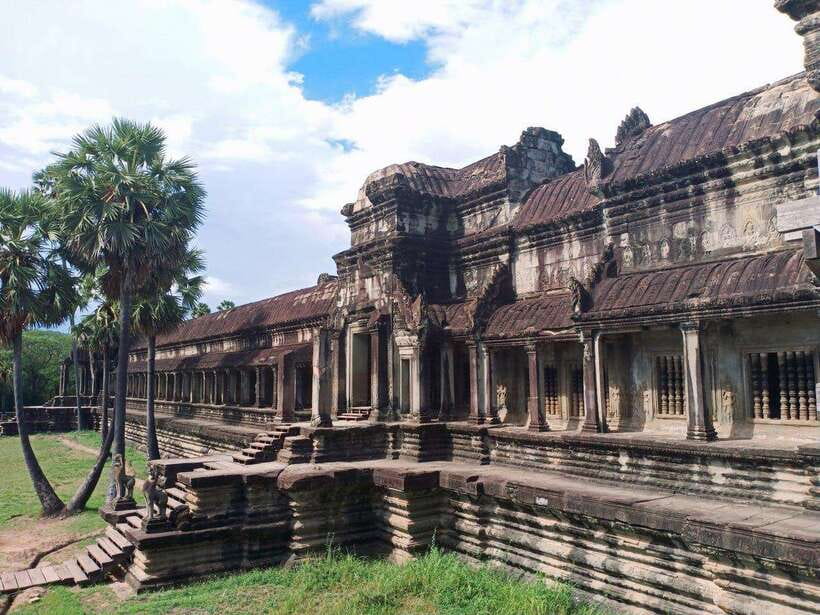
The next three stops are grouped within Angkor Thom and show different sides of the ancient royal center. Each is shorter, but together they fill out the story of the city.
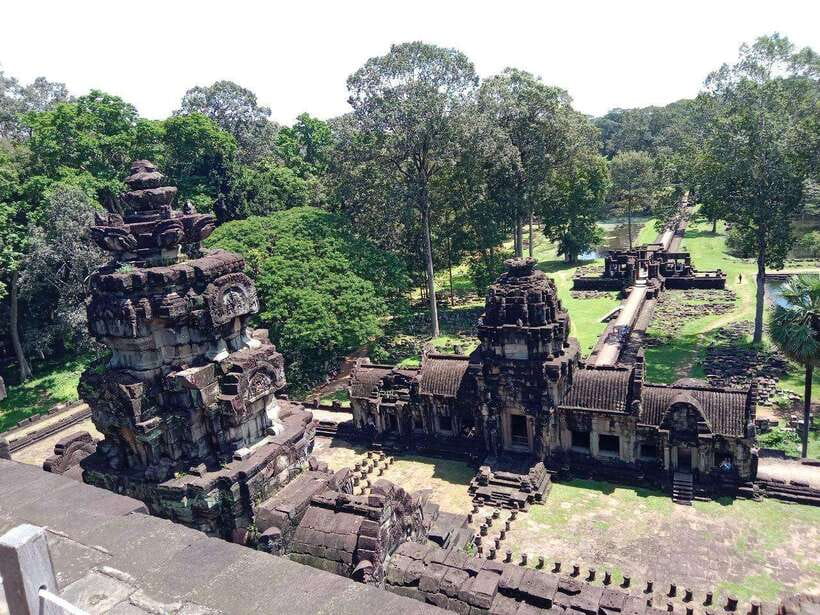
Baphuon is reached by a long causeway. The temple’s scale becomes clear as you approach, and a giant reclining Buddha was reconstructed from a huge pile of displaced stones. The restoration took place after a 37-year disruption caused by war and was completed in 2011.
That detail gives Baphuon unusual weight. You are seeing not only an ancient monument, but also the result of a difficult modern rebuilding effort. The long approach can be tiring in the heat, though, especially after Angkor Wat, the Southern Gate, and Bayon.
Phimeanakas sits in a more shaded setting and offers an over-the-treetops view to people who climb its steep steps. I would treat this as optional in spirit, even if it is part of the planned route. If your legs are tiring or the heat is intense, the climb may not feel worth forcing.
The Terrace of the Elephants follows with about 30 minutes. This long royal platform is known for its elephant carvings and its connection to the old palace area. It works best as a stop for understanding how royal ceremony and public display fit into the city.
The route then winds toward the shaded area around Preah Palilay, a quieter and more picturesque corner. The description includes this area in the exploration, although the timed itinerary does not give it a separate stop. Do not expect a long visit there. Think of it as a brief atmospheric section before lunch.
Lunch is a welcome pause, but bring extra cash
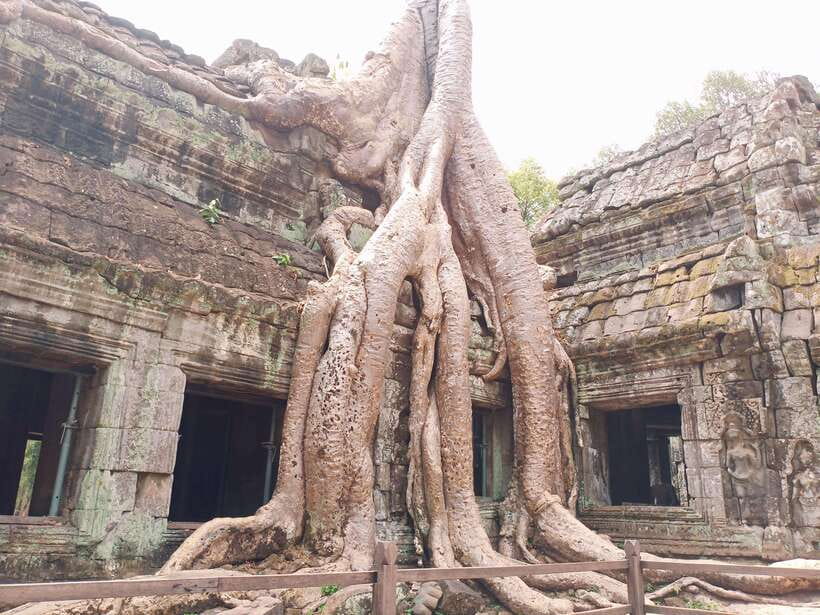
Lunch is not included, and the stated expected cost is about $7 to $10. You will need cash for the meal, as well as for the separate temple ticket, which costs $37.
The break matters because the tour is physically demanding. One booking praised the stop at a pleasant restaurant, while another pointed out that the full day can feel punishing in hot weather. I would use lunch to sit down properly, drink more water, and check your sunscreen rather than rushing through another photo stop.
The tour provides cold water and wipes, and this was one of its most praised practical features. Water is not a luxury here. It is part of managing the day safely when you are walking for hours in heat and dust.
Ta Prohm after lunch, roots, moss, and movie fame
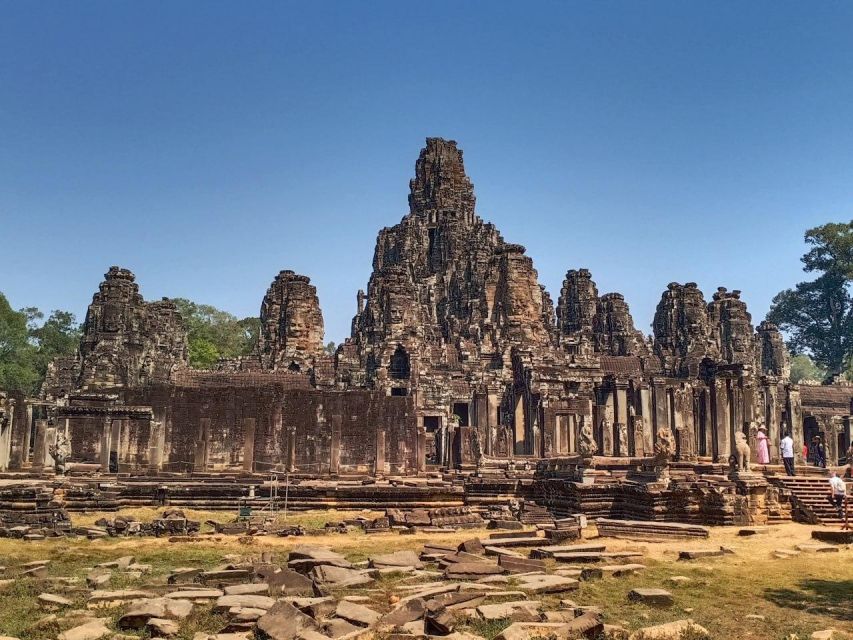
The afternoon visit to Ta Prohm lasts about an hour. This is the temple most closely linked with the film Tomb Raider and Angelina Jolie’s Lara Croft, but the site has enough character without its movie connection.
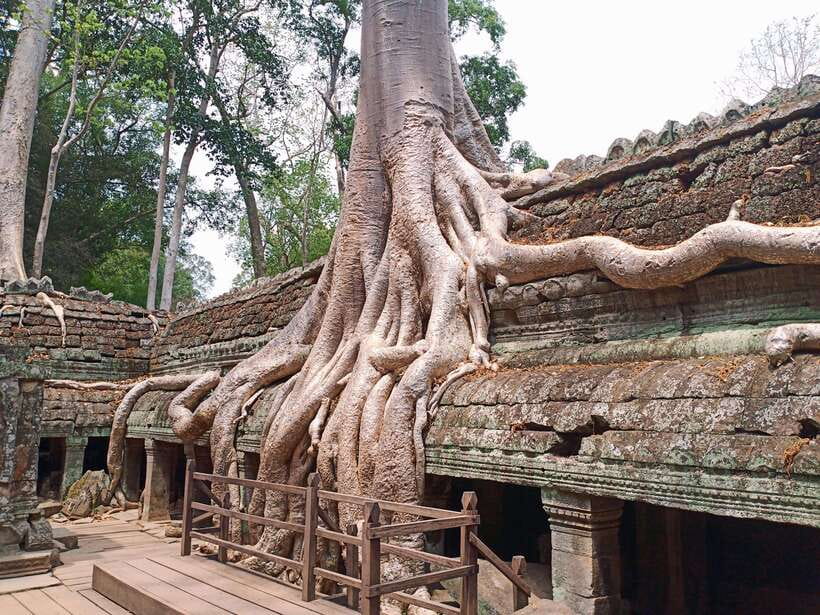
Ta Prohm’s appeal comes from the relationship between stone and tree roots. Spung trees, also called Tetrameles nudiflora, have grown over and around sections of the temple. Moss-covered walls, broken galleries, and thick roots create constantly changing frames for photographs.
I find Ta Prohm more atmospheric than orderly. You are not moving through a clean sequence of rooms. Instead, you pause at courtyards, doorways, and root-covered walls, trying to understand how the temple has been altered by time and nature.
The movie has made Ta Prohm one of the most sought-after stops at Angkor, so the popular corners can feel busy. Your guide can help you find better angles, but patience is still part of the experience. Keep your camera ready, yet remember to look up from the screen. The scale of the roots is easier to appreciate in person.
Sunset and the long return to Siem Reap
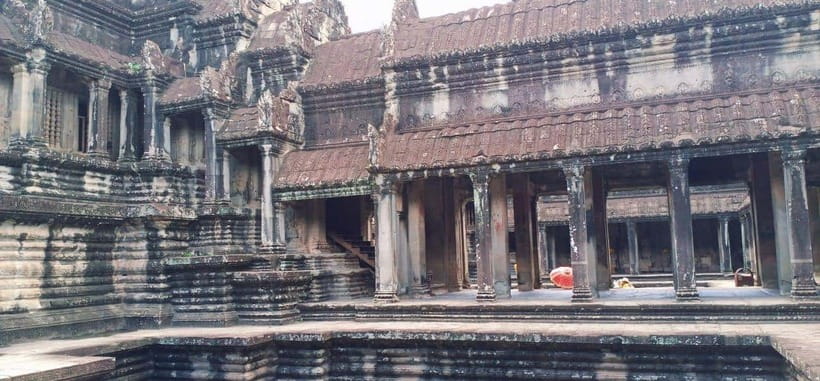
The experience includes sunset, followed by the drive back to your hotel. The supplied schedule does not identify a separate sunset viewpoint, so I would confirm the exact place and expected timing before booking if sunset photography is your main reason for choosing this tour.
By this point, your body will have done most of its work. The route covers several major monuments, and one booking described the day as roughly eight hours in oppressive heat with little shade. Another specifically advised adding more rest pauses or dropping one temple because the walking became difficult.
That is useful warning, not a reason to reject the tour. It tells you to plan honestly. You should be comfortable walking for long periods, climbing steps, and spending most of the day outside. The air-conditioned ride between sections helps, but it does not turn this into a low-effort tour.
The return transfer is valuable after Ta Prohm and sunset. You do not need to find a tuk-tuk or negotiate a ride while tired. The driver takes you back to your hotel, completing a full circuit from Siem Reap.
Guide quality, group pace, and practical comfort
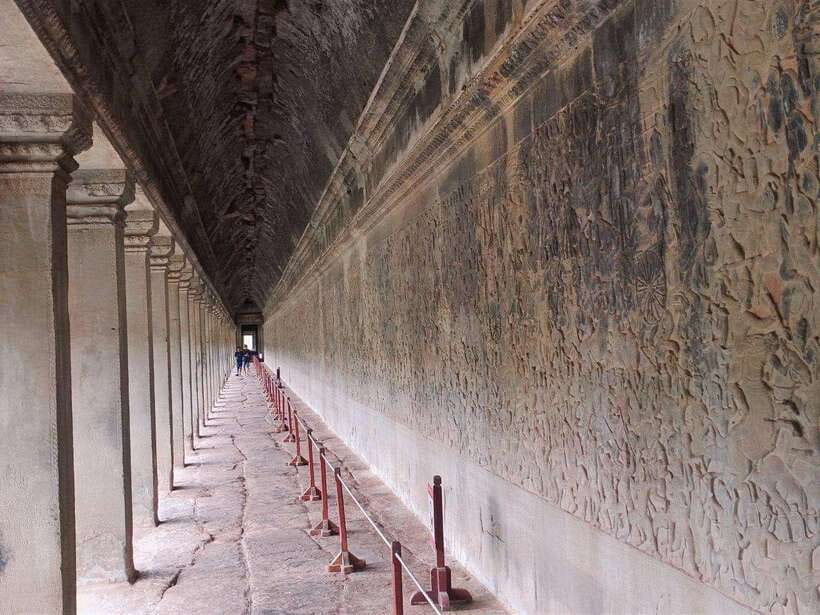
The strongest praise is directed at the guide and driver. One booking described the guide as extremely well informed about each temple, while another called both guide and driver excellent. That matters because Angkor is too large and symbol-heavy to understand fully from signs alone.
The English-speaking guide is licensed and is expected to explain the purpose, carvings, religious changes, and causes behind each monument. Ask questions as you go. The best value comes from turning each stop into a conversation rather than simply following a flag through ruins.
The group format can bring a social advantage. You may meet someone new during the shared ride and lunch, and the day can feel more enjoyable when you have company for the long walks. The tradeoff is a shared pace. If one person needs extra time for photographs or rest, the schedule may feel tight.
The vehicle is air-conditioned, and transport includes the driver and petrol. Cold water and wet wipes are provided. Bring your own power bank, biodegradable insect repellent, camera, cash, and any extra water you prefer.
Religious sites require covered shoulders and knees. Pets are not allowed. The activity is not suitable for children under 10, wheelchair users, or people with visual impairments. Those limits reflect the uneven ground, steep steps, long distances, and need to navigate temple structures.
Who should book this Angkor day?
I would recommend this tour to a first-time Angkor visitor who wants the main temples explained in one organized day. It is especially useful if you are staying in Siem Reap and want hotel transport, an English-speaking guide, and no need to arrange a driver yourself.
It suits active adults who can manage a long day on foot in hot conditions. Photographers should enjoy Ta Prohm, Bayon, and Angkor Wat, though the schedule may not provide unlimited time at every favorite angle.
I would be cautious about booking it for older people with limited stamina, anyone who struggles in heat, or anyone hoping for a slow, restful temple visit. The route is ambitious. A shorter program with more pauses may be a better fit.
FAQ
Is hotel pickup and drop-off included?
Yes. Pickup and drop-off at your hotel in Siem Reap are included. You should provide the hotel name and address, and the guide and driver will meet you in the hotel lobby.
How much does the tour cost?
The tour costs $19 per person. The Angkor temple ticket is separate and costs $37 per person. Lunch is also separate and is expected to cost about $7 to $10.
How long does the experience last?
It is a full-day experience. The schedule includes about eight hours of touring, walking, temple visits, sunset, and the return transfer to Siem Reap.
Which temples are included?
The route includes Angkor Wat, Angkor Thom’s Southern Gate, Bayon, Baphuon, Phimeanakas, the Terrace of the Elephants, and Ta Prohm. The route also passes through the shaded Preah Palilay area.
Is an English-speaking guide included?
Yes. A licensed professional guide who speaks English is included in the tour price.
Are drinks provided?
Cold water and wipes are provided during the tour. You should still bring sunscreen, a hat, and any extra water you may need for the long walking day.
What should I wear to the temples?
Wear comfortable, closed shoes because the paths can be dusty and you will walk a long distance. Your knees and shoulders should be covered at the religious monuments. Long pants and a long-sleeved shirt are useful protection from the sun and insects.
Can I cancel the booking?
You can cancel up to 24 hours in advance for a full refund. The reserve-now, pay-later option lets you book without paying immediately.
Should you book this Angkor tour?
Book it if you want the major Angkor sights in one day at a low tour price, and you are ready for substantial walking in hot weather. The guide, driver, hotel transfers, cold water, and clear temple sequence give you strong value for $19.
Before committing, budget the $37 temple ticket and $7 to $10 lunch. Also ask about the exact sunset location and group size if those details matter to you. For a fit first-time visitor who wants history, carvings, roots, royal monuments, and practical transport in one long day, this is a sensible choice. If you need frequent rests or prefer a slower pace, choose a shorter itinerary instead.
Just added around Siem Reap
- Private Battambang Full-Day Guided Tour★ 4.5 · 3 reviews
- Kulen Mountain, Beng Mealea and Banteay Srei Full Day Tour★ 5.0 · 3 reviews
- Kompong Pluk Tour★ 5.0 · 3 reviews
- Private 3 Day Tour to Discover the ancient temples★ 5.0 · 3 reviews
- Kulen National Park Ticket -Waterfall & 1000 Lingas★ 5.0 · 3 reviews
- Cambodia: Absolute Traditional Dance Show with Buffet Dinner★ 5.0 · 3 reviews
- Border Transfer (Siem Reap to Laos/Laos to Siem Reap)★ 3.5 · 3 reviews
- Best Taxi Siem Reap to Battambang – English Speaking Driver★ 4.5 · 3 reviews
Sunset Tours, compared.

Angkor Wat Sunrise or Sunset Tour with Guide from Siem Reap
Read our review →
Angkor Wat: Small-Group Sunrise or Sunset Tour
Read our review →
Sunset tour of Kampong Phluk stilts home village on the Tonle Sap
Read our review →
Angkor Wat 2-Day Tour with Sunrise and Sunset
Read our review →

Angkor Wat Sunset Small Group Tour with Lunch Included
Read our review →
Angkor 2-Day Sunset & Sunrise Small-Group Tour
Read our review →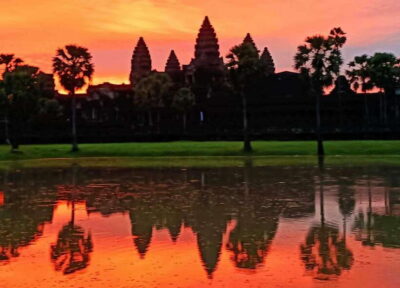
Browse the lists this tour appears in