
Reviewed · ANGKOR WAT TOURS
Siem Reap: Angkor Wat Private Tour by Tuk Tuk
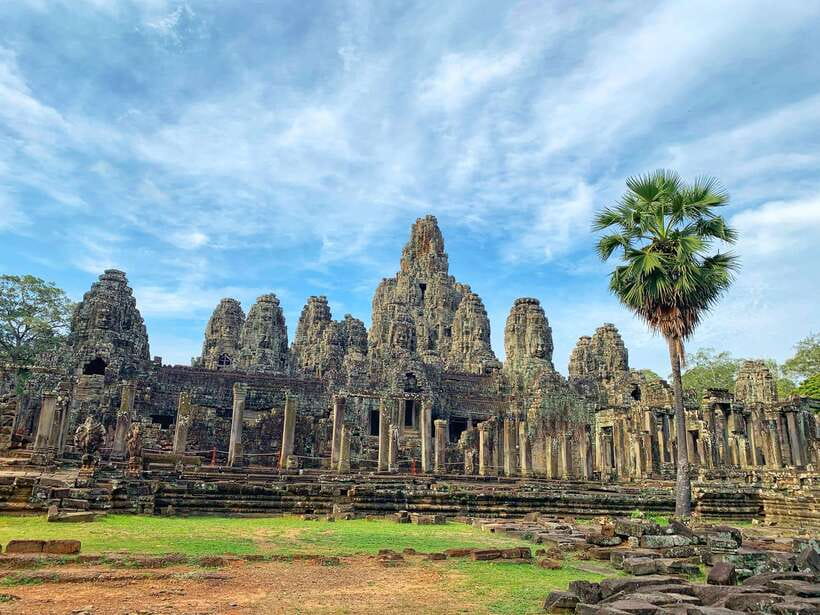
Temples, faces, roots, and a breezy tuk tuk ride. This low-cost private tour gives you a full day among Cambodia’s greatest ruins, linking Angkor Wat, Angkor Thom, Bayon, Ta Prohm, and several smaller temples without the cost of a private car. I especially like the private transport and the patient local drivers, including Rachou, Sona, Vannak, and Pholla. Cold drinking water is supplied, which matters under Cambodia’s hot sun.
The main thing to consider is that this is primarily a tuk tuk and driver service, not a full guided tour with detailed historical talks at every stop. You’ll need to buy your temple ticket and lunch separately, and the long day includes a lot of walking on uneven ground and steep steps.
In This Review
- What makes this day useful
- Why a tuk tuk works well at Angkor
- Angkor Wat: allow three hours for Cambodia’s symbol
- Entering Angkor Thom through the South Gate
- Bayon’s 216 stone faces
- Baphuon, Phimeanakas, and the royal terraces
- Preah Palilay offers a quieter pause
- Lunch is a break, not an included meal
- Thommanon and Chau Say Tevoda
- Ta Prohm and the famous tree roots
- What the $13 price really covers
- Timing, comfort, and who should book
- Should you book this Angkor tuk tuk day?
- FAQ
- Where does the tour begin?
- Is the tour private?
- What type of transportation is used?
- Is the driver English-speaking?
- Which major temples are included?
- How long is the visit to Angkor Wat?
- Is the temple ticket included?
- Is lunch included?
- Is drinking water provided?
- Does the tour return to the hotel?
What makes this day useful
- $13 per person gives you a private tuk tuk, hotel pickup and drop-off, fuel, parking, tolls, and cold water.
- Angkor Wat receives three hours, enough time to see its grand entrance, galleries, towers, and central sanctuary at a reasonable pace.
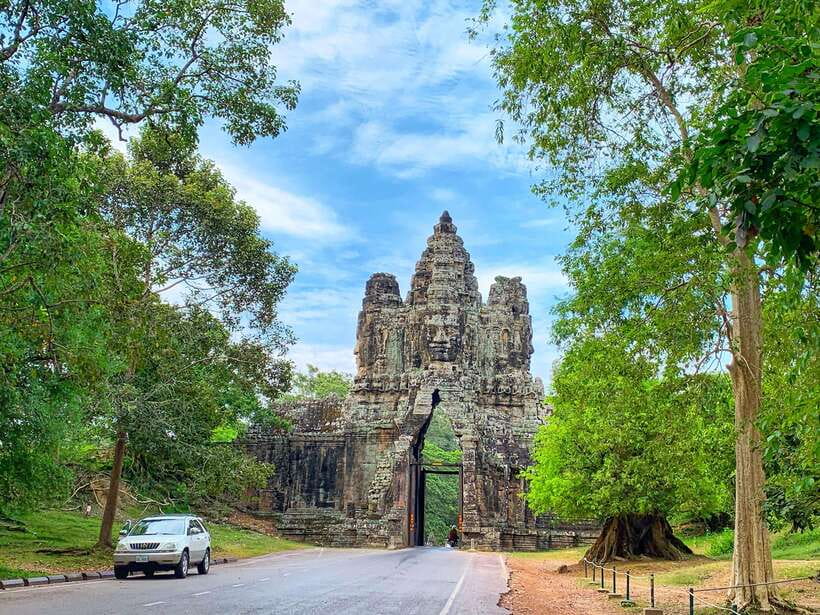
- Angkor Thom is treated as a group of stops, including the South Gate, Bayon, Baphuon, Phimeanakas, the Terrace of the Leper King, and the Terrace of the Elephants.
- Ta Prohm gets a full hour, giving you time to see the famous tree roots and moss-covered stone without rushing through it.
- The route includes quieter temples, such as Preah Palilay, Thommanon, and Chau Say Tevoda, not just the famous headline sites.
- You ride with only your own booking party, while drivers such as Rachou have been praised for waiting patiently, suggesting restaurants, taking photos, and adapting the day to personal requests.
Why a tuk tuk works well at Angkor

The Angkor temple zone is spread over a broad area, so transport matters. A tuk tuk keeps the day simple: your driver picks you up at your hotel in Krong Siem Reap, takes you from one site to the next, waits while you walk around, and returns you to town at the end.
I like the open-sided ride for this setting. You can feel the air moving as you travel between ancient walls and jungle, and the trip feels more connected to local life than sitting behind closed car windows. It is also a practical choice at this price. You are paying for transport and personal service, not a polished luxury vehicle.
The tradeoff is exposure. Tuk tuk travel means heat, dust, traffic noise, and the occasional bump. The supplied cold water helps, but you should still plan for a hot day and bring comfortable walking shoes, sun protection, and clothing suitable for temple visits.
This is a private group tour, not a shared ride. That gives you useful control over the pace. Rachou, one of the named drivers, arrived early for one booking and waited until the group was ready. He also took a group to an extra temple and later dropped them at Starbucks to rest. Those details show the kind of practical flexibility you can hope for, though individual drivers may vary.
More Tuk Tuk Tours in Siem Reap
- Siem Reap: Angkor Wat Private Tuk-Tuk Tour
★ 4.9 · 2,222 reviews - Siem Reap Countryside Bike Tour / E-Bike or Tuk Tuk
★ 5.0 · 935 reviews - Angkor Sunrise Bike Tour / E-Bike or Tuk Tuk
★ 5.0 · 615 reviews
Angkor Wat: allow three hours for Cambodia’s symbol
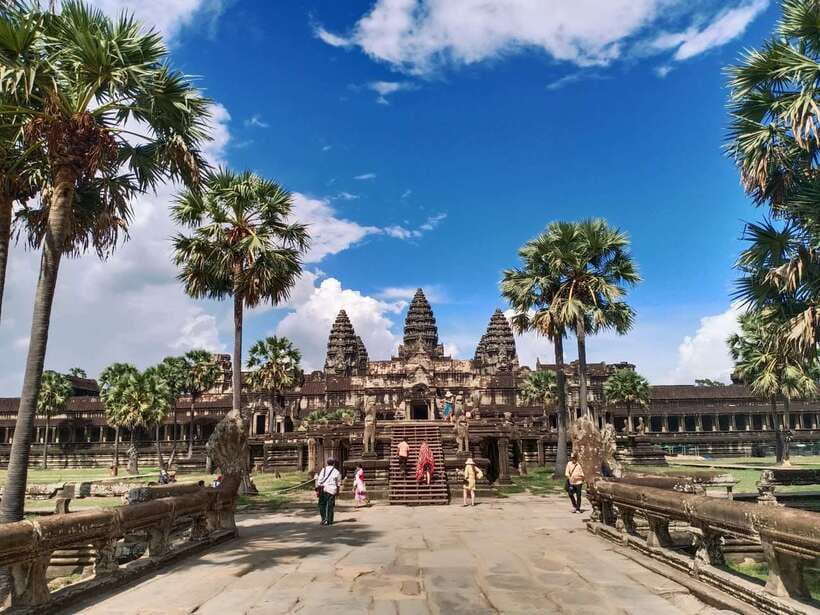
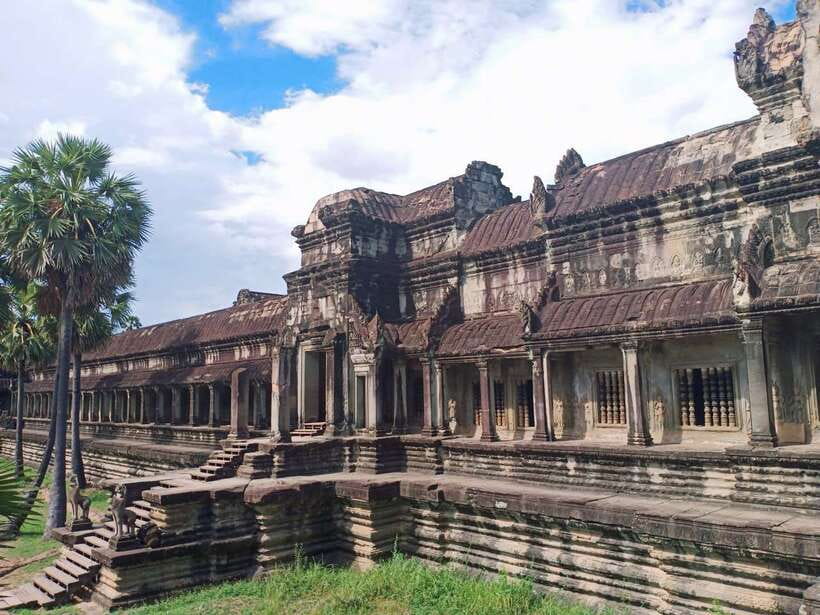
The day begins at Angkor Wat, the largest religious monument in the world and the best-preserved major temple in the Angkor area. Built by King Suryavarman II in the early 12th century, it was first dedicated to Vishnu and later became a Buddhist site.
Three hours is a sensible amount of time here. You can cross the approach, study the towers reflected in the water, walk through the galleries, and climb toward the central sanctuary if access conditions allow. The carved walls reward slow walking. Look for long scenes from Hindu epics and the careful repetition of columns, galleries, and carved figures.
Angkor Wat also gives you the clearest introduction to Khmer imperial design. Its ordered layout, great moat, and rising central towers were meant to represent a sacred universe, not simply create an impressive building. You do not need a long lecture to appreciate the scale, but a little preparation before the tour will help you recognize what you are seeing.
The drawback is that this is the most famous stop, so it can feel busy. The tour description promises a separate entrance for skipping the line, but it does not specify how much waiting you will avoid or how temple entry is managed on your chosen date. The temple ticket is not included, so budget for that separately.
Entering Angkor Thom through the South Gate
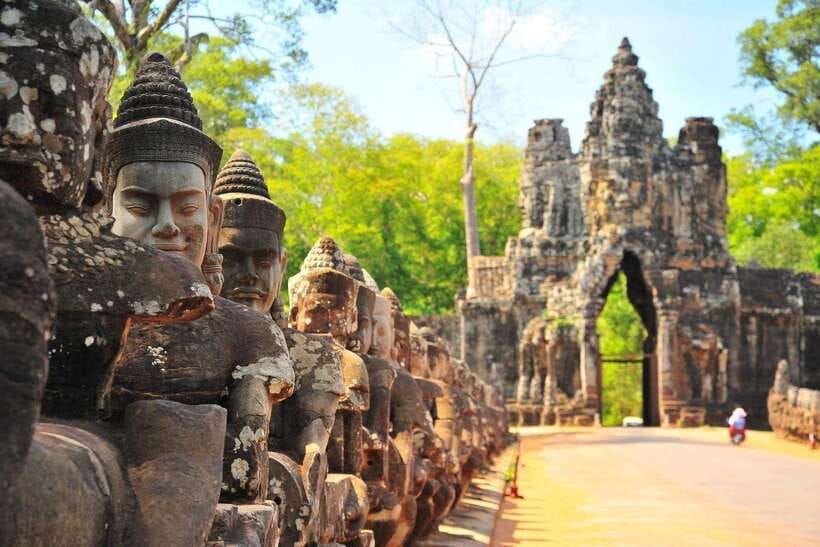
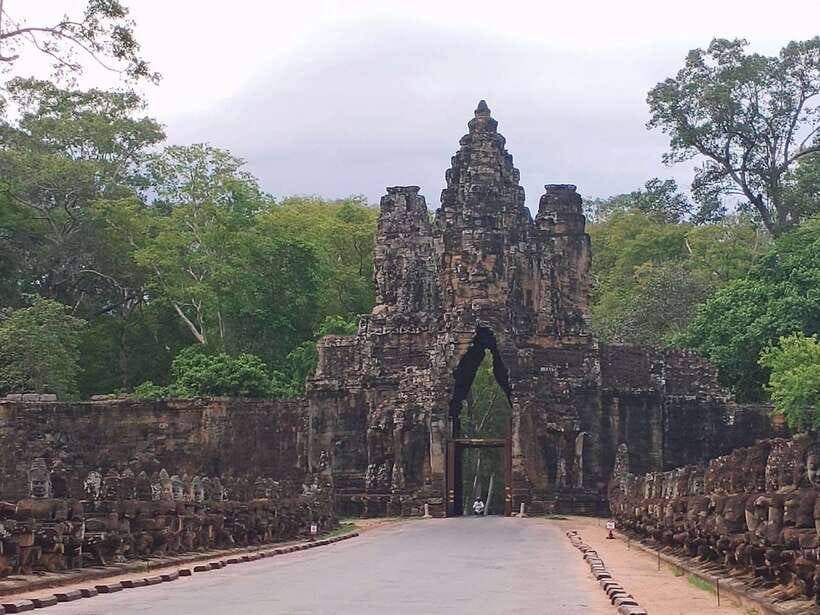
From Angkor Wat, the tuk tuk continues to Angkor Thom, the ancient walled city at the heart of the site. Its laterite walls form a square roughly three kilometers on each side, with a moat that remains flooded in places.
The South Gate is your first stop, and it is a good photo point. The approach gives you the famous line of figures pulling a serpent, a scene linked to the Hindu story of the Churning of the Ocean of Milk. The gate itself leads into a city that once held royal and religious buildings rather than a single isolated temple.
You have about 15 minutes here. That is enough for photographs and a quick look, but not enough for a slow inspection of every figure. Keep your visit focused, since the day has several substantial walking stops ahead.
Bayon’s 216 stone faces
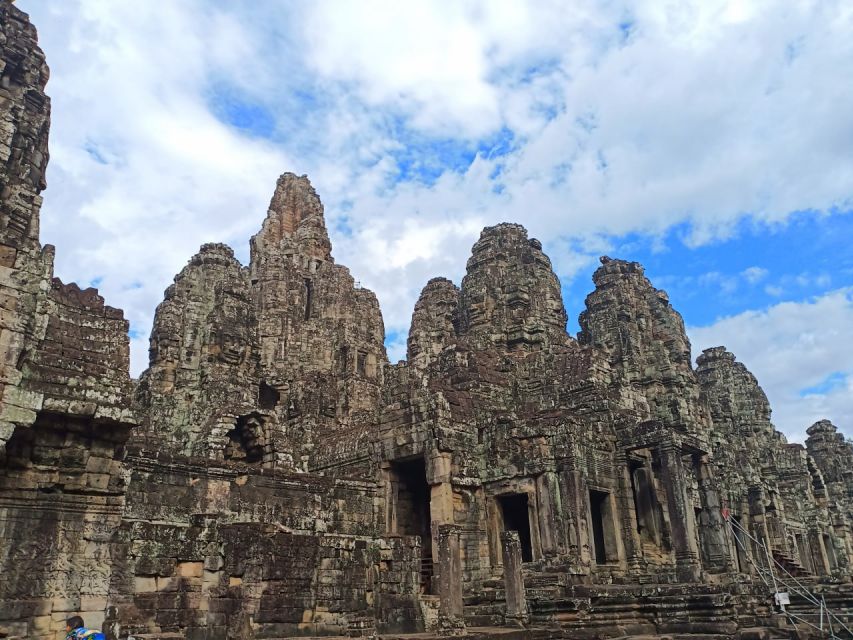
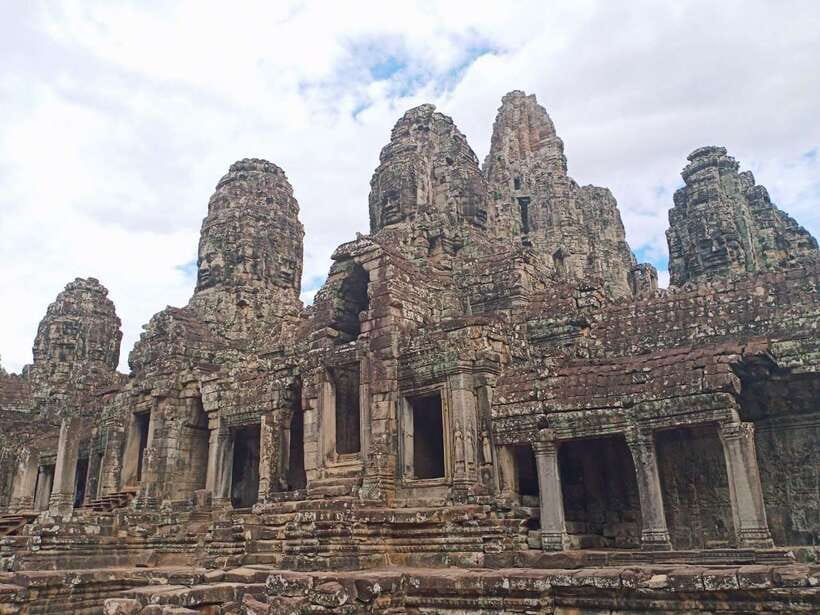
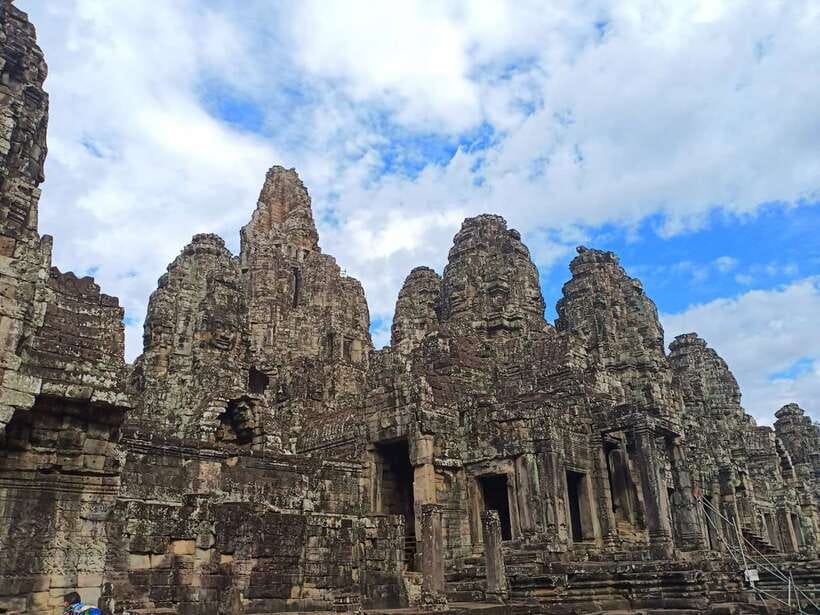
At the center of Angkor Thom, Bayon provides one of the day’s strongest moments. Its towers carry large carved faces that look outward in different directions. The exact identity and meaning of the faces have been debated, but their calm expressions and repeated arrangement are what make the temple memorable.
The planned visit lasts about an hour and a half. Use it to move through the inner passages, where the temple can feel confusing in the best way. Towers appear, disappear, and reappear as you turn corners. The close quarters make Bayon a different experience from Angkor Wat’s broad galleries.
The setting also helps explain the shift in Khmer religious and royal ideas. Bayon was associated with Jayavarman VII, a later king than Suryavarman II, and its imagery reflects a different period of Angkor’s development. You can see how the site changed over time rather than treating all the ruins as one uniform monument.
More Angkor Wat tours we have reviewed:
- Angkor Wat Sunrise or Sunset Tour with Guide from Siem Reap
★ 5.0 · 12,109 reviews - Siem Reap: Angkor Wat: Small-Group Sunrise or Sunset Tour
★ 5.0 · 9,444 reviews - Siem Reap: Angkor Wat 2-Day Tour with Sunrise and Sunset
★ 4.9 · 4,429 reviews - Siem Reap: Full-Day Angkor Wat Guided Tour with Sunset
★ 4.9 · 3,803 reviews
Baphuon, Phimeanakas, and the royal terraces
Baphuon follows with a 30-minute visit. Its long raised causeway leads toward a large temple mountain, and the western side includes a giant reclining Buddha assembled from surviving stone. The reconstruction was completed in 2011 after a 37-year interruption caused by war.
The causeway gives Baphuon a strong sense of approach. You do not simply walk up to a doorway. You cross toward the temple as its tiers rise ahead of you. Some parts involve stairs and uneven surfaces, so take your time rather than treating this as a quick photo stop.
Phimeanakas is scheduled for another 30 minutes. Partly shaded by jungle, it offers an over-the-tree-tops view to people who climb its steep steps. This is one of the clearest places on the route where your physical condition affects the experience. You can see the structure from below if the climb is not comfortable, but the upper view requires effort.
The route then reaches the Terrace of the Leper King and the Terrace of the Elephants. Each receives about 30 minutes. The terraces are linked to the royal center of Angkor Thom and are especially useful for understanding the scale of public and ceremonial space in the ancient city.
The Terrace of the Elephants is known for its elephant carvings and long raised platform. The Terrace of the Leper King is more enclosed and detailed, with carved figures tucked into the walls. Together, they give the day a useful change of pace: less climbing, more attention to reliefs, walls, and the shape of the old royal district.
Preah Palilay offers a quieter pause
Preah Palilay is scheduled for 30 minutes in a shaded area. It is a smaller, more atmospheric stop than Angkor Wat or Bayon, with jungle growth and a sense of separation from the main crowds.
I like having a place like this in the route. The famous temples can fill your head with towers, carvings, and photographs. A quieter ruin lets you notice smaller details and gives your feet a short break from the largest monuments.
Do not expect the same scale here. Preah Palilay is included for mood and variety rather than grand architecture. That is exactly why it earns a place in a full-day route.
Lunch is a break, not an included meal
The schedule includes a lunch break, but food is not included in the $13 price. You will pay for your own meal, and the exact restaurant is not specified.
That arrangement keeps the base price low and gives you some choice. One driver, Rachou, recommended a restaurant that received positive feedback, so you can ask your driver for a suggestion. Still, confirm the price before ordering if you are trying to keep the day within a tight budget.
Lunch is also your natural chance to drink more water and cool down. The day includes roughly nine hours of planned temple visits and transport, so do not treat the break as optional.
Thommanon and Chau Say Tevoda
The afternoon begins with Thommanon, a Hindu temple built during the reign of Suryavarman II. Its name comes from Pali words connected with Buddhist teachings and supreme wisdom, though the temple itself belongs to the Hindu religious setting of the Angkor Wat period.
Thommanon is smaller and easier to read than the huge central monuments. You can see how Khmer builders used towers, galleries, doorways, and carved female figures on a more compact scale. It is paired with Chau Say Tevoda, located directly across Victory Way.
Chau Say Tevoda was built in the mid-12th century and dedicated to Shiva and Vishnu. Its devata sculptures add visual interest, particularly if you have begun to notice how carved figures differ from one temple to another.
Both stops receive about 30 minutes. That is enough for a clear look and photographs, but not a detailed architectural study. If you prefer a day focused only on the biggest temples, these may feel like extras. If you want to understand how the Angkor area is made up of many different sites, they are worthwhile.
Ta Prohm and the famous tree roots
Ta Prohm is the afternoon finale, with about one hour to explore. Its modern fame comes partly from the film Tomb Raider, but the temple earns its place even without that connection.
The most memorable scenes are where the roots of the spung tree, also called Tetrameles nudiflora, press against ancient stone. Moss, broken galleries, doorways, and roots create photographs that look almost unreal, yet the appeal is not just visual. Ta Prohm shows the ongoing tension between preservation and the natural world.
Use your hour carefully. Walk beyond the first obvious root-covered corners, look for carved details under the vegetation, and allow time to stop rather than rushing from picture to picture. The paths can be uneven, and popular viewpoints may take patience.
Ta Prohm is also where the tour can feel most crowded. Its fame brings many visitors, and the narrow spaces do not spread people out as easily as Angkor Wat’s open approach. The private tuk tuk does not solve that issue, but it does let you leave promptly when you have seen enough.
What the $13 price really covers
At $13 per person, this is unusually inexpensive for a private full-day transport service around Angkor. The price includes a private tuk tuk, an English-speaking licensed driver, fuel, parking, toll roads, hotel pickup and drop-off, and cold water.
It does not include the temple ticket or meals. Those extra costs matter, so do not mistake the advertised price for the total cost of your day. Even after adding those items, the tour offers strong value if you mainly need dependable transport and a flexible driver.
The value is strongest for solo visitors, couples, and small groups who want their own vehicle. A solo visitor pays the listed per-person rate but still gets private transport. A larger group booking together can make the personal vehicle especially economical, assuming the tuk tuk can accommodate the number booked.
The driver is not presented as a full licensed historical guide who will provide long explanations at every monument. If you want detailed interpretation, you may need to arrange a separate guide or prepare with your own reading. If you prefer to explore independently and ask practical questions along the way, this setup may suit you better.
Timing, comfort, and who should book
This is a full day, not a casual half-day outing. You will walk for several hours, climb at Baphuon and Phimeanakas, and move through hot outdoor spaces. Wear sturdy shoes and light clothing that covers the shoulders and knees for temple visits.
The supplied water is a useful touch. Cambodia’s heat can turn a pleasant temple walk into a tiring one, and having cold bottles in the tuk tuk saves you from having to search for drinks between every stop. Still, bring any additional water you need, especially if you are sensitive to heat.
I would choose this tour if you want:
- A low-cost private day rather than a shared group.
- The major Angkor highlights plus several smaller sites.
- A local tuk tuk experience instead of a car.
- A driver who can wait, adjust the pace, take photographs, or suggest a lunch stop.
- Hotel pickup and drop-off with fuel and parking already handled.
I would look for another arrangement if you need a detailed guided lecture at every temple, air-conditioned transport, or a short and easy schedule. The route is ambitious, and the price reflects simple transport rather than luxury.
Communication appears to be a strong point. Sona received praise for clear instructions about where to meet and what to do, while drivers named Rachou, Vannak, and Pholla were singled out for helpful service and flexibility. The overall score is 4.8 from 24 ratings, with the strongest praise aimed at the drivers’ patience, friendliness, and willingness to respond to personal needs.
Should you book this Angkor tuk tuk day?
Yes, if you want maximum temple coverage for a small price and are comfortable exploring mostly on your own. Angkor Wat, Bayon, and Ta Prohm provide the headline moments, while Baphuon, the royal terraces, Preah Palilay, Thommanon, and Chau Say Tevoda give the day more depth.
Before booking, be clear about what you are buying: private transport, not a guaranteed full-time temple lecture. Ask your driver for help with photographs, lunch, and pacing, as those practical touches have made the biggest difference for people who enjoyed the day.
The best match is an independent visitor who wants local transport, a full itinerary, cold water, and a driver who waits patiently. If that sounds like your kind of Angkor day, $13 is a very fair starting price.
FAQ
Where does the tour begin?
Pickup is provided from your hotel lobby in Krong Siem Reap.
Is the tour private?
Yes. The tour is for the number of people included in your booking and is not joined with other groups.
What type of transportation is used?
You travel by private tuk tuk with a private licensed driver.
Is the driver English-speaking?
Yes. English is listed as the tour language, and the driver is described as English-speaking.
Which major temples are included?
The route includes Angkor Wat, Bayon, and Ta Prohm, along with Angkor Thom and several smaller temples and terraces.
How long is the visit to Angkor Wat?
The planned visit to Angkor Wat lasts about three hours.
Is the temple ticket included?
No. The temple ticket is not included in the tour price.
Is lunch included?
No. Meals are not included. A lunch break is provided during the day.
Is drinking water provided?
Yes. Cold drinking water is supplied during the tour.
Does the tour return to the hotel?
Yes. The tuk tuk drives you back to your hotel in Krong Siem Reap after the temple visits.
Just added around Siem Reap
- Private Battambang Full-Day Guided Tour★ 4.5 · 3 reviews
- Kulen Mountain, Beng Mealea and Banteay Srei Full Day Tour★ 5.0 · 3 reviews
- Kompong Pluk Tour★ 5.0 · 3 reviews
- Private 3 Day Tour to Discover the ancient temples★ 5.0 · 3 reviews
- Kulen National Park Ticket -Waterfall & 1000 Lingas★ 5.0 · 3 reviews
- Cambodia: Absolute Traditional Dance Show with Buffet Dinner★ 5.0 · 3 reviews
- Border Transfer (Siem Reap to Laos/Laos to Siem Reap)★ 3.5 · 3 reviews
- Best Taxi Siem Reap to Battambang – English Speaking Driver★ 4.5 · 3 reviews
Angkor Wat Tours, compared.

Angkor Wat Sunrise or Sunset Tour with Guide from Siem Reap
Read our review →
Angkor Wat: Small-Group Sunrise or Sunset Tour
Read our review →
Angkor Wat 2-Day Tour with Sunrise and Sunset
Read our review →

Angkor Wat Sunrise tour with Small – Group and Guide tours
Read our review →
Angkor Wat Highlights and Sunrise Guided Tour from Siem Reap
Read our review →
Angkor Wat Sunset Small Group Tour with Lunch Included
Read our review →
Full-Day Angkor Wat Sunrise Private Tour with Guide from Siem Reap
Read our review →Browse the lists this tour appears in