
Reviewed · ANGKOR WAT TOURS
Siem Reap: Angkor Wat Small Group Tour with Spanish Guide
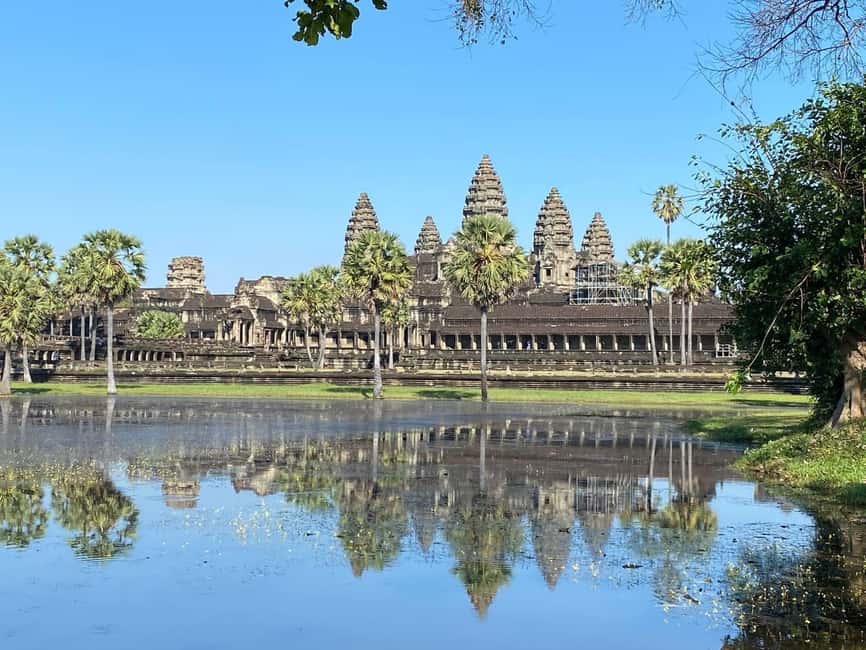
Angkor rewards a good guide. This Siem Reap tour makes the temples easier to understand, especially if you prefer Spanish explanations and want more than a quick photo stop. I especially like the chance to choose between a shared outing and a private tour, plus the guides’ habit of helping with photos. The other strong point is the route itself: you see Angkor Wat, Bayon, Ta Prohm, and, on the longer option, Banteay Srei.
The main drawback is the heat and the amount of walking. The one-day plan is full, and the two-day plan adds several temples that may feel repetitive if you mainly want the famous highlights. You also need to add the Angkor pass to the advertised $50 price, and lunch is extra.
In This Review
- Key points before you book
- Why a Spanish-speaking guide matters at Angkor
- The morning pickup and choosing your transport
- South Gate, Victory Gate, and the approach to Angkor Thom
- Bayon, the smiling faces of Angkor Thom
- Baphuon and the Terraces of the Elephants and Leper King
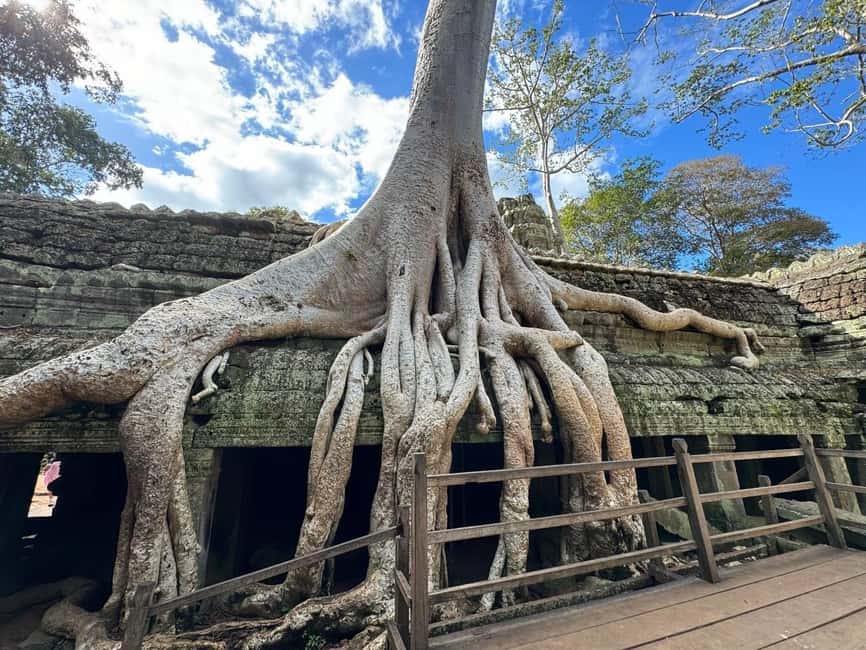
- Ta Prohm and the roots that made it famous
- Lunch near Srah Srang, with food paid separately
- Angkor Wat, the grand finish
- What changes on the two-day extended tour
- Cost, inclusions, and the real value
- Practical advice for the heat, clothing, and walking
- Who will get the most from this tour
- Should you book this Angkor Wat tour?
- FAQ
- Is the Angkor entrance ticket included?
- What time does the regular tour begin?
- How does the sunrise option work?
- Does the tour include lunch?
- Is the tour private or shared?
- What transport is used for one or two people?
- Are children allowed to join?
- What clothing is required at the temples?
Key points before you book
- Spanish guidance with a personal touch: Guides such as Mario Moreno and Samuel have been praised for clear explanations, patience, humor, and taking many photos.
- Two useful ways to visit: Pick the one-day Small Circuit for the essential temples, or add the Grand Circuit and Banteay Srei over two days.
- The entrance pass costs extra: Budget $37 for one day or $62 for a two to three-day pass.
- Transport depends on group size: One or two people usually ride in a tuk-tuk, while groups of three or more use an air-conditioned van or bus.
- Sunrise changes the whole day: The early option begins around 5:00 AM and finishes around noon, rather than following the regular 8:30 AM to 5:00 PM schedule.
- Dress for a temple, not a beach: Knees and shoulders must be covered, with stricter clothing rules at Angkor Wat.
Why a Spanish-speaking guide matters at Angkor
Angkor is not one monument. It is a huge archaeological park filled with temples from different periods, royal buildings, reservoirs, gateways, carvings, and religious symbols. Without help, you can easily admire the stones without understanding what you are seeing.
A Spanish-speaking guide gives you the background in the language you use most comfortably. That matters at Bayon, where the famous stone faces raise questions about the king, religion, and the temple’s design. It also helps at Angkor Wat, where galleries and carvings can seem endless without a clear explanation of what to watch for.
I would particularly value the guide’s role in managing the day. The heat can be tiring, and the schedule includes several long visits. A good guide can explain the important points, keep you moving, and show you where to pause for photographs rather than leaving you to wander around every corridor.
Mario Moreno receives especially warm praise for combining detailed explanations with a relaxed manner and strong photography skills. Samuel is noted for patience and for adjusting the pace to suit a family. Since guides may vary by date, you should not assume one particular person is guaranteed, but these examples show the kind of service this experience aims to provide.
More Angkor Wat tours we have reviewed:
- Angkor Wat Sunrise or Sunset Tour with Guide from Siem Reap
★ 5.0 · 12,109 reviews - Siem Reap: Angkor Wat: Small-Group Sunrise or Sunset Tour
★ 5.0 · 9,444 reviews - Siem Reap: Angkor Wat 2-Day Tour with Sunrise and Sunset
★ 4.9 · 4,429 reviews
The morning pickup and choosing your transport
Pickup takes place at your hotel lobby in Siem Reap between 8:30 and 9:00 AM for the regular tour. You then go to the ticket booth to buy your Angkor pass, unless you have already bought it online.
For a small party of one or two people, the shared option uses a tuk-tuk. That can be a pleasant way to move between temples, with an open-air feel and easy views of the road. It also means more exposure to sun, dust, and heat. A car can be selected for the private one-day option, which may suit you better if comfort is a priority.
Groups of three or more use an air-conditioned van or bus. On the two-day private plan, one or two people use a tuk-tuk on the first day and a car on the second. Cold water and cold towels are included, small comforts that matter once the temperature rises.
The transport score is very strong, and punctuality is an important part of a temple day. Still, do not judge the experience by the vehicle alone. The value comes from combining the transfer, guide, route planning, and temple explanations in one package.
South Gate, Victory Gate, and the approach to Angkor Thom
The route begins around Angkor Thom, the great walled city at the center of the Angkor complex. The tour description highlights the South Gate, with its large stone faces, while the detailed route also includes a photo stop at Victory Gate.
These gates are more than quick entrances. They introduce the scale of Angkor Thom and give you a first look at the grand style used by the Khmer builders. The causeway and carved figures make a strong opening, though the stop can be busy and you may need to wait for a clear photograph.
The Victory Gate stop is brief, listed at about 10 minutes. Treat it as a chance to see the structure and take a picture, not as a long guided visit. The guide’s help is useful here because a short stop can otherwise blur into a string of stone gateways.
Bayon, the smiling faces of Angkor Thom
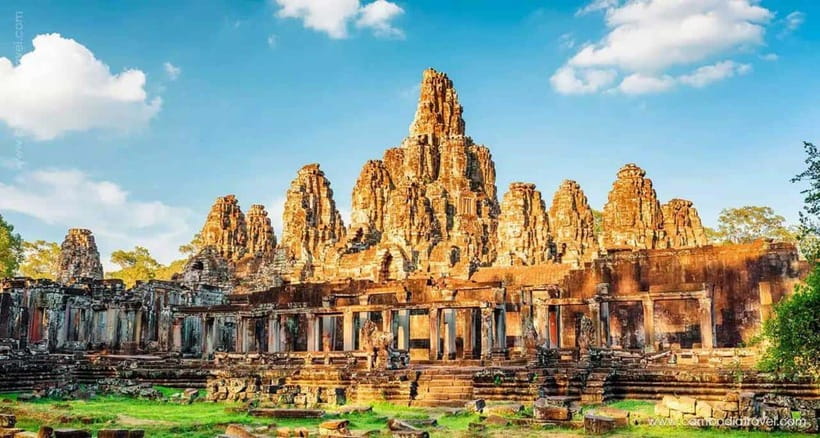
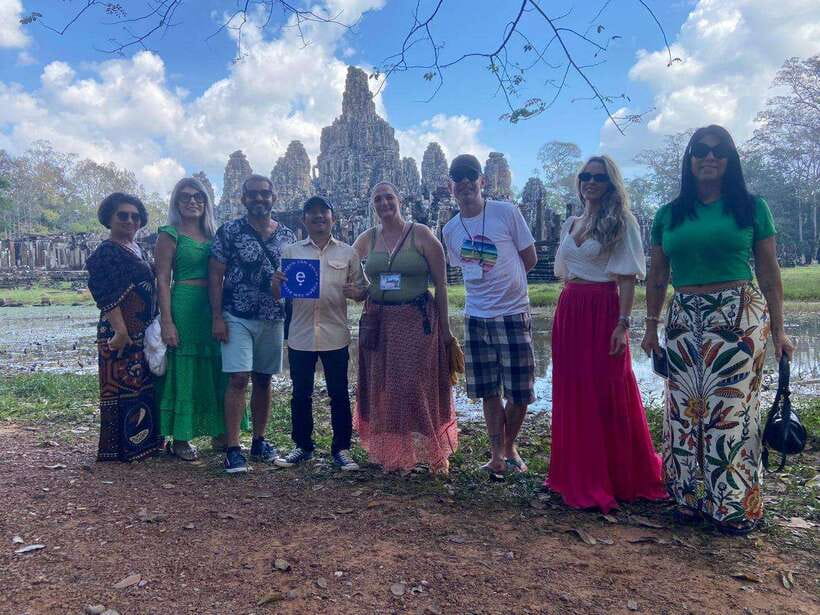
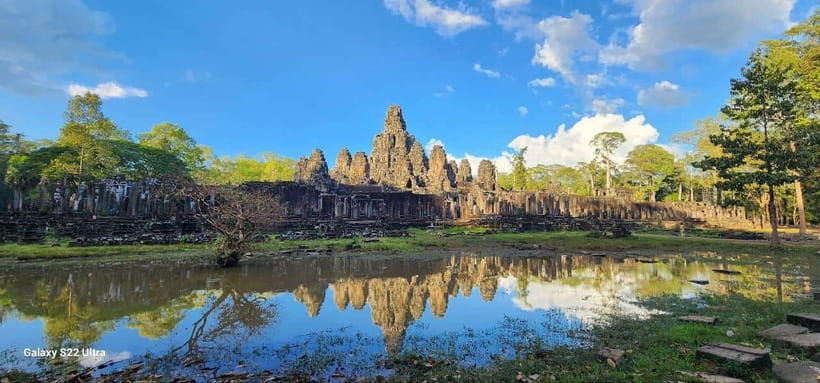
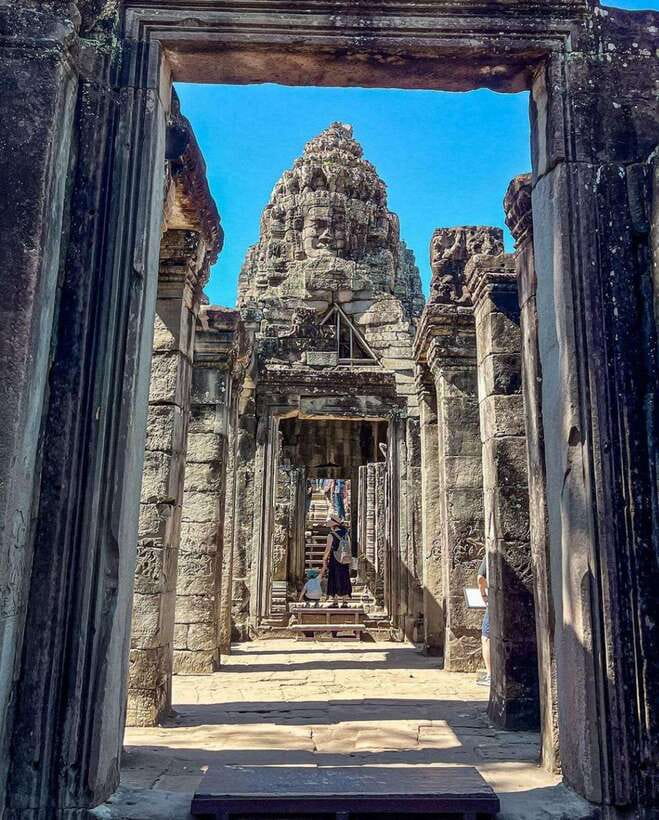
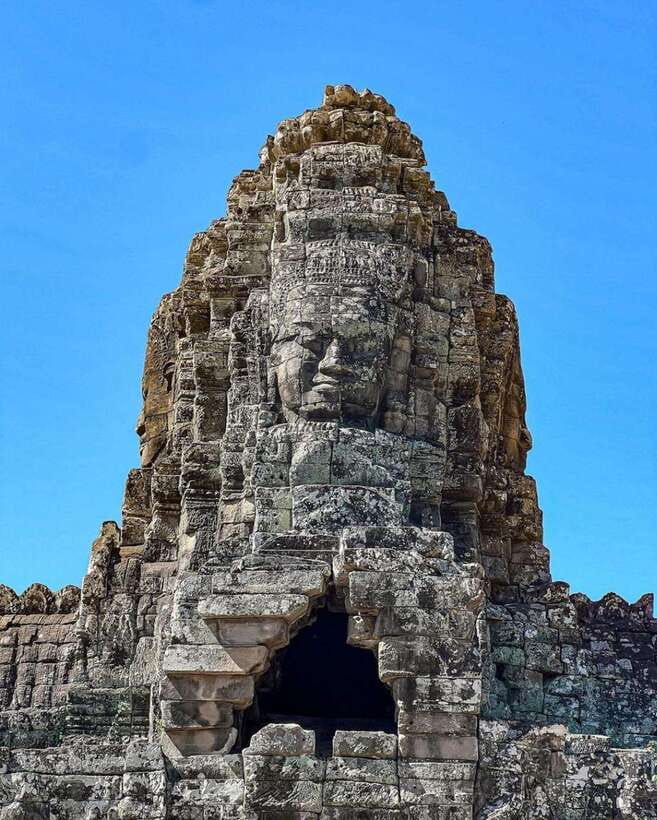
Bayon is one of the most memorable stops on the one-day tour. Its towers carry huge carved faces with calm expressions, and the effect changes as you walk around them. From one angle the faces seem watchful, from another they blend into the temple’s maze of towers.
The guided visit lasts about 45 minutes in the detailed schedule, though the broader Angkor Thom visit takes around two hours when the surrounding terraces and Baphuon are included. That is enough time to see the main structure without trying to inspect every carving.
I like Bayon as a guide-led stop because the temple can feel confusing at first. The guide can point out the faces, galleries, and key views, then help you understand how the temple fits into the wider royal city. It is also a good place for photographs, but the stone towers and narrow passages can make group movement slow.
A few more trips worth weighing up
- From Siem Reap: Kampong Phluk Floating Village Tour by Boat
★ 4.9 · 6,979 reviews - Sunset tour of Kampong Phluk stilts home village on the Tonle Sap
★ 5.0 · 4,865 reviews - Siem Reap: Kampong Phluk Floating Village Tour with Boat
★ 4.9 · 3,843 reviews - Siem Reap: Full-Day Angkor Wat Guided Tour with Sunset
★ 4.9 · 3,803 reviews
Baphuon and the Terraces of the Elephants and Leper King
Inside Angkor Thom, the tour continues to Baphuon and the terraces. Baphuon has a strong, elevated form and a long approach that gives you a sense of ceremonial scale. It is a more architectural stop than a simple portrait of a temple, so comfortable shoes are important.
The Terrace of the Elephants is listed as a 30-minute guided visit. Its carved elephants and long platform once formed part of the royal center. The Terrace of the Leper King is included in the description of the Angkor Thom visit, even though it is not listed as a separate timed stop.
These structures reward careful listening. They are not as instantly recognizable as Angkor Wat or Ta Prohm, but they help you see Angkor Thom as a functioning royal city rather than a collection of isolated ruins. The drawback is that the sequence contains several large stone sites close together, so younger children or anyone struggling with the heat may need regular pauses.
Ta Prohm and the roots that made it famous
Ta Prohm is the cinematic stop, known for tree roots spreading over temple walls and doorways. The roots are not a decorative addition. They show the long contest between vegetation and stone, and they give the temple a mood that feels different from the more formal Angkor Wat.
The visit is scheduled for about one hour. That is enough to see the most famous sections and hear the story of the temple, though you will not explore every passage. The walk can be uneven, and narrow areas may slow the group.
I like having Ta Prohm early in the route because it gives the morning a strong visual highlight. It is also one of the places where the guide’s photography help can make a difference. A guide who knows the better angles can take photographs of you among the roots instead of leaving you with only hurried snapshots.
Lunch near Srah Srang, with food paid separately
The itinerary allows about an hour for a break and lunch around Srah Srang. Lunch is not included, so you should carry some cash and expect to pay for your Cambodian meal separately.
Srah Srang is a sensible rest point because the day needs a pause. After several temples, a shaded break and cold drink can help you manage the afternoon. The tour includes cold water and towels during the visits, but those supplies do not replace lunch or a proper drink stop.
If you choose the sunrise plan, bring breakfast from your hotel. The early pickup is around 5:00 AM, and the tour finishes near noon. This option gives you a cooler start and a chance to see the morning light, but you will need to organize food before leaving.
Angkor Wat, the grand finish
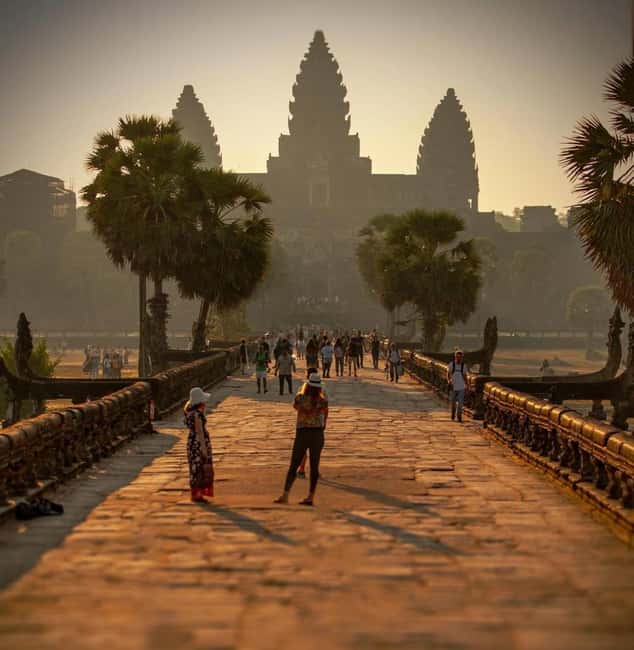
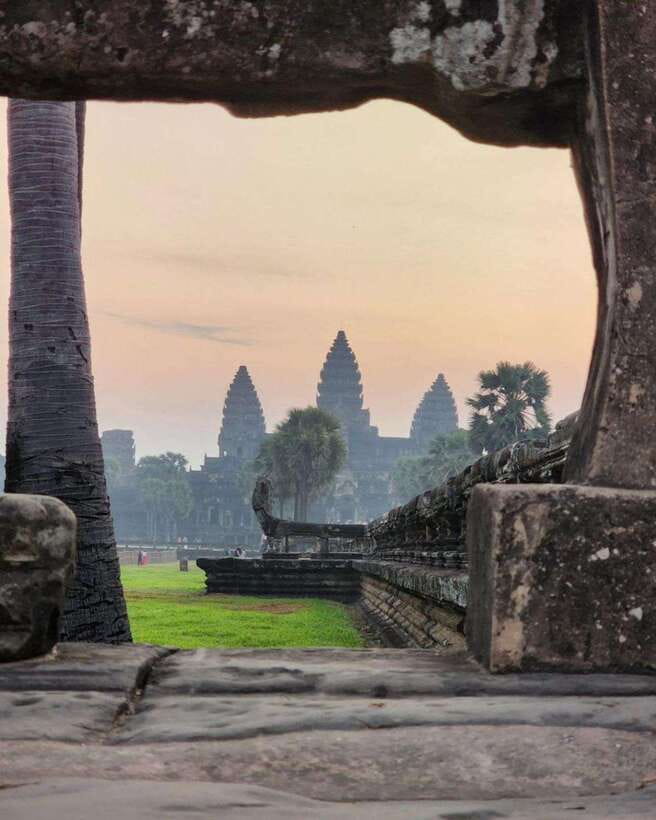
Angkor Wat receives about two and a half hours on the one-day route. That is the right kind of time for this enormous religious monument. You can see the long approach, courtyards, towers, galleries, carvings, and main symbolic features without reducing the visit to a quick exterior photograph.
The guide’s storytelling is most useful here. Angkor Wat can overwhelm you with scale. A clear explanation helps you connect the building’s layout with Khmer religious ideas, royal power, and the details carved into its walls.
Expect the final visit to be tiring. By the afternoon, you have already walked through Ta Prohm and Angkor Thom, often in strong sun. The reward is that the tour ends with the monument most people came to see, followed by return to your Siem Reap hotel around 5:00 PM.
For the sunrise version, the schedule is different. You start at 5:00 AM and finish around noon, giving you a shorter, cooler day. Sunrise is appealing, but it also means less sleep and a tighter rhythm. Check the exact sunrise arrangement when booking, particularly for the two-day plan.
What changes on the two-day extended tour
The two-day option includes the Small Circuit, Grand Circuit, and Banteay Srei. It is better for you if Angkor is the main purpose of your Siem Reap visit and you prefer not to race through the temples.
Day two begins with Preah Khan, a large monastic complex with corridors, carvings, and a more atmospheric feel than the open spaces around Angkor Wat. Its size makes a guide useful, since it is easy to lose your sense of direction among the galleries.
Neak Pean follows. This small temple sits among pools and has a calmer setting than the larger monuments. It is a shorter, more unusual stop, though the amount you see can depend on access and walking conditions.
Ta Som is known for its tree-covered gate. It echoes the famous look of Ta Prohm on a smaller scale, which makes it a good photographic stop but also explains why some people may find the second day repetitive.
East Mebon once stood on an island in an ancient reservoir. Its position today helps you picture how water shaped the Khmer capital. Pre Rup then provides a strong, mountain-style temple with broad views toward the Cambodian countryside.
The final stop is Banteay Srei, often called the Citadel of Women. Its pink sandstone carvings are among the most delicate in the Angkor area, with fine detail that rewards a slower look. It is also farther from the central cluster of temples, so adding it makes the second day longer in feel even if the tour finishes around 4:00 PM.
The two-day route offers more variety, but it does not double the number of unforgettable sights. If you only have one full day, the essential route is enough. If you enjoy archaeology, photography, and quieter temple details, the second day earns its place.
Cost, inclusions, and the real value
The advertised price is $50 per person. That covers a one-day or two-day guided experience, depending on the option you choose, along with hotel pickup, transport, guided visits, a Spanish-speaking guide, cold water, and cold towels.
The Angkor pass is extra: $37 for one day or $62 for a two to three-day pass. That puts the basic total at about $87 for the one-day experience or $112 for the two-day option, before lunch and gratuity.
That is fair value if you want a guide in Spanish. You are not just paying for transport to the temples. You are paying for route planning, explanations, photo assistance, and the ease of returning to your hotel without arranging each transfer yourself.
The shared option usually offers the best price for solo visitors or couples. A private tour makes more sense for families, photographers, or anyone who wants a slower pace. Children under 12 join free on private tours, and children under 12 do not need an entrance ticket, though you must show a passport as proof.
Practical advice for the heat, clothing, and walking
Wear comfortable shoes. The temples involve uneven surfaces, steps, and extended walking, and the schedule gives you little reason to wear anything delicate or restrictive.
Bring sunglasses, a hat, sunscreen, and insect repellent. Comfortable clothing is essential, but temple rules matter more than fashion. Shorts, short skirts, sleeveless shirts, tank tops, and revealing clothing are not permitted.
At some temples, a scarf may cover your knees and shoulders. Angkor Wat has stricter requirements, so pants or a skirt covering the knees and a shirt covering the shoulders are the safer choice. Dressing correctly from the start saves you from having to adjust your clothing at the entrance.
This experience is not suitable for wheelchair users, and it is not recommended for people over 95. The heat is a real consideration for everyone. One of the most useful habits is to drink water before you feel thirsty and use the scheduled lunch break as an actual rest, not just a chance to eat quickly.
Who will get the most from this tour
I would recommend this experience to Spanish-speaking visitors who want context without having to translate a guide’s explanation. It also suits first-time visitors who want the major temples arranged in a sensible order.
Families may appreciate the private option, especially because the guide can adjust the pace. Samuel’s reported patience with questions and family timing is exactly the sort of service parents should seek, though guide assignments can change.
Photography-minded visitors should also consider it. The guides are praised for taking many photos and pointing out good locations, which is useful when you are traveling as a couple or small group with nobody available to take the picture.
You may prefer another arrangement if you want to explore alone, spend a very long time at one temple, or avoid a fixed schedule. The one-day plan is busy, and the second day includes several temples with related stone-and-root scenery. Angkor is too important to rush, so choose the longer option only if you genuinely enjoy seeing more of the park.
Should you book this Angkor Wat tour?
Book it if you want Spanish explanations, hotel pickup, temple-to-temple transport, and practical photo help in one package. The one-day tour gives you the essential Angkor experience, while the two-day plan is a better choice for a slower visit and Banteay Srei.
I would choose the one-day private option for a couple wanting comfort and flexibility, the shared option for keeping costs down, and the two-day plan for anyone with a strong interest in Khmer architecture. Add the ticket, lunch, suitable clothing, and a little patience for the heat, and the $50 starting price represents solid value.
FAQ
Is the Angkor entrance ticket included?
No. The Angkor Archaeological Park pass must be purchased separately. It costs $37 per person for one day and $62 per person for a two to three-day pass.
What time does the regular tour begin?
Hotel pickup takes place between 8:30 and 9:00 AM. The one-day tour usually returns to the hotel around 5:00 PM.
How does the sunrise option work?
The sunrise option starts at about 5:00 AM and finishes around noon. You are advised to bring breakfast from your hotel.
Does the tour include lunch?
No. Lunch is not included. The itinerary provides a lunch and rest break at a nearby Cambodian restaurant.
Is the tour private or shared?
You can choose a private tour or a small shared group experience. Transport and some arrangements vary according to the option selected.
What transport is used for one or two people?
One or two people generally travel by tuk-tuk. A car can be selected for the private one-day tour, and the two-day private option uses a tuk-tuk on Day 1 and a car on Day 2.
Are children allowed to join?
Children under 12 can join free of charge on private tours. Children under 12 do not need an Angkor ticket, but a passport must be shown as proof of age.
What clothing is required at the temples?
You need clothing covering your knees and shoulders. Shorts, short skirts, sleeveless shirts, tank tops, and revealing clothing are not permitted, with especially strict requirements at Angkor Wat.
Just added around Siem Reap
- Private Battambang Full-Day Guided Tour★ 4.5 · 3 reviews
- Kulen Mountain, Beng Mealea and Banteay Srei Full Day Tour★ 5.0 · 3 reviews
- Kompong Pluk Tour★ 5.0 · 3 reviews
- Private 3 Day Tour to Discover the ancient temples★ 5.0 · 3 reviews
- Cambodia: Absolute Traditional Dance Show with Buffet Dinner★ 5.0 · 3 reviews
- Kulen National Park Ticket -Waterfall & 1000 Lingas★ 5.0 · 3 reviews
- Border Transfer (Siem Reap to Laos/Laos to Siem Reap)★ 3.5 · 3 reviews
- Best Taxi Siem Reap to Battambang – English Speaking Driver★ 4.5 · 3 reviews
Angkor Wat Tours, compared.

Angkor Wat Sunrise or Sunset Tour with Guide from Siem Reap
Read our review →
Angkor Wat: Small-Group Sunrise or Sunset Tour
Read our review →
Angkor Wat 2-Day Tour with Sunrise and Sunset
Read our review →

Angkor Wat Sunrise tour with Small – Group and Guide tours
Read our review →
Angkor Wat Highlights and Sunrise Guided Tour from Siem Reap
Read our review →
Angkor Wat Sunset Small Group Tour with Lunch Included
Read our review →