
Reviewed · ANGKOR WAT SUNRISE TOURS
Siem Reap: Angkor Wat Sunrise Small Group tour and Breakfast
Wake up early, see Cambodia glow.
This $19 small-group tour gives you a big day for modest money: sunrise at Angkor Wat, breakfast at a family-run restaurant, a village stop, Ta Prohm, Bayon, Baphuon, and the terraces of Angkor Thom. I especially like the cool water, towels, air-conditioned transport, and guides such as Seila, Mony, and Veasna, who add useful context and often help with photographs. The main drawback is the schedule: a 4:30 to 5:00 AM pickup followed by nine hours of temples can leave you worn out.
The itinerary also works because it mixes Cambodia’s famous stone monuments with everyday village life. Preah Dak’s palm cake and countryside setting give the morning a local touch, while the small group, limited to 14 people, makes it easier to hear your guide and ask questions. Just remember that the $37 Angkor pass is extra, and sunrise depends on the weather.
In This Review
- Key points to know before booking
- Why the 4:30 AM start is worth it
- Angkor Wat in the first light
- Breakfast beside Srah Srang
- Preah Dak and the taste of palm cake
- Ta Prohm, where trees claim the ruins
- Angkor Thom and the smiling faces of Bayon
- Baphuon and the royal viewing terraces
- How the day feels in a group of 14
- The real cost and overall value
- What to pack and how to dress
- Should you book this Angkor Wat sunrise tour?
- FAQ
- What time does hotel pickup take place?
- Is the Angkor temple pass included?
- Is breakfast included?
- How large is the small group?
- What should I wear to the temples?
- Is the tour suitable for children under 10?
Key points to know before booking
- Sunrise comes first: You reach Angkor Wat before the main heat and spend about 1.5 to 2 hours exploring it.
- Breakfast has a local focus: A family restaurant near Srah Srang serves breakfast, with a vegetarian option available.
- Preah Dak adds village life: You can see local palm cake and taste this traditional Cambodian sweet.
- The group stays manageable: Small groups are capped at 14 people, with private tours available for more flexibility.
- Refreshments are unusually well handled: Expect unlimited bottled water and cool towels during the day.
- Dress for the temples: Your knees and shoulders must be covered, and comfortable shoes matter.
Why the 4:30 AM start is worth it
The day begins before sunrise, with hotel pickup in Siem Reap between 4:30 and 5:00 AM. You should wait in the lobby 10 minutes early because the driver will wait only five minutes after the scheduled time.
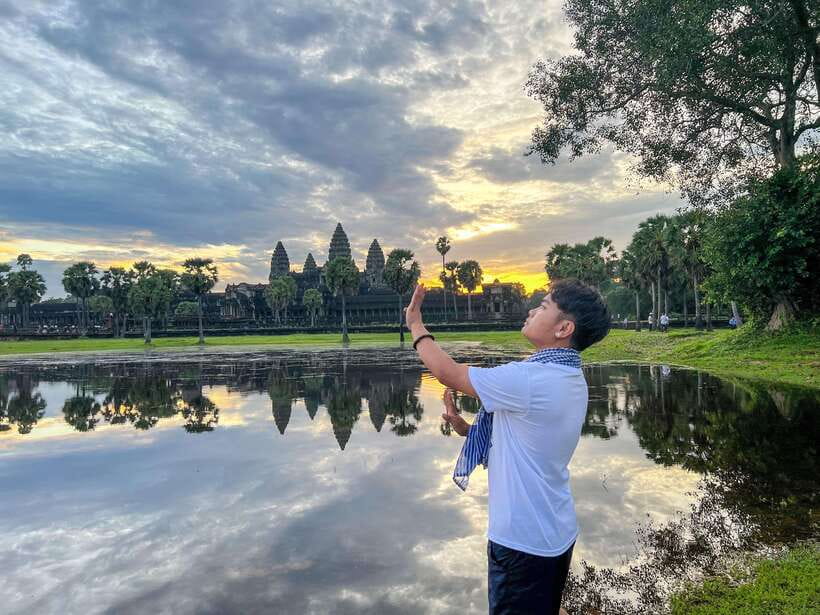
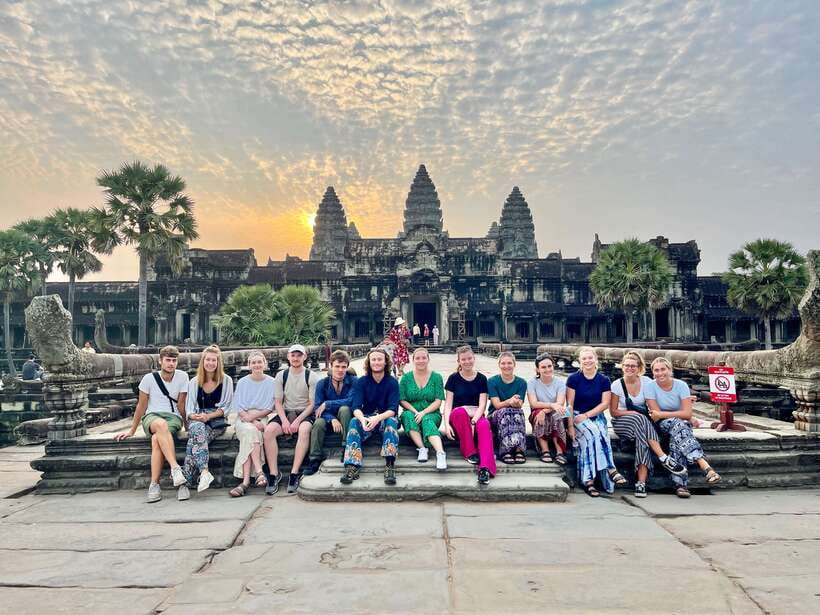
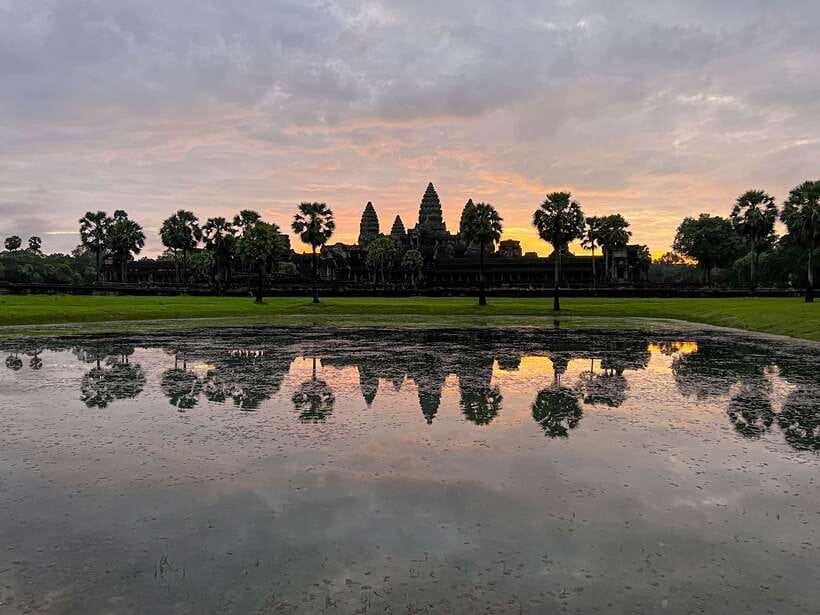
This early start is not just a marketing trick. Angkor Wat is far more pleasant before the sun climbs high, and reaching the temple early gives you time to find a viewing place near the reflecting pools. The famous outline of the towers against the changing sky is the reason many people choose this trip, and clear weather can make the scene extraordinary.
The catch is obvious: you will be awake while much of Siem Reap is still asleep. If you arrive after a late flight or prefer slow mornings, this may feel punishing. For most people, though, the early alarm pays off because you see the temple before the strongest heat and then continue with the major monuments.
The ride is in an air-conditioned car, minivan, or bus, depending on the group. The transport receives especially strong praise, and that matters in Cambodia’s heat. Drivers such as Sothea, Jame, Theara, Moon, and Ouk are repeatedly described as punctual, careful, and attentive. Cold water, cool towels, and sometimes fruit or a small snack are provided when you return to the vehicle.
More sunrise starts at Angkor Wat:
- Angkor Wat Sunrise or Sunset Tour with Guide from Siem Reap
★ 5.0 · 12,109 reviews - Angkor Wat Sunrise tour with Small – Group and Guide tours
★ 5.0 · 3,655 reviews - Full-Day Angkor Wat Sunrise Private Tour with Guide from Siem Reap
★ 5.0 · 2,920 reviews
Angkor Wat in the first light
You spend roughly two hours at Angkor Wat, although the actual walking time is described elsewhere as about 1.5 hours. That is enough for a guided look at the main building, galleries, courtyards, and photo points, but not enough for every corner of this enormous temple complex.
Angkor Wat was built as a Hindu temple dedicated to Vishnu and later became an important Buddhist site. Your English-speaking guide explains the carvings, religious ideas, and Khmer imperial setting, helping you see more than a beautiful row of towers.
I like the way the visit begins with quiet observation before the formal explanation. You get a chance to watch the sky brighten, take photographs, and get your bearings. Guides including Mony, Ramen, Jan, and August are praised for knowing good photo angles, while Veasna and Seila are noted for clear explanations and warm, engaging delivery.
Do not expect an empty temple. Sunrise at Angkor Wat is one of Siem Reap’s busiest rituals, and other groups will be there. A guide can help you avoid some of the worst congestion, but no tour can remove the crowd entirely.
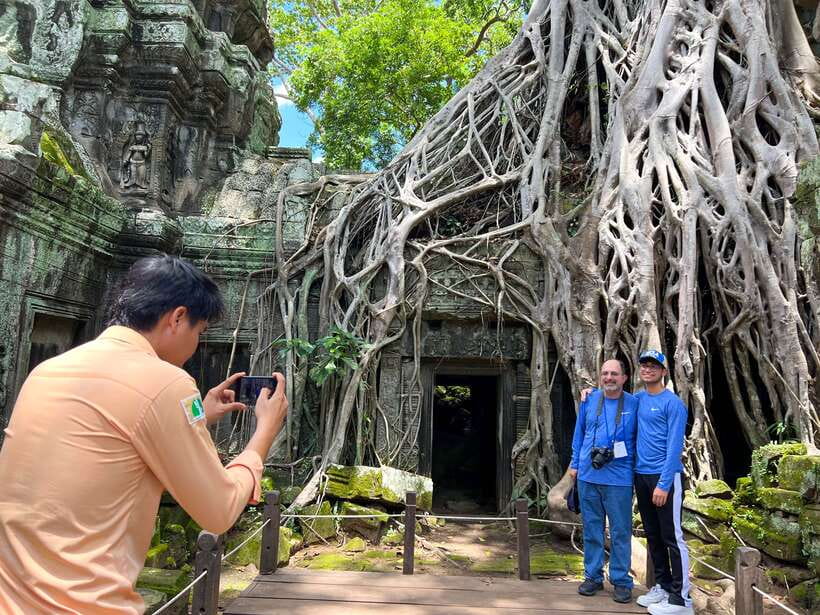
Bring a camera, though you need not hire a separate photographer. Several guides are happy to take photographs and suggest poses or angles. Still, keep your attention on the temple too. Sunrise passes quickly, and the best memory is not always the most carefully arranged picture.
Breakfast beside Srah Srang
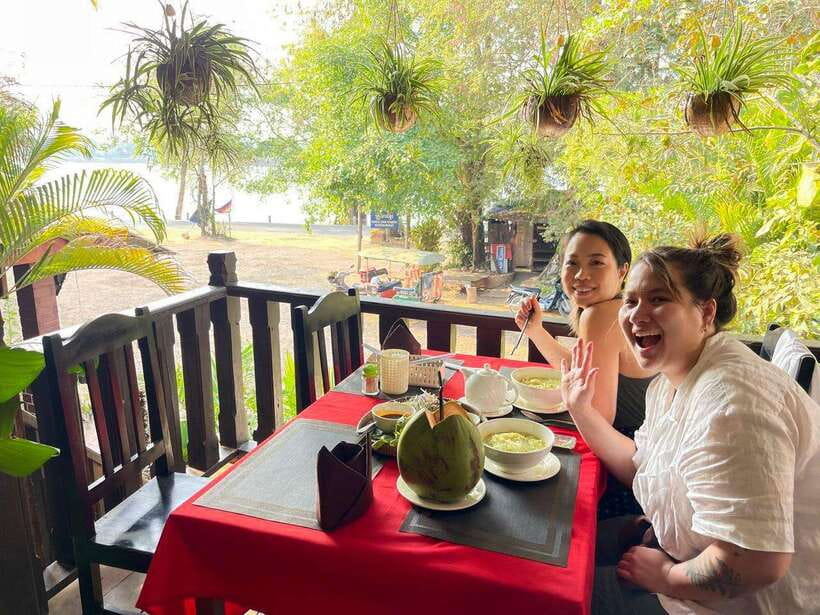
After Angkor Wat, the group pauses for about an hour around Srah Srang, a large royal reservoir east of Angkor Wat. Breakfast at a local family restaurant gives you a useful break from stone corridors and early-morning walking.
Breakfast is included, and a vegetarian option is available. The meal is described as tasty and filling, with the setting near the water adding a pleasant change of pace. One practical detail is the timing: some groups eat around 8:30 AM, after the Angkor Wat visit, so you may want a small snack before pickup if you normally eat early.
This is not a luxury restaurant stop, and it should not be judged like one. The value is in supporting a local family business and eating as part of the morning route. You also avoid losing time searching for food between temples.
The tour does not include lunch or soft drinks. By late morning, you may be hungry again, so carry some extra cash and ask your guide about the schedule if you need a larger meal. The supplied water helps, but it is not a substitute for lunch.
Preah Dak and the taste of palm cake
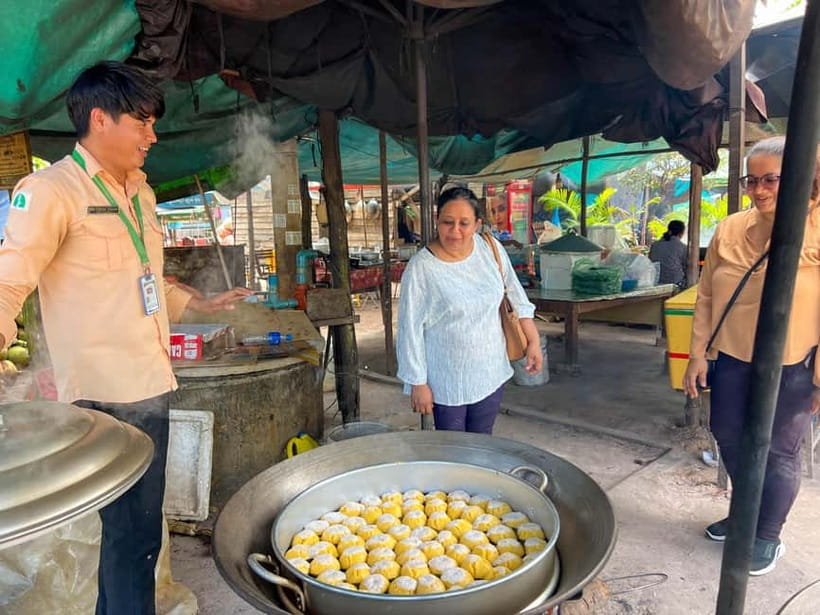
The countryside stop at Preah Dak is one of the most appealing parts of this experience because it changes the rhythm of the day. Instead of moving from one monument to another, you see a community connected to the wider Angkor area and taste traditional palm cake.
Palm products are closely tied to Cambodian rural life. The tour gives you a chance to see palm cake being made or sold and sample the sweet. Several visitors describe the cakes and other local sweets as a highlight, and one breakfast stop included a walk through the village before the tasting.
Keep your expectations grounded. This is a short cultural stop, not a full farming tour or a long village homestay. You will get a glimpse of local life rather than a detailed study of it. Even so, the pause helps you understand that the Angkor area is not only an archaeological park. People live, work, cook, and sell food around these monuments.
I would treat this as a good opportunity to buy a small local snack if available, while staying respectful about photographs. The tour information specifically presents the stop as a way to experience countryside life, not as a staged performance.
More Angkor Wat tours we have reviewed:
- Siem Reap: Angkor Wat: Small-Group Sunrise or Sunset Tour
★ 5.0 · 9,444 reviews - Siem Reap: Angkor Wat 2-Day Tour with Sunrise and Sunset
★ 4.9 · 4,429 reviews - Siem Reap: Full-Day Angkor Wat Guided Tour with Sunset
★ 4.9 · 3,803 reviews - Angkor Wat Highlights and Sunrise Guided Tour from Siem Reap
★ 5.0 · 3,213 reviews
Ta Prohm, where trees claim the ruins
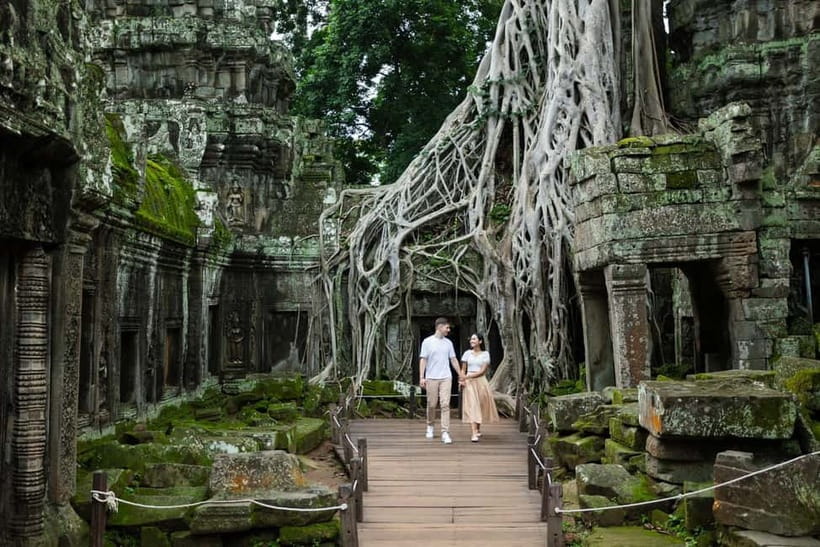
Ta Prohm brings the visual drama. The temple has been left partly in its original state, with trees and huge roots growing across the stone. It is also associated with the film Tomb Raider, which has made it one of the most recognizable stops around Angkor.
You spend about an hour here. That gives you time to walk through the jungle-enveloped remains, examine carved doorways, and take photographs without trying to cover every passage.
Ta Prohm feels different from Angkor Wat. Angkor Wat is planned, monumental, and open to grand views. Ta Prohm is more enclosed and tangled, with roots pressing against walls and corridors. I like that contrast, since it keeps the tour from becoming a string of similar temple visits.
The drawback is that narrow paths and popular photo locations can slow the group. Wear shoes with a good grip, especially if the ground is damp. Insect repellent is also sensible, as the tour specifically recommends it.
Angkor Thom and the smiling faces of Bayon
The route then moves toward Angkor Thom, the great walled city, entering through one of its monumental gates. The schedule includes a stop at Victory Gate and a visit to the southern gate area, with about 15 to 20 minutes for some of these brief sections.
The South Gate is lined with figures associated with the churning of the ocean of milk, a major Hindu creation story. Your guide can explain the arrangement and the symbolism, which is easy to miss when you are focused on getting from the vehicle to the temple.
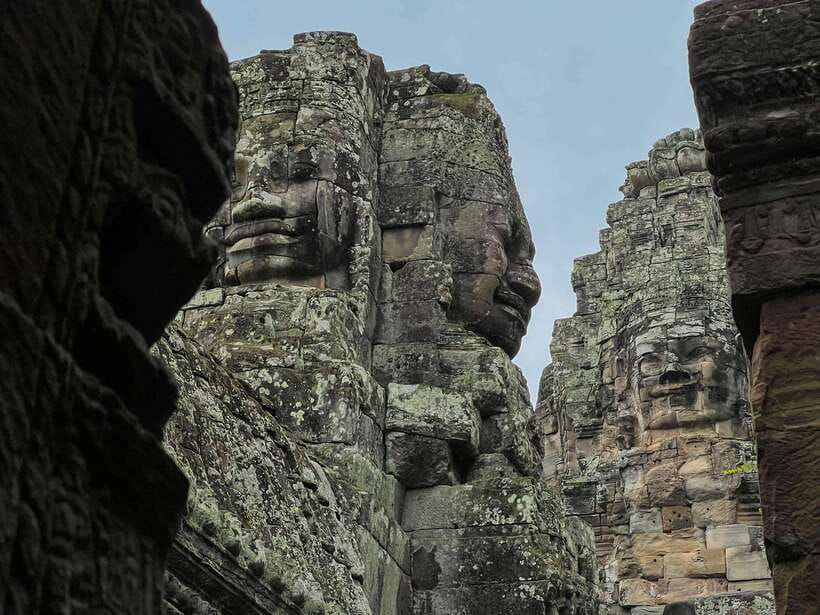
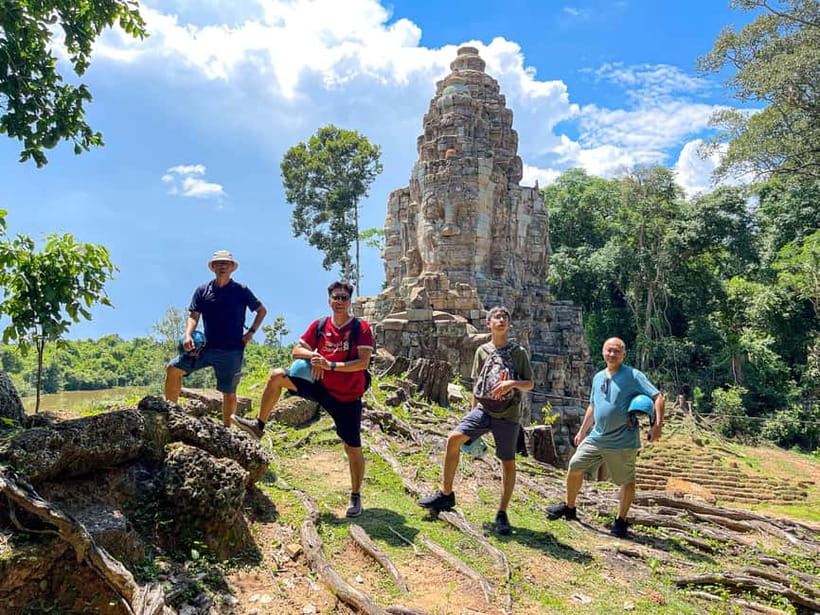
Bayon is the main event inside Angkor Thom. Its towers carry the serene faces often linked with Avalokitesvara, the bodhisattva of compassion. The tour description identifies 54 towers and 216 faces, though the number visible today can be discussed differently depending on how towers and surviving faces are counted.
You receive about an hour at Bayon, including guided explanation. This is where a good guide earns the fee. The faces look similar at first, but close viewing reveals different angles, levels, and expressions. Guides such as Sam, Kim, Jan, and Veasna are praised for making the stories easy to follow, while several guides are also appreciated for keeping the group engaged with humor.
Bayon can feel crowded, especially around the central towers. Stay close enough to hear the guide, but do not rush your photographs. If your guide offers a less crowded angle, take it. The best views are not always the first ones you see.
Baphuon and the royal viewing terraces
Baphuon follows Bayon with around 30 minutes for a guided walk and sightseeing. This temple mountain is more open and vertical in feel, so you should expect steps and uneven surfaces. The tour data does not give a detailed accessibility assessment, which means anyone with mobility concerns should ask the provider before booking.
The Terrace of the Elephants is a shorter visit of about 20 minutes. It served as a royal viewing platform and forms part of the ceremonial center of Angkor Thom. Look for the elephant carvings along the terrace wall, but also listen for the explanation of how the space worked during royal processions and public events.
The Terrace of the Leper King receives another 20 minutes. It is associated with the royal audience area, and its carved walls reward a close look. The visit is brief, so your guide will need to focus on the most important details rather than explain every carving.
These stops are valuable because they show Angkor Thom as a functioning royal city, not simply a collection of isolated temples. You see religious buildings, ceremonial routes, and spaces tied to kingship in one compact section of the morning.
How the day feels in a group of 14
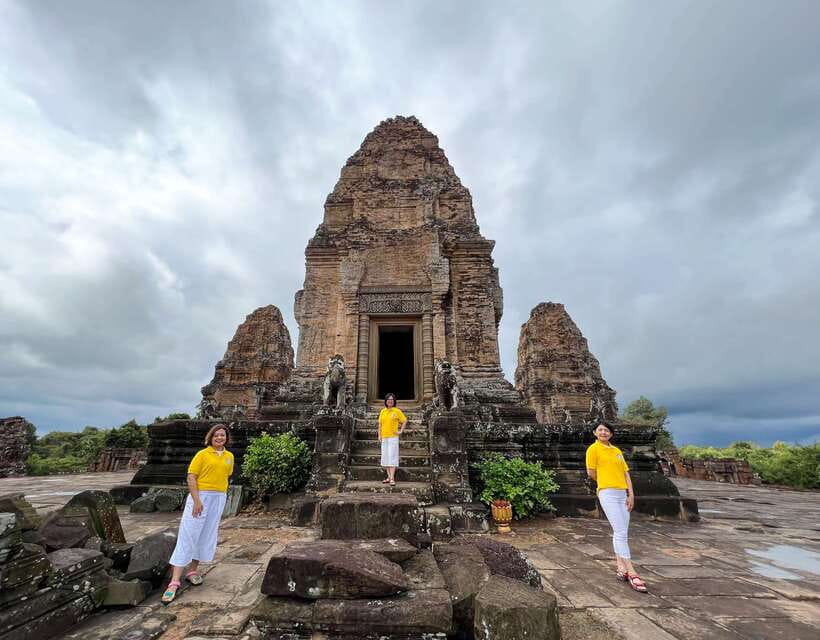
A maximum of 14 people is a sensible compromise. You get the lower cost of a shared tour without being placed in a huge crowd, and the guide can usually answer questions without losing control of the schedule.
Several guides are praised for clear English, humor, and personal attention. Seila is described as friendly and organized, Mony as both an effective guide and photographer, and Veasna as warm, attentive, and especially strong at explaining Cambodian history and culture. Individual guide assignments can change, so you should not book solely for one named person, but these examples show the level of service the operator aims for.
The driver and guide divide the work well. The guide explains the temples and helps with photographs, while the driver keeps the vehicle ready with air conditioning, water, and cool towels. That small service becomes more important as the humidity rises.
A private option costs more, but it may suit couples, families, or anyone who wants to adjust the pace. The shared version is better value if you are happy to follow the set route and meet other people.
The real cost and overall value
The advertised price is $19 per person. That covers hotel pickup and drop-off, air-conditioned transport, an English-speaking guide, breakfast, unlimited bottled water, and cool towels.
You must add the one-day Angkor pass, priced at $37 per person. This makes the practical total $56 before lunch and soft drinks. The pass is not optional, and you need to have it before the tour begins. Buying it online in advance is important because the group heads directly to Angkor Wat for sunrise.
At the full cost, this is still strong value if you want the major temples covered in one day without arranging transport, a guide, breakfast, and timing yourself. You are paying for convenience as much as admission. The tour also reduces the risk of missing sunrise because someone else handles the early pickup and route.
The price is less attractive if you already have a driver, know the temples well, or prefer to spend a full morning at only one or two sites. This schedule covers a lot, and that means you will not have unlimited time at any single temple.
What to pack and how to dress
The practical packing list is simple:
- Comfortable shoes for uneven paths and temple steps
- Insect repellent for the early morning and village stop
- Sunscreen and sunglasses
- A sun hat
- Camera or phone
- Extra cash for lunch and soft drinks
Your shoulders and knees must be covered. Short skirts, very short shorts, and sleeveless shirts are not suitable for the temple visits. Smoking, alcohol, and drugs are not allowed.
I would also bring a small personal towel, even though the driver supplies cool towels. The day moves from cool darkness to strong heat, and an extra layer can help during the pre-sunrise wait.
Children under 10 are not considered suitable for the small-group option. If you are traveling with younger children, ask about the private tour before booking rather than assuming the shared departure will work.
Should you book this Angkor Wat sunrise tour?
I would book it if you want to see the major Angkor highlights in one well-organized day, value clear English explanations, and do not want to arrange a driver before dawn. The combination of sunrise, a local breakfast, palm cake in Preah Dak, Ta Prohm, Bayon, Baphuon, and the royal terraces gives you more variety than a temple-only route.
I would skip it if you dislike early starts, need a slow pace, or want long quiet periods at each monument. Also budget honestly: the $37 temple pass and lunch are extra.
For most first-time visitors to Siem Reap, this is a very good introduction. Buy the pass early, dress properly, carry insect repellent, and accept that the day will be tiring. The cold water, cool towels, careful drivers, and strong guides make that long day much easier to enjoy.
FAQ
What time does hotel pickup take place?
Pickup is between 4:30 and 5:00 AM. You should wait in your hotel lobby 10 minutes before the scheduled time, and the driver will wait no longer than five minutes after pickup.
Is the Angkor temple pass included?
No. The one-day Angkor pass costs $37 per person and must be purchased before the tour starts. Online purchase is recommended so you can go directly to Angkor Wat for sunrise.
Is breakfast included?
Yes. Breakfast at a local family restaurant is included, and a vegetarian option is available. Lunch and soft drinks are not included.
How large is the small group?
The small-group tour is limited to 14 participants. A private tour is also available for a more flexible schedule.
What should I wear to the temples?
Your knees and shoulders must be covered. Comfortable shoes are recommended, along with sunscreen, sunglasses, a sun hat, and insect repellent.
Is the tour suitable for children under 10?
Children under 10 are not considered suitable for the small-group option. Ask the provider about the private option if you are traveling with younger children.
More Morning
- Angkor Wat Sunrise & 3 Main Temples with Breakfast – Small Group
★ 5.0 · 2,857 reviews - Siem Reap: Angkor Wat Sunrise and Full-Day Sightseeing Tour
★ 4.9 · 2,828 reviews - Angkor 2-Day Sunset & Sunrise Small-Group Tour
★ 5.0 · 2,567 reviews - Siem Reap: Angkor Wat Sunrise or Sunset Guided Tour
★ 4.9 · 2,123 reviews
Just added around Siem Reap
- Private Battambang Full-Day Guided Tour★ 4.5 · 3 reviews
- Kulen Mountain, Beng Mealea and Banteay Srei Full Day Tour★ 5.0 · 3 reviews
- Kompong Pluk Tour★ 5.0 · 3 reviews
- Private 3 Day Tour to Discover the ancient temples★ 5.0 · 3 reviews
- Kulen National Park Ticket -Waterfall & 1000 Lingas★ 5.0 · 3 reviews
- Cambodia: Absolute Traditional Dance Show with Buffet Dinner★ 5.0 · 3 reviews
- Border Transfer (Siem Reap to Laos/Laos to Siem Reap)★ 3.5 · 3 reviews
- Beng Melea, Rolous Group & Kompong Phluk Floating Village★ 5.0 · 3 reviews
Angkor Wat Sunrise Tours, compared.

Angkor Wat Sunrise or Sunset Tour with Guide from Siem Reap
Read our review →
Angkor Wat Sunrise tour with Small – Group and Guide tours
Read our review →
Full-Day Angkor Wat Sunrise Private Tour with Guide from Siem Reap
Read our review →
Angkor Wat Sunrise & 3 Main Temples with Breakfast – Small Group
Read our review →
Angkor Wat Sunrise and Full-Day Sightseeing Tour
Read our review →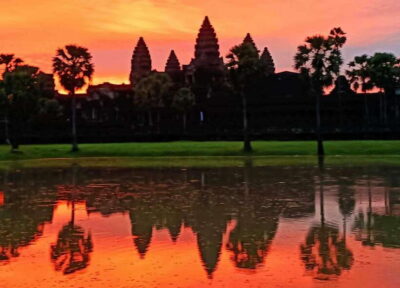
Siem Reap Tour: Angkor Wat Sunrise, Bayon, Ta Prohm, Banteay Srei
Read our review →
Angkor Wat Sunrise Explore The Most Iconic Temples
Read our review →Browse the lists this tour appears in