
Reviewed · ANGKOR WAT TOURS
Siem Reap: Angkor Wat Tour with Italian-Speaking Guide
Ancient stones tell better stories with context. This private Angkor tour pairs the great temples with an Italian-speaking local guide, making a large and sometimes confusing archaeological park easier to understand. You can choose a focused one-day visit or a slower two-day route that adds the Grand Circuit and Banteay Srei.
I especially like the guide’s role in finding quieter approaches and useful photo spots, rather than simply walking from one famous doorway to the next. I also like the small comforts: hotel pickup, private transport, cold water, and chilled towels after temple walks. The main drawback is cost. At $140 per group of up to two, you still need to add the Angkor ticket, lunch, and possibly the cost of upgrading from a tuk-tuk to a car.
The Italian-language service is the real reason to choose this experience. Guides such as Matteo, Caro, Chhoure, and Alex have been praised for clear explanations, humor, flexibility, and photo help. Language ability can vary by guide, so it is sensible to confirm who will lead your tour and how fluent their Italian is before you pay.
In This Review
- Key points to know before booking
- What the private format gives you at Angkor
- South Gate, Bayon, and Angkor Thom’s royal center
- Ta Prohm, where the trees share the ruins
- Lunch beside Srah Srang, with time to reset
- Angkor Wat, the final major stop
- Why the two-day option is worth serious thought
- Sunrise timing and the question of pace
- Price, included comforts, and the real total
- Clothing, shoes, and practical limits
- Who should book this Angkor tour?
- FAQ
- Is the Angkor entrance ticket included?
- How much does the private tour cost?
- Does the tour include hotel pickup?
- What language does the guide speak?
- What transport is used for one or two people?
- What transport is used for groups of three or more?
- Are children allowed to join?
- What does the one-day tour include?
- What extra sites are included on the two-day tour?
- What clothing should I wear?
Key points to know before booking
- Private access for up to two people: You get a personal tour rather than being folded into a large coach group.
- Two useful route choices: The one-day plan covers the main Angkor temples, while the two-day option adds Preah Khan, Neak Pean, Ta Som, East Mebon, Pre Rup, and Banteay Srei.
- Italian explanations make the temples easier to read: Your guide covers Khmer art, religion, architecture, and daily life in a language you understand comfortably.
- Tuk-tuk transport is part of the charm: One or two people generally travel by tuk-tuk on the first day, with a car used on Day 2 of the extended tour.
- Fresh towels are a small but welcome luxury: The driver offers cold water and chilled towels after temple visits, a thoughtful touch in Cambodia’s heat.
- Temple admission costs extra: The Angkor pass is $37 per person for one day or $62 per person for two to three days.
What the private format gives you at Angkor
Angkor Archaeological Park is not one temple. It is a huge collection of monuments spread around Siem Reap, with long drives between several of the major sites. A private guide helps turn that scale into a sensible day.
Your guide meets you in your hotel lobby at 8:30 AM, unless you select the early start option. You then go to the ticket booth together, or use an Angkor ticket purchased online in advance. The entrance pass is not included, so budget for it separately.
For one or two people, the standard vehicle is a tuk-tuk. That open-sided ride gives you moving air and a more local feel, although dust, heat, and rain are possible. A car can be selected at checkout for the one-day tour. Groups of three or more use an air-conditioned van or bus.
This arrangement suits couples, families, or friends who want to ask questions and adjust the pace. It is also useful if you want photographs. Several guides have been praised for taking pictures during the day, which saves you from relying on hurried selfies.
More Angkor Wat tours we have reviewed:
- Angkor Wat Sunrise or Sunset Tour with Guide from Siem Reap
★ 5.0 · 12,109 reviews - Siem Reap: Angkor Wat: Small-Group Sunrise or Sunset Tour
★ 5.0 · 9,444 reviews - Siem Reap: Angkor Wat 2-Day Tour with Sunrise and Sunset
★ 4.9 · 4,429 reviews
South Gate, Bayon, and Angkor Thom’s royal center
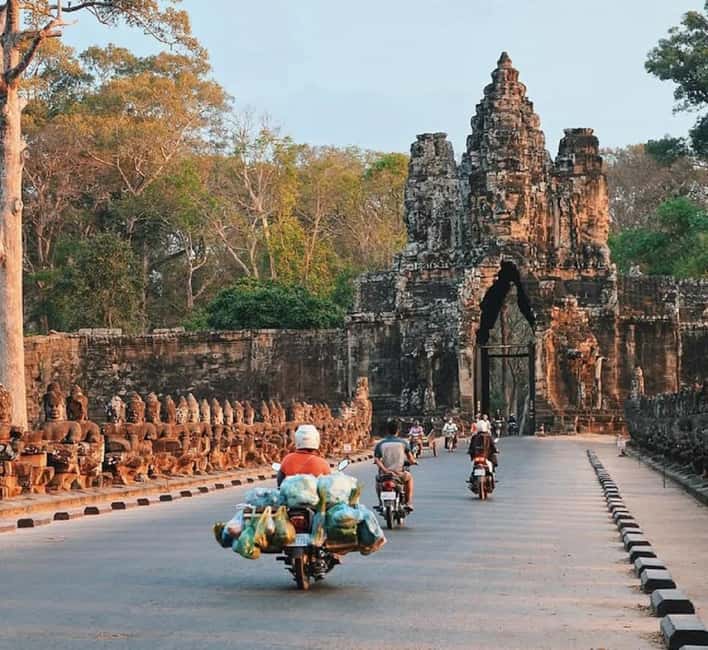
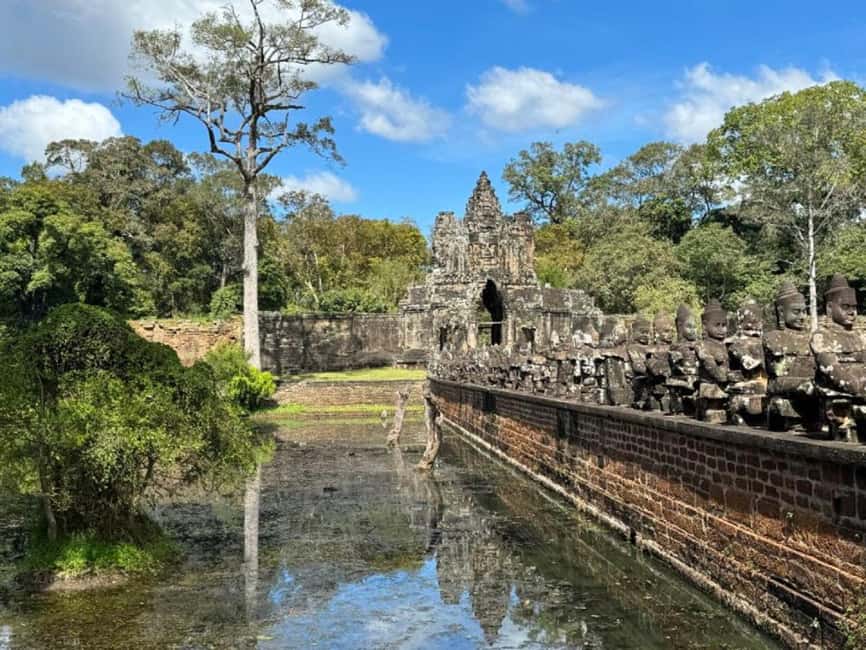
The South Gate of Angkor Thom is a strong opening. A bridge lined with figures leads toward the entrance, while the gate carries the famous large stone faces. Your guide can explain the religious imagery and the role of Angkor Thom as a major Khmer capital.
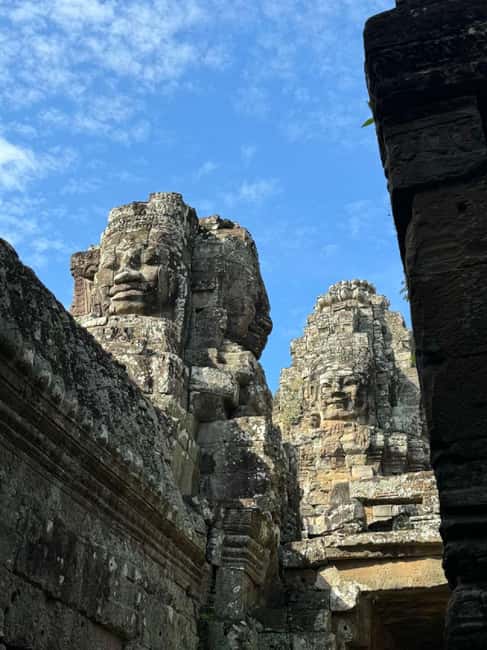
Inside, Bayon is the main attraction. Its towers carry serene faces that appear from different angles as you walk through the crowded, layered structure. This is not a temple you understand well from a quick photo stop. The corridors, carved scenes, and shifting views reward a slow circuit with explanations.
The route also includes Baphuon, a tall temple with a long raised walkway. It gives you a sense of the scale and ambition behind Angkor’s royal building projects. The stone steps and uneven surfaces make comfortable shoes important.
The Terrace of the Elephants and the Terrace of the Leper King are shorter stops, but they help explain how public and royal spaces worked. The elephant carvings are especially memorable. These visits are listed as guided stops and photo opportunities, so you should expect a mix of walking, explanation, and brief pauses rather than long temple explorations at every monument.
Ta Prohm, where the trees share the ruins
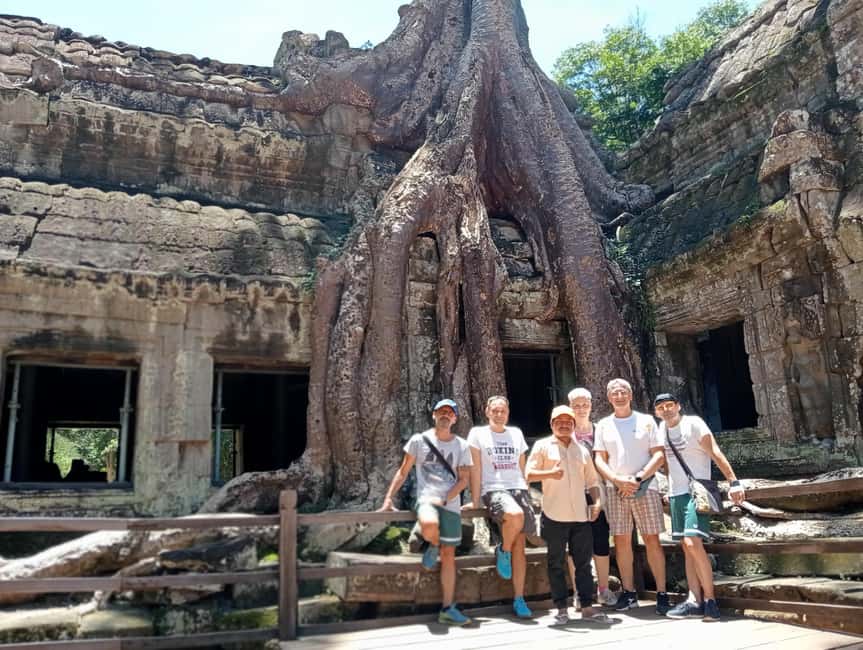
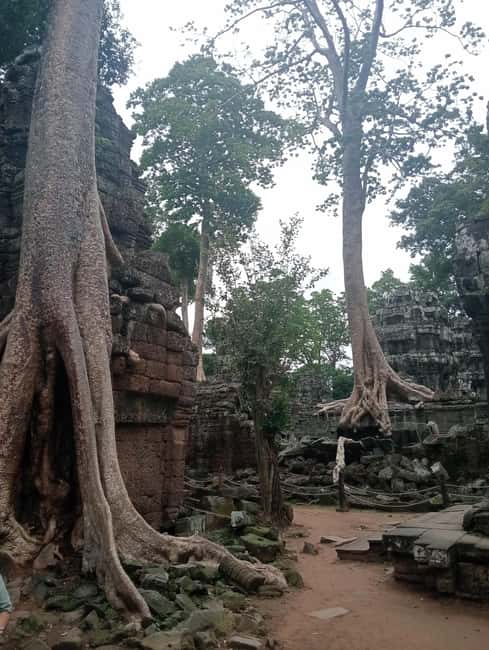
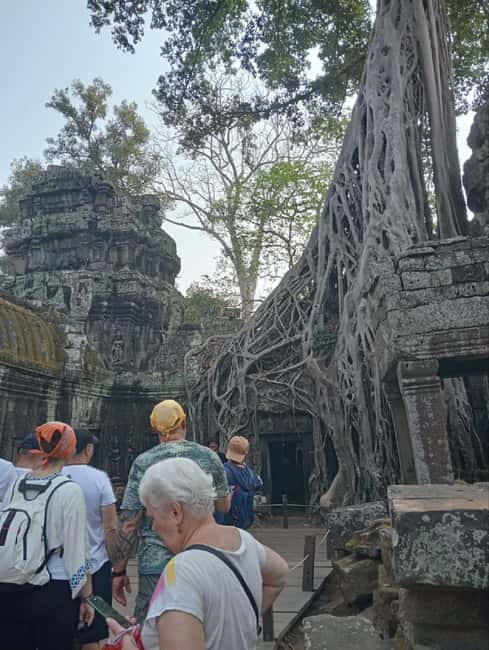
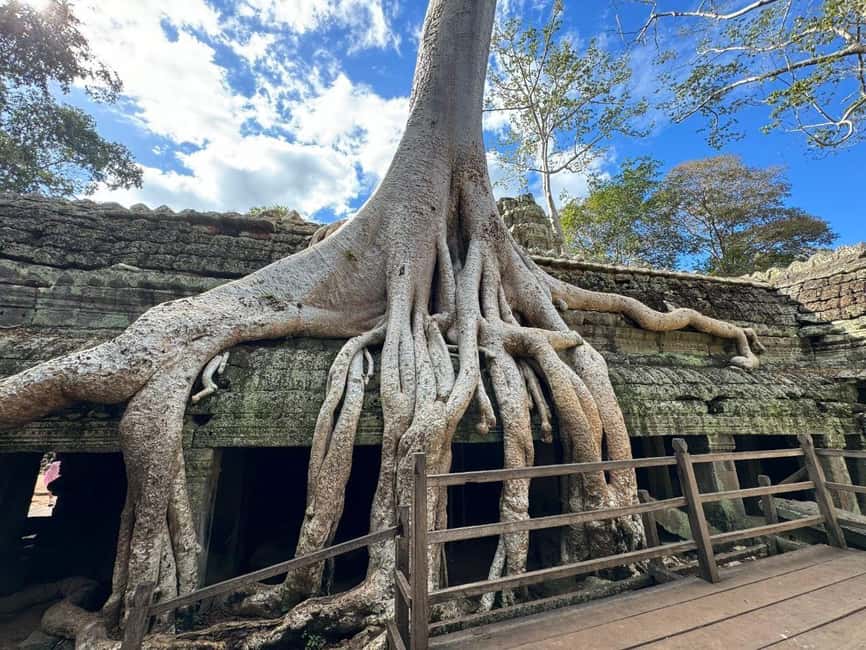
Ta Prohm is one of the most atmospheric stops on the one-day route. Huge roots spread over walls and doorways, creating the scene many people recognize from film and travel photography.
The trees are not simply decoration. They show the long tension between the forest and the stone buildings, and they make Ta Prohm feel different from the more open temples. Your guide can point out carvings and explain why the site was built and used.
Ta Prohm is also one of the places where crowd management matters. The guide may use a less obvious entrance or reverse the usual order to help you find better views with fewer people. That was a repeated strength of this service, though no guide can promise an empty temple.
The ground is uneven, and some doorways are narrow. If you have young children, the advice given by guide Karo is worth noting: some temples work better with a stroller, while others are easier with a baby carrier. The tour can be adapted for families, but ancient temple steps are still ancient temple steps.
Lunch beside Srah Srang, with time to reset
The planned lunch break is around Srah Srang, a large reservoir associated with Angkor’s royal center. Lunch is not included, so you pay directly at a nearby Cambodian restaurant.
This break matters more than it may appear on the schedule. Angkor days involve heat, stairs, walking, and repeated transitions between bright open courtyards and shaded corridors. A proper meal and a pause by the water can keep the afternoon from becoming a blur.
You may want to carry snacks as well, especially with children. Cold water is included, and the driver supplies cold towels during the visits. That towel service has been one of the most praised practical touches, particularly in hot and humid weather.
A few more trips worth weighing up
- From Siem Reap: Kampong Phluk Floating Village Tour by Boat
★ 4.9 · 6,979 reviews - Sunset tour of Kampong Phluk stilts home village on the Tonle Sap
★ 5.0 · 4,865 reviews - Siem Reap: Kampong Phluk Floating Village Tour with Boat
★ 4.9 · 3,843 reviews - Siem Reap: Full-Day Angkor Wat Guided Tour with Sunset
★ 4.9 · 3,803 reviews
Angkor Wat, the final major stop
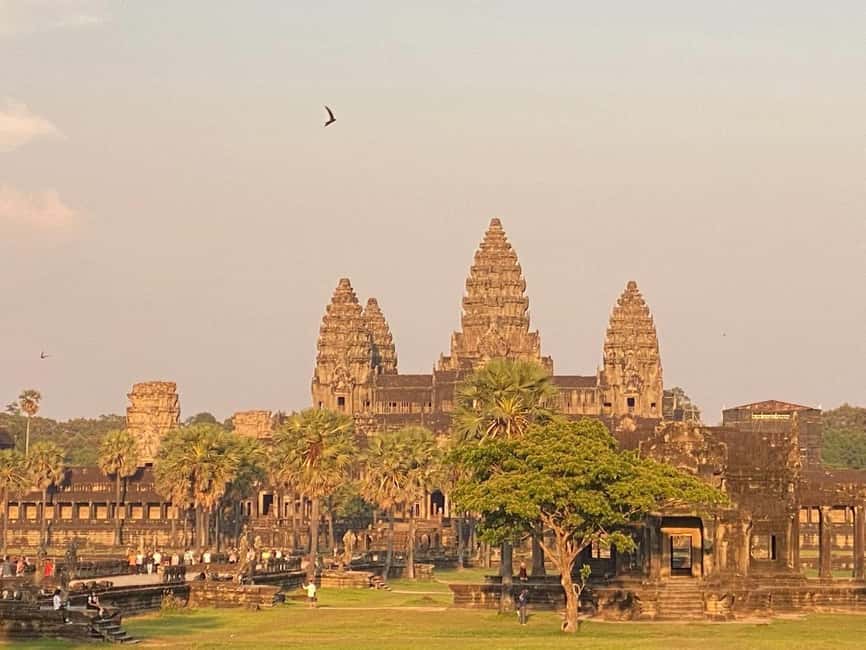
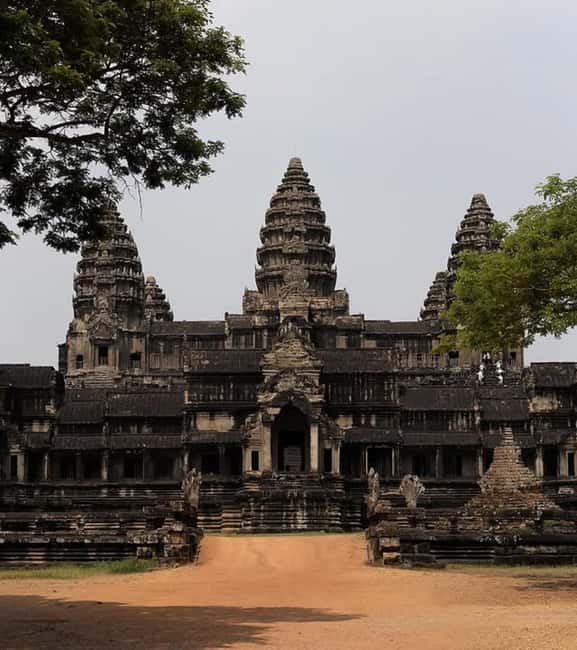
The afternoon visit to Angkor Wat lasts about two hours. Saving the park’s largest and most famous temple for later gives the day a clear climax, though some people may prefer visiting it early to avoid the heaviest crowds.
Angkor Wat is vast, carefully aligned, and filled with carved galleries. A guide is especially useful here because the monument’s meaning is not obvious from its towers alone. You can learn how the architecture expresses religious ideas, how the galleries tell stories, and how the temple fits into Khmer culture.
The central towers and long approach are impressive, but the details reward attention. Ask your guide to slow down at the bas-reliefs and explain what you are seeing. An Italian-speaking guide can make those explanations more natural than trying to absorb them through a written leaflet or an audio track.
The visit can be affected by rain. One recent itinerary finished earlier than expected after bad weather limited time outside Angkor Wat. Build some flexibility into your day rather than treating the listed end time as guaranteed.
The standard one-day tour finishes around 5:00 PM and returns you to your hotel. The detailed route includes Ta Prohm, Victory Gate, the Terraces, Baphuon, Bayon, Srah Srang, and Angkor Wat. That is a full day, not a gentle stroll.
Why the two-day option is worth serious thought
If you have two days in Siem Reap, I would give the extended option a close look. The second day spreads the famous sites over a more manageable schedule and adds several temples that show different sides of Angkor.
The Grand Circuit begins with Preah Khan, a broad monastic complex with long corridors, carved doorways, and a more enclosed feel than Angkor Wat. It is a rewarding place for travelers who prefer atmosphere and detail to one giant postcard view.
Neak Pean is smaller and quieter in design. The temple sits amid pools, creating a calm contrast after the large compounds at Angkor Thom and Angkor Wat. Ta Som is known for its tree-covered gate, a smaller-scale echo of Ta Prohm’s famous roots.
East Mebon once occupied an island in an ancient reservoir. Today, its elevated position helps you understand how water shaped the Khmer capital. Pre Rup is a mountain-style temple with broad views across the Cambodian countryside. Its upper levels require care, especially in hot weather.
The extended route ends at Banteay Srei, often called the Citadel of Women. Its pink sandstone carvings are unusually fine, with delicate detail that can be easier to appreciate after you have seen the larger monuments. Banteay Srei is farther from the central Angkor temples, so reaching it by private transport is much simpler than arranging each transfer yourself.
The two-day schedule finishes around 4:00 PM on the Grand Circuit day. One or two people use a tuk-tuk on Day 1 and a private car on Day 2. That change is practical because Banteay Srei involves more road time.
Sunrise timing and the question of pace
A sunrise option is available at checkout. It begins at 5:00 AM and finishes around noon. The early start is best for people who care strongly about dawn photography and cooler temperatures, but it demands an early night and does not suit everyone.
The two-day plan is the better choice if you want time to look carefully at carvings, ask questions, and take breaks. The one-day version gives you the essential sights, but it packs a lot into eight hours.
Guide Chhoure has been praised for keeping explanations clear and allowing enough time at each site. Guide Karo has been praised for adjusting the route for small children. Alex has received favorable comments for answering questions and speaking good Italian. Matteo has been singled out for humor, stories, and taking memorable photos.
These details point to an important booking tip: the quality of your day depends partly on the individual guide. Italian ability is advertised, but the level may differ. One Italian-speaking guide was described as good yet sometimes brief when answering questions, possibly because language made longer explanations harder.
Price, included comforts, and the real total
The listed price is $140 per private group of up to two people. That can be fair value if you want personal guidance and Italian explanations, especially compared with paying separate fees for transport, a driver, and a language-specific guide.
The Angkor entrance pass is extra. It costs $37 per adult for one day and $62 per adult for two or three days. Two adults therefore add $74 to a one-day visit or $124 to the two-day option, before lunch and any vehicle upgrade.
Children under 12 can join the tour free of charge and do not need an entrance ticket, but you must show a passport as proof of age. Adults aged 12 to 90 pay the standard price.
Included in the tour are hotel pickup and drop-off, the Italian-speaking guide, transport according to the selected option, transfers listed in the plan, cold water, and cold towels. Lunch, temple admission, and anything else not specifically named are your responsibility.
The high transport score makes sense given the cold towels and regular water service. Those touches do not change the temples, but they can change how you feel after walking through them in the heat.
Clothing, shoes, and practical limits
Dress for both heat and temple rules. You need clothing that covers your shoulders and knees. Short skirts, shorts, tank tops, sleeveless shirts, and other revealing clothing are not permitted.
A scarf may help cover your knees and shoulders at some temples, but the rules are stricter at Angkor Wat. The information provided states that pants or skirts covering the knees and shirts covering the shoulders are required there. Do not rely on a scarf alone if your outfit is otherwise too short.
Bring comfortable shoes, sunglasses, a sun hat, sunscreen, and insect repellent. The paths can be uneven, and the combination of sun, humidity, and stairways makes flimsy footwear a poor choice.
The experience is not suitable for wheelchair users because of the temple surfaces, steps, and access conditions. It is also not recommended for people over 95. Families can join, and the route has been adapted for toddlers, but parents should discuss stroller and baby-carrier needs with the guide.
Free cancellation is available up to 24 hours before the start, and you can reserve now and pay later. Pickup depends on the hotel information and contact number you provide at booking.
Who should book this Angkor tour?
I would choose this tour if you want Angkor explained in Italian, prefer private transport, or like the idea of having a guide take photos and adjust the route. It is also a strong fit for couples and families who do not want to manage temple tickets, drivers, and distances on their own.
The one-day plan suits a short Siem Reap stay and covers the essential monuments. Choose it only if you are comfortable with a full, active day.
The two-day plan is better for anyone who wants Banteay Srei and the Grand Circuit without rushing. It costs more once the longer entrance pass and meals are added, but the extra time gives you a more balanced look at Angkor.
I would skip it if you want complete independence, dislike guided explanations, or need wheelchair-friendly access. I would also confirm the guide’s Italian fluency if detailed historical discussion is the main reason you are booking.
With a 4.9 rating from 29 ratings and especially strong praise for guides, drivers, photography help, family flexibility, and fresh towels, this is a well-supported choice for Italian-speaking visitors. Book the one-day version for the essential circuit, or spend two days if Angkor is one of the main reasons you came to Cambodia.
FAQ
Is the Angkor entrance ticket included?
No. The ticket costs $37 per person for one day or $62 per person for two to three days.
How much does the private tour cost?
The listed price is $140 per private group of up to two people. Lunch, temple admission, and other items not named as included cost extra.
Does the tour include hotel pickup?
Yes. The guide meets you in your hotel lobby and returns you to your hotel after the tour. You need to provide the hotel name or address and a contact number when booking.
What language does the guide speak?
The live guide service is in Italian.
What transport is used for one or two people?
On the one-day tour, one or two people travel by tuk-tuk unless they select a car at checkout. On the two-day tour, they use a tuk-tuk on Day 1 and a private car on Day 2.
What transport is used for groups of three or more?
Groups of three or more use an air-conditioned van or bus.
Are children allowed to join?
Yes. Children under 12 can join free of charge. They also do not need an Angkor entrance ticket, but a passport must be shown as proof of age.
What does the one-day tour include?
The route includes Ta Prohm, Victory Gate, the Terrace of the Elephants, the Terrace of the Leper King, Baphuon, Bayon, Srah Srang, and Angkor Wat, with transport and an Italian-speaking guide.
What extra sites are included on the two-day tour?
The extended route adds Preah Khan, Neak Pean, Ta Som, East Mebon, Pre Rup, and Banteay Srei.
What clothing should I wear?
Wear comfortable clothing that covers your shoulders and knees. Short skirts, shorts, sleeveless shirts, tank tops, and other revealing clothing are not permitted. Bring comfortable shoes, sunglasses, a hat, sunscreen, and insect repellent.
Just added around Siem Reap
- Private Battambang Full-Day Guided Tour★ 4.5 · 3 reviews
- Kulen Mountain, Beng Mealea and Banteay Srei Full Day Tour★ 5.0 · 3 reviews
- Kompong Pluk Tour★ 5.0 · 3 reviews
- Private 3 Day Tour to Discover the ancient temples★ 5.0 · 3 reviews
- Kulen National Park Ticket -Waterfall & 1000 Lingas★ 5.0 · 3 reviews
- Cambodia: Absolute Traditional Dance Show with Buffet Dinner★ 5.0 · 3 reviews
- Border Transfer (Siem Reap to Laos/Laos to Siem Reap)★ 3.5 · 3 reviews
- Best Taxi Siem Reap to Battambang – English Speaking Driver★ 4.5 · 3 reviews
Angkor Wat Tours, compared.

Angkor Wat Sunrise or Sunset Tour with Guide from Siem Reap
Read our review →
Angkor Wat: Small-Group Sunrise or Sunset Tour
Read our review →
Angkor Wat 2-Day Tour with Sunrise and Sunset
Read our review →

Angkor Wat Sunrise tour with Small – Group and Guide tours
Read our review →
Angkor Wat Highlights and Sunrise Guided Tour from Siem Reap
Read our review →
Angkor Wat Sunset Small Group Tour with Lunch Included
Read our review →