Reviewed · MORNING
Siem Reap Morning Culinary & Culture Tour – (Vego also available)
Start your day with breakfast and a lesson in Cambodia. This three-hour tour combines local Khmer food with a guided walk through Siem Reap, beginning at a colorful market and continuing to a pagoda, a family-run street stall, and an up-market dining spot. I like the way food is used to explain culture, daily life, and current affairs, and I also like the small group size, capped at six people. The main consideration is simple: at $45 per person, this costs more than eating breakfast on your own.
The 9:00 am start suits early risers and leaves your afternoon free for temples or a relaxed pool break. You should arrive ready to eat several times, though, because this is not one quick breakfast with a few samples. It is a progressive morning meal, with short walks between stops and two surprise elements at the end.
In This Review
- Key points at a glance
- Meeting the tour at Made in Cambodia Market
- The local market and Cambodia’s first breakfast
- Street food, a pagoda walk, and a family-run stall
- The final breakfast beside locally grown produce
- Two surprises at the end
- What the $45 price really covers
- Vegetarian diners and food preferences
- Who will enjoy this morning most?
- Practical points before you book
- Should you book the Siem Reap morning food tour?
- FAQ
- How long does the Siem Reap Morning Culinary and Culture Tour last?
- What time does the tour begin?
- Where does the tour meet?
- Where does the tour finish?
- How many people can join the tour?
- Is a vegetarian option available?
- What is the price?
- Can I cancel for a full refund?
Key points at a glance
- Three breakfast stops in three hours: You will try Cambodian morning dishes in a market, at a mother-and-daughter street stall, and in an up-market setting.
- A 13th-century food tradition: The first breakfast dish connects to Cambodian history dating back to the 13th century.
- Food plus city orientation: The route includes street walks and a local pagoda, so you get more than a succession of plates.
- Very small group: A maximum of six people allows room for questions and a more personal pace.
- Vegetarian option available: The tour is listed as suitable for vegetarian diners, though you should make your preference clear when booking.
- Two surprises at the finish: The final part is kept secret, adding a playful close to the morning.
Meeting the tour at Made in Cambodia Market
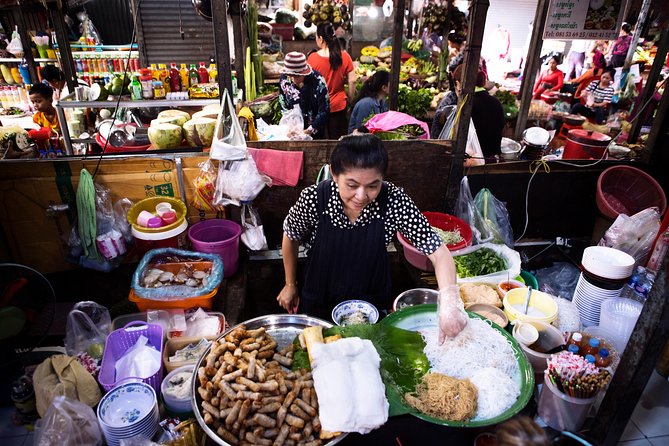
Your morning begins at the Sombai Liqueur Stall inside Made in Cambodia Market on Achar Sva Street. The meeting time is 9:00 am, and the activity returns to this same point at the end.
That arrangement is useful. You do not need to work out a second pickup point after breakfast, and you can plan the rest of your day from a known location in central Siem Reap. The tour includes a mobile ticket, so keeping the booking on your phone should be enough for entry and check-in.
The group limit of six is one of the strongest practical features. A food walk can become awkward when everyone is crowded around a vendor or trying to hear an explanation over street noise. With a small party, you should have a better chance to see what is being prepared, ask about ingredients, and stay together during the city walk.
The experience lasts about three hours. Since the tour starts at 9:00 am, you should avoid eating a large breakfast beforehand. This is a morning built around multiple dishes, not a quick coffee stop.
A few more trips worth weighing up
- Angkor Wat Sunrise or Sunset Tour with Guide from Siem Reap
★ 5.0 · 12,109 reviews - Siem Reap: Angkor Wat: Small-Group Sunrise or Sunset Tour
★ 5.0 · 9,444 reviews - Siem Reap: Angkor Wat 2-Day Tour with Sunrise and Sunset
★ 4.9 · 4,429 reviews
The local market and Cambodia’s first breakfast
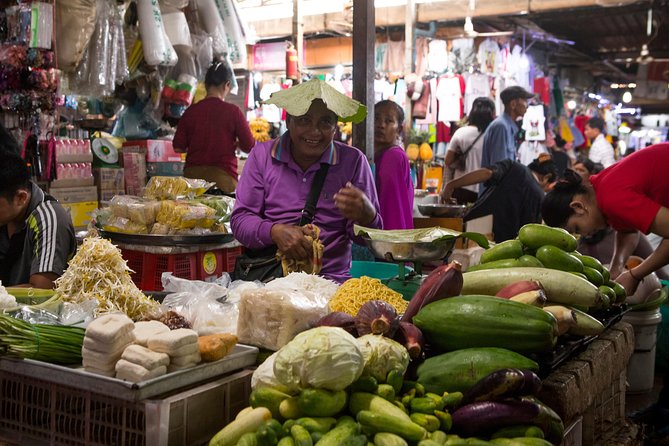
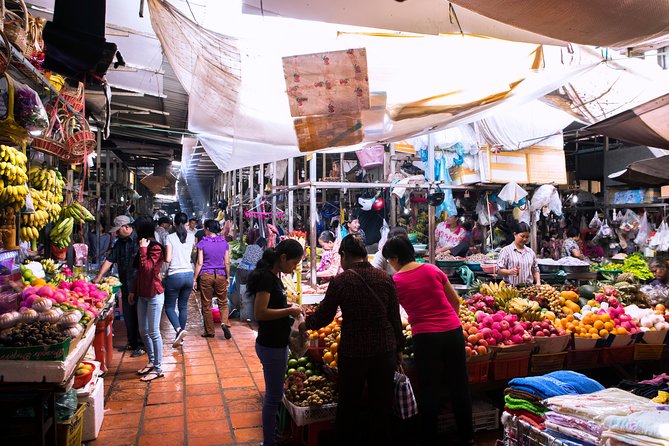
The first stop takes place in a colorful local market. This is where the tour sets its tone. Instead of beginning with a polished restaurant, you start among everyday ingredients and the visual noise of a working food market.
The guide explains Khmer cuisine and the ingredients used in it, with attention to a style of cooking that is often overlooked beside better-known food traditions in Southeast Asia. That context matters. You are not simply told what is on the plate. You get a look at the raw materials and the food culture around them.
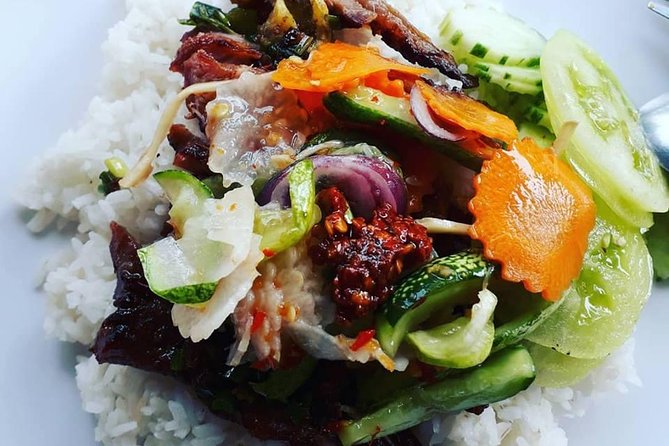
Your first Cambodian breakfast is a dish with roots reaching back to the 13th century. The specific name is not provided in the tour details, but the historical link gives the meal extra weight. It shows that breakfast traditions are not just convenient street food. They can carry old habits, local identity, and a sense of continuity.
I especially like this opening because it gives you a way to understand later dishes. Once you have seen the ingredients in their market setting, you can think about how they are combined and served. The market also helps you see the difference between food prepared for local daily life and meals designed mainly for international visitors.
There is one tradeoff. Markets are active places, and the experience may feel less orderly than a sit-down meal. If you need a quiet, highly controlled setting for breakfast, this first stop may not be your favorite. For most people, though, the market is the point. It brings you close to the food before you eat it.
Street food, a pagoda walk, and a family-run stall
After the market, the tour moves into the streets for a short city orientation. You also visit a local pagoda and forage for more snacks along the way.
The walking section gives your stomach a break, which is welcome on a food tour with three breakfast stops. It also keeps the experience from becoming a simple circuit of restaurants. You get a brief look at the city, a pagoda visit, and a sense of how food fits into ordinary streets and religious spaces.
The pagoda stop adds cultural context without taking over the morning. The tour is not presented as a full temple visit, and you should not expect a long architectural lecture or an extended religious tour. Instead, it works as a compact introduction to an important part of Cambodian life between food stops.
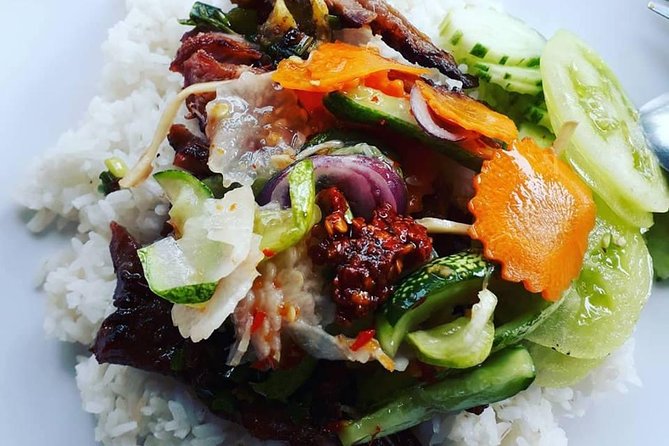
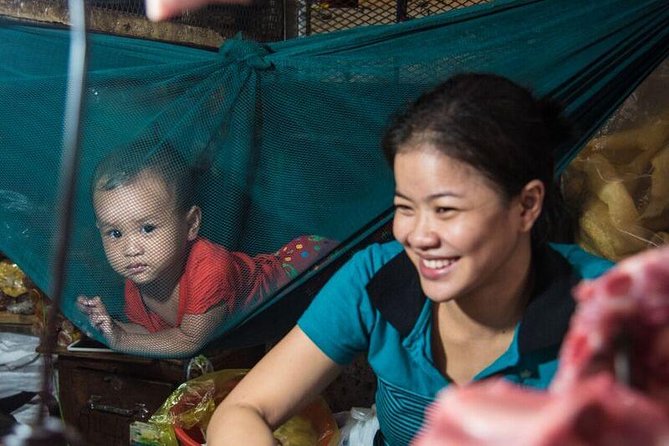
The next meal comes from a local family-run street stall operated by a mother and daughter. That detail is worth noticing. A small food business run across generations gives you a more personal connection to the dish and to the people serving it. The tour describes this food as one of Cambodia’s most famous breakfast choices, though the exact dish is not named in the available details.
You should expect the stall to feel more informal than the final dining stop. That is part of its appeal. The focus is on a familiar local breakfast, served in the setting where people actually buy and eat it. It also lets the guide compare food from a small street business with what you saw at the market.
I like this middle section because it places food in a human setting. The market introduces ingredients. The family stall introduces the people and daily routines behind a popular breakfast. The short walk in between helps the morning feel like a tour of Siem Reap rather than a row of tastings.
The final breakfast beside locally grown produce
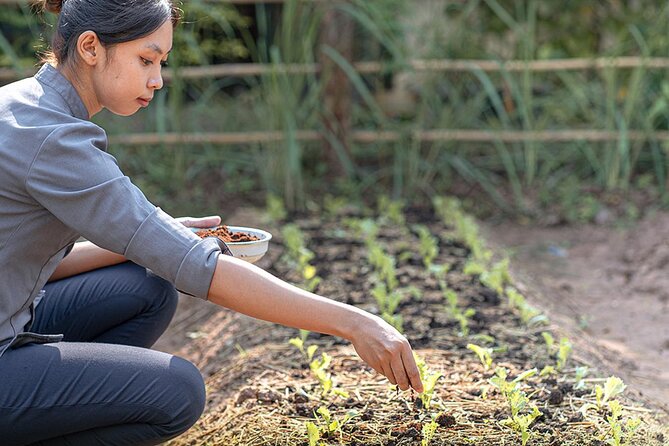
After another short walk, you settle in for the final breakfast at a distinctive up-market venue. The produce is grown next to the table, linking the meal to local agriculture and the future of Khmer cooking.
This stop changes the mood. You move from the market and street stall into a more polished environment, but the food remains connected to Cambodian ingredients. That contrast is useful because it shows how local cuisine can develop without losing its connection to the land and to familiar produce.
The phrase up-market should set your expectations. This is likely to feel more comfortable and refined than the earlier stops, but the tour details do not promise a particular restaurant style, menu, or view. You should think of it as the final setting in a three-part food story, not as a luxury dining experience.
The produce-growing element is the most distinctive idea in the itinerary. It gives the guide a chance to discuss where Cambodian cuisine may be headed and how locally grown food can shape modern dining. That link to current affairs is unusual for a short breakfast tour. You are not only learning what people eat, but also how food businesses and local producers may influence the country’s food culture.
By this point, you will have eaten enough to understand why the tour recommends arriving hungry. The walking breaks help, but you should still expect a substantial morning rather than tiny decorative samples.
A completely different kind of day out from Siem Reap:
- From Siem Reap: Kampong Phluk Floating Village Tour by Boat
★ 4.9 · 6,979 reviews - Sunset tour of Kampong Phluk stilts home village on the Tonle Sap
★ 5.0 · 4,865 reviews - Siem Reap: Kampong Phluk Floating Village Tour with Boat
★ 4.9 · 3,843 reviews - Siem Reap: Full-Day Angkor Wat Guided Tour with Sunset
★ 4.9 · 3,803 reviews
Two surprises at the end
The tour finishes with two surprise elements. No details are given, so the mystery is best left intact.
That secrecy adds a bit of fun, especially after a morning that is otherwise clearly planned around markets, street food, a pagoda, and a final dining venue. Just keep your expectations sensible. A surprise does not necessarily mean a major attraction or a large extra meal. It may be a small final gesture, activity, or taste, but you will need to take the tour to find out.
The surprises also give the experience a memorable ending. Food tours can blur together when the final stop is simply another plate. A secret finish gives the morning a clear final note.
What the $45 price really covers
At $45 per person, this tour is not the cheapest way to eat breakfast in Siem Reap. You can certainly find individual dishes for much less if you explore on your own.
The value comes from the structure and interpretation. Your fee covers several food stops, a market introduction, a city orientation walk, a pagoda visit, a family-run stall, and a final meal in a more polished setting. It also gives you a guide who connects those pieces to Khmer culture, history, and current affairs.
The group limit strengthens the value. A private tour would cost more, but a six-person maximum offers some of the advantages of personal attention without putting the price at a private-tour level. If you want to ask about ingredients, cooking traditions, or local life, a small group should make that easier.
The price makes the most sense for you if you value explanation as much as food. If your main goal is simply to eat a cheap breakfast, book a table or explore a market independently. If you want a guided introduction to Khmer cuisine and the city, the cost is easier to justify.
The 100 percent recommendation rate and five-star rating indicate very strong satisfaction, though the sample is small, with 19 ratings. I would treat that as encouraging rather than as a guarantee that every dish or walking segment will suit every palate.
Vegetarian diners and food preferences

A vegetarian version is available, which makes the tour more flexible than many food walks built around meat-based street dishes. The supplied information does not explain the exact vegetarian menu or how closely it matches the standard route.
If you do not eat meat, make that clear at booking and again at the start. The tour includes several eating points, so confirming your needs early is sensible. The same advice applies to allergies or other dietary restrictions, since no detailed ingredient list is provided.
The tour description calls the experience suitable for most people, but it does not give a precise walking distance or explain every surface along the route. You should be comfortable with a short city walk and several stops for food. Service animals are allowed, and the meeting point is near public transportation.
Who will enjoy this morning most?
I would recommend this experience to first-time visitors who want a quick introduction to Siem Reap beyond the temple circuit. The food gives you a direct way into Cambodian daily life, while the pagoda and street orientation add useful local context.
It also suits you if you prefer small groups. A six-person maximum is a good fit for solo visitors, couples, and families who want a more conversational tour without committing to a private booking.
Food-curious visitors will get the most from it. You should enjoy trying dishes that may be unfamiliar and listening to explanations about ingredients and traditions. The tour is less suitable if you want a long, formal temple visit, a late breakfast, or a single leisurely restaurant meal.
The 9:00 am start is helpful for a busy Siem Reap schedule. You finish around noon, leaving the rest of the day for Angkor sites, shopping, a massage, or a quiet afternoon. It is also a smart first-day activity because it can give you an early feel for local food before you choose other meals in town.
Practical points before you book
Confirmation arrives when you book, and the activity uses a mobile ticket. The tour begins and ends at the Sombai Liqueur Stall at Made in Cambodia Market, so check the address carefully before setting out.
Most people can participate, and service animals are allowed. The group has a maximum of six, which is worth checking if you prefer a personal setting.
Free cancellation is available until 24 hours before the 9:00 am start time. Canceling or changing the booking inside that window does not qualify for a refund. The experience also depends on good weather and a minimum number of participants. If poor weather or low enrollment cancels the tour, you will be offered another date or experience, or a full refund.
Should you book the Siem Reap morning food tour?
Book it if you want food with context, not just a list of dishes. The market, pagoda walk, mother-and-daughter street stall, and locally grown produce create a well-shaped morning that links breakfast to Khmer culture and modern Cambodia.
Skip it if you are looking for the lowest-cost meal, a long temple tour, or a quiet restaurant breakfast. At $45, the price pays for guidance, several settings, and a small group rather than food alone.
For most first-time visitors with an open appetite, this is a smart use of three hours. Arrive hungry, wear comfortable walking shoes, and leave room for the two final surprises.
FAQ
How long does the Siem Reap Morning Culinary and Culture Tour last?
The tour lasts approximately three hours.
What time does the tour begin?
It starts at 9:00 am.
Where does the tour meet?
The meeting point is the Sombai Liqueur Stall at Made in Cambodia Market, on Achar Sva Street in Siem Reap.
Where does the tour finish?
The activity ends back at the original meeting point.
How many people can join the tour?
The tour has a maximum of six participants.
Is a vegetarian option available?
Yes. A vegetarian version is available.
What is the price?
The listed price is $45 per person.
Can I cancel for a full refund?
Yes. You can cancel at least 24 hours before the experience start time for a full refund. Cancellations or changes made less than 24 hours before the start are not refunded.
Just added around Siem Reap
- Private Battambang Full-Day Guided Tour★ 4.5 · 3 reviews
- Kulen Mountain, Beng Mealea and Banteay Srei Full Day Tour★ 5.0 · 3 reviews
- Kompong Pluk Tour★ 5.0 · 3 reviews
- Private 3 Day Tour to Discover the ancient temples★ 5.0 · 3 reviews
- Cambodia: Absolute Traditional Dance Show with Buffet Dinner★ 5.0 · 3 reviews
- Kulen National Park Ticket -Waterfall & 1000 Lingas★ 5.0 · 3 reviews
- Border Transfer (Siem Reap to Laos/Laos to Siem Reap)★ 3.5 · 3 reviews
- Beng Melea, Rolous Group & Kompong Phluk Floating Village★ 5.0 · 3 reviews
Morning, compared.

Angkor Wat Sunrise or Sunset Tour with Guide from Siem Reap
Read our review →
Angkor Wat: Small-Group Sunrise or Sunset Tour
Read our review →
Angkor Wat 2-Day Tour with Sunrise and Sunset
Read our review →
Angkor Wat Sunrise tour with Small – Group and Guide tours
Read our review →
Angkor Wat Highlights and Sunrise Guided Tour from Siem Reap
Read our review →
Full-Day Angkor Wat Sunrise Private Tour with Guide from Siem Reap
Read our review →
Angkor Wat Sunrise & 3 Main Temples with Breakfast – Small Group
Read our review →