
Reviewed · ANGKOR WAT TOURS
Sunrise Small Group Tour to Angkor Wat Temple
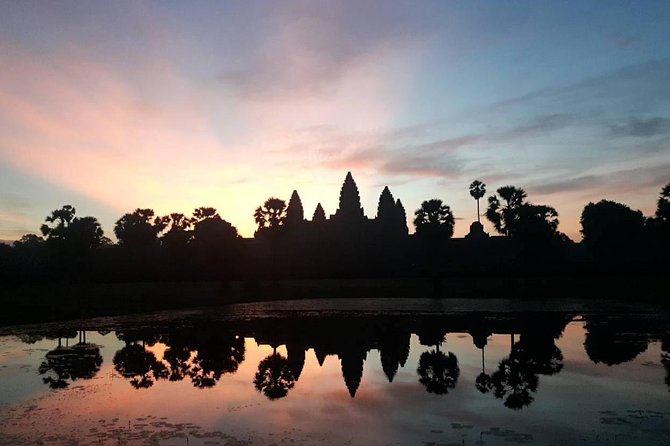
Angkor Wat at sunrise rewards an early start. This six to seven-hour outing combines the park’s three essential temples: Angkor Wat, Bayon, and Ta Prohm. I like the way the route pairs the famous sunrise with useful historical guidance, and I like the comfort of an air-conditioned vehicle, cold towels, drinking water, and hotel pickup.
The main catch is the extra cost: the tour is $33 per person, but the Angkor temple pass costs another $37. You also need to cover your knees and shoulders, walk for several hours, and accept that the monk blessing offered at Angkor Wat or Bayon depends on availability.
In This Review
- Key points to know before booking
- Why a sunrise start works at Angkor Wat
- Angkor Thom’s South Gate and the route beyond
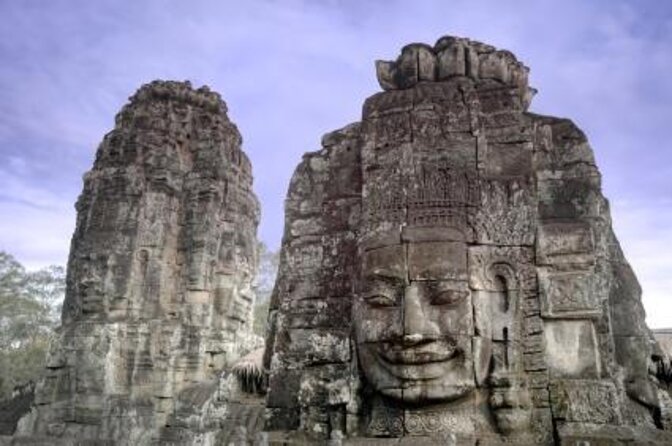
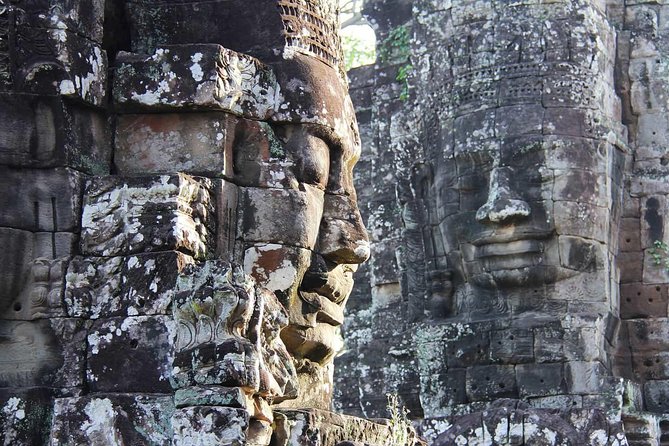
- Bayon Temple and its famous stone faces
- Ta Prohm, where trees take over the temple
- What the guide adds to the experience
- Air-conditioned transport and small-group comfort
- The real price and overall value
- Who will enjoy this Angkor Wat tour most
- Should you book the Sunrise Small Group Tour?
- FAQ
- How much does the Sunrise Small Group Tour to Angkor Wat cost?
- How long does the tour last?
- Which temples and sites are included?
- Is hotel transportation included?
- How large is the tour group?
- Is a monk blessing guaranteed?
- What should I wear and bring?
Key points to know before booking
- Sunrise comes first: You begin at Angkor Wat, the symbol shown on Cambodia’s flag, before visiting the other major temples.
- Three essential temples in one morning: The route includes Angkor Wat, Bayon, and Ta Prohm, plus Angkor Thom’s South Gate and the Elephant Terrace.
- A guide can make the difference: Guides such as Thom and Sun are praised for clear explanations, humor, patience, photography help, and care for the group.
- Transport adds real value: Hotel pickup, an air-conditioned vehicle, cold towels, and drinking water matter in Siem Reap’s heat.
- Budget around $70 before tips: The $33 tour price does not include the required $37 temple ticket or recommended tips for the guide and driver.
- Small, but not necessarily private: The maximum group size is 15 people, so you get more support than on a large coach tour, though the vehicle may still include other people.
Why a sunrise start works at Angkor Wat
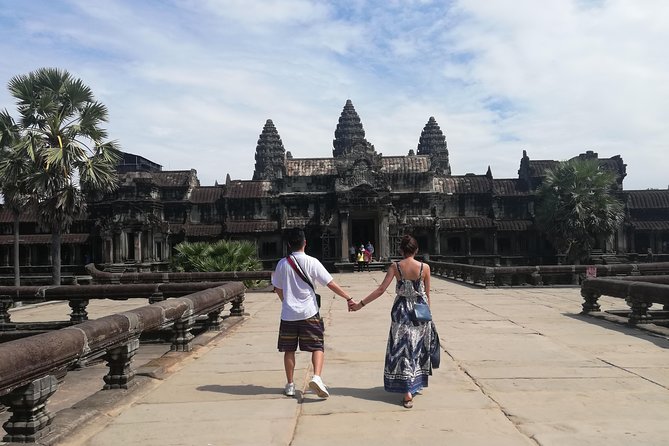
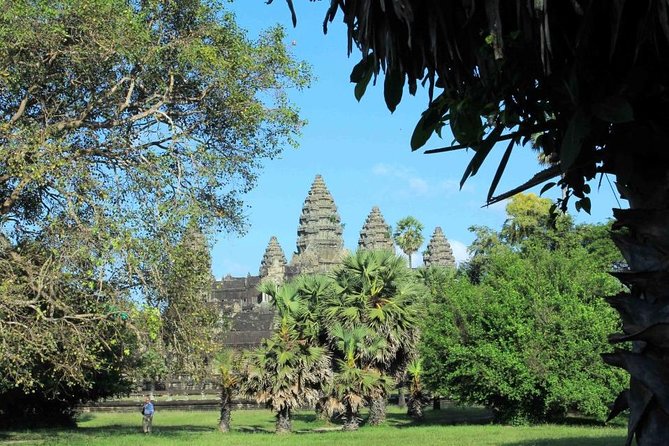
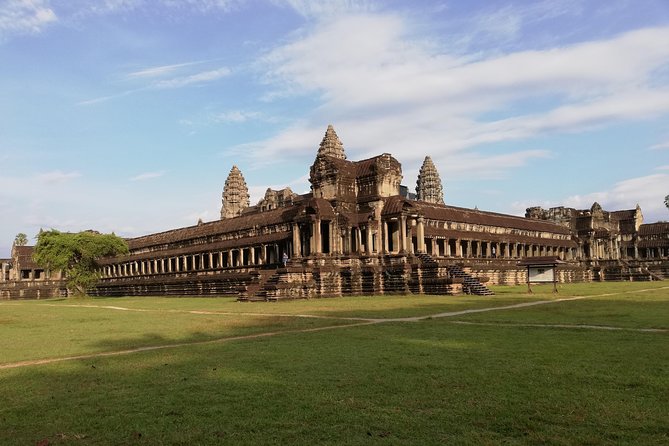
Angkor Wat is the emotional centerpiece of the morning. You see it from outside, then enter with a local English-speaking guide who explains its history and purpose rather than leaving you to wander past carved stone without context.
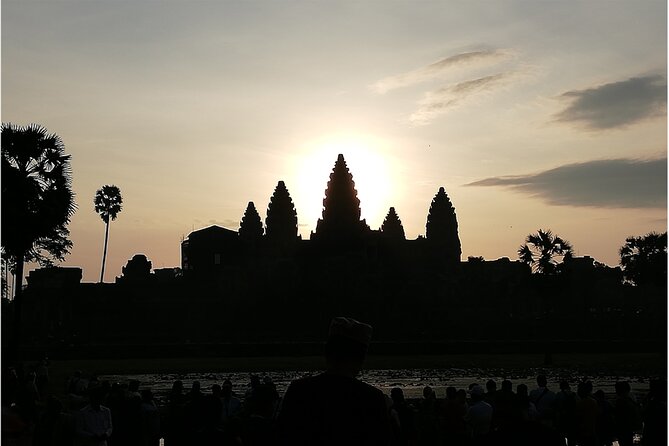
The early timing is useful for more than photographs. The light can give the temple a softer appearance, and beginning before the heat builds makes the long walking portions easier. You should still expect an early pickup and a full morning on your feet, but the schedule uses the coolest part of the day for the biggest site.
The sunrise itself is not guaranteed to be dramatic. Clouds and weather decide that. The worthwhile part is the chance to be at Angkor Wat at first light, then continue inside while you still have energy.
Angkor Wat is also more than a picture on Cambodia’s flag. Its scale and design make more sense when a guide points out what you are seeing and places the temple within Cambodia’s past. Thom receives especially strong praise for making the history easy to follow, adding humor, answering questions, and helping with photographs.
One practical point: the description says the temple will be seen from outside and inside, but it does not promise a particular sunrise viewing spot or exact time. Your pickup time will also depend on your hotel and the day’s arrangements. Confirm those details after booking.
More Angkor Wat tours we have reviewed:
- Angkor Wat Sunrise or Sunset Tour with Guide from Siem Reap
★ 5.0 · 12,109 reviews - Siem Reap: Angkor Wat: Small-Group Sunrise or Sunset Tour
★ 5.0 · 9,444 reviews - Siem Reap: Angkor Wat 2-Day Tour with Sunrise and Sunset
★ 4.9 · 4,429 reviews
Angkor Thom’s South Gate and the route beyond
After Angkor Wat, the route moves toward Angkor Thom City. The South Gate is an important part of the approach, and it gives you a sense that Angkor was not simply one isolated temple. It was a major urban center with ceremonial entrances and a much broader plan.
The South Gate is included in the overall tour description, although the listed stop times focus on Angkor Wat, Ta Prohm, and Bayon. That means you should think of it as a short but worthwhile part of the route rather than a separate long visit.
The Elephant Terrace is also named as part of the day. It adds another piece to Angkor Thom’s story and helps connect the grand temples with the city’s public and ceremonial spaces. Since no separate duration is given, your guide will determine how long the group pauses there.
This is one reason a local guide helps. You are not only checking off famous buildings. You are moving through a connected area, and a guide can explain how the gates, terraces, city, and temples relate to one another.
Bayon Temple and its famous stone faces
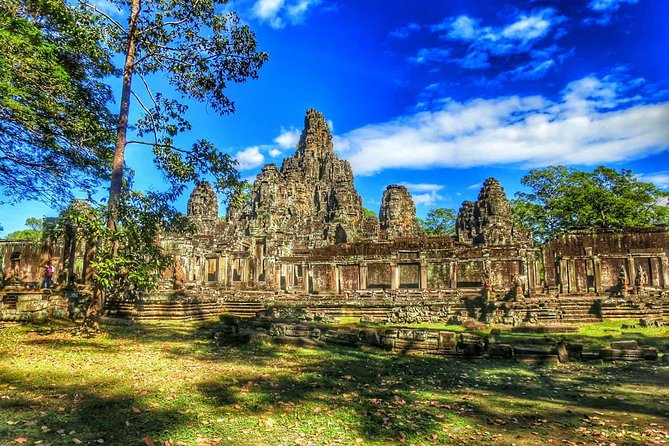
Bayon is a strong second major stop. Its most recognizable feature is the collection of enormous carved faces, which appear in different directions from the temple’s towers. You visit from outside and inside, with about one hour allotted to the site.
That hour gives you time to look closely, but it is not an unlimited exploration. Bayon can feel confusing because of its compact layout and many galleries. A guide is especially helpful here, since you can easily miss important carvings or spend too long trying to find the best angle for a photograph.
Thom is repeatedly praised for his ability to explain individual temples and Cambodia’s past in a way that remains entertaining. Sun is also described as a warm and well-informed guide who helped make the sites memorable. Guide quality can vary by departure, so the experience may depend on who is assigned to your group.
The tour may also offer a monk blessing at Bayon or Angkor Wat. This is not guaranteed. It depends on whether monks are available, so treat it as a possible addition rather than a promised part of the program.
You should approach a blessing respectfully. Keep your shoulders and knees covered inside the temples, follow your guide’s instructions, and avoid treating the ceremony as a quick photo opportunity.
Ta Prohm, where trees take over the temple
Ta Prohm is allotted about one hour and provides the sharpest visual contrast with Angkor Wat and Bayon. It is known as the tree temple because large roots grow over and around parts of the stone structure.
The effect is striking, but Ta Prohm is not simply a jungle backdrop. The damaged walls, corridors, and tree roots show how nature and time have shaped the site. The guide’s historical explanation helps you see more than the most photographed doorway.
Ta Prohm is also known as the Tomb Raider temple. That nickname attracts plenty of attention, but the site is worth visiting even if you have never seen the film. The roots, galleries, and enclosed spaces give the temple a different mood from the open scale of Angkor Wat.
One hour is enough for a focused visit, especially after you have already spent time walking at Angkor Wat and Bayon. It may feel short if you want to photograph every corner. I would prioritize the areas your guide recommends, then use any spare minutes for your own pictures.
Comfortable shoes are important throughout the morning. The itinerary involves temple grounds, gates, terraces, and interior areas, so sandals that offer poor support may become uncomfortable before the final stop.
A few more trips worth weighing up
- Angkor Wat Sunrise tour with Small – Group and Guide tours
★ 5.0 · 3,655 reviews - Angkor Wat Highlights and Sunrise Guided Tour from Siem Reap
★ 5.0 · 3,213 reviews - Full-Day Angkor Wat Sunrise Private Tour with Guide from Siem Reap
★ 5.0 · 2,920 reviews - Angkor Wat Sunrise & 3 Main Temples with Breakfast – Small Group
★ 5.0 · 2,857 reviews
What the guide adds to the experience
The strongest feature of this tour is the guide service. Thom receives particularly warm praise for being funny, patient, attentive, and good at explaining both individual carvings and the wider story of Cambodia. He is also praised as a photographer who knows useful photo locations, coffee stops, and clean bathrooms in the park.
Those small practical touches matter. Angkor is a large site, and knowing where to pause, refresh yourself, or take a better picture can make the morning less tiring. They also help you use the limited time at each temple.
Sun is another named guide praised for his information and pleasant manner. Other departures may use a different guide, and the tour promises a local English-speaking guide rather than a specific person. If Thom is important to you, ask the operator if a particular guide can be requested, but do not assume that request can be guaranteed.
The guide’s role is especially valuable at sunrise. In the dim early light, you may not want to stop and read long explanations on your own. A good guide can provide the key points while you keep moving with the group.
The available feedback is uniformly strong, with a five-star rating from 20 reviews and 100 percent recommendation shown in the supplied information. That is a small sample, but the praise is consistent: good guides, clear explanations, humor, patience, useful photography help, and care for the group.
Air-conditioned transport and small-group comfort
Hotel pickup and drop-off are included, along with an air-conditioned vehicle, drinking water, and cold towels. In Siem Reap, those are not decorative extras. After walking through exposed temple grounds, a cold towel and a cool ride can make the next stop much more pleasant.
The maximum group size is 15 people. That is small enough for a guide to answer questions and keep an eye on the group, but it is not the same as having a private guide and vehicle. Several comments describe private-feeling outings, yet the advertised format remains a small-group tour.
Transport is described as an air-conditioned vehicle, while one experience is described as having been by tuk-tuk. The exact vehicle may vary. If air conditioning is essential to you, confirm the transport type before departure rather than relying on a particular review.
A vehicle also saves time and energy between sites. Angkor’s temples are spread across a large area, and walking from one major stop to the next would not suit a compact six-to-seven-hour schedule.
The real price and overall value
The headline price is $33 per person. The required temple admission adds $37, bringing the known total to $70 before tips. Tips for the guide and driver are recommended but not included, so budget a little more if you want to follow that advice.
At $70 before tips, the tour is not the cheapest way to see Angkor Wat. Yet the value is reasonable if you want transport, a local English-speaking guide, a planned route, water, cold towels, and a small group. Hiring transport separately may look cheaper at first, but you would still need to arrange a guide or learn the sites yourself.
The route also covers the three temples most people hope to see on a first visit. Angkor Wat gives you the iconic beginning, Bayon supplies the famous faces, and Ta Prohm provides the root-covered ruins. The South Gate and Elephant Terrace add context without turning the morning into a long list of minor stops.
The limitation is that admission is not bundled. You should understand that when comparing prices with other tours. The tour also does not list meals, breakfast, or personal expenses as included, so do not expect food to be part of the package.
The company says 50 percent of profits support education for underprivileged students. That gives the purchase a social benefit, though you should view it as an added reason to choose the operator rather than a substitute for judging the tour’s actual services.
Who will enjoy this Angkor Wat tour most
I would recommend this outing to a first-time visitor who wants the main temples explained without arranging several separate bookings. It also suits anyone who prefers a guide who can manage transport, timing, photographs, and practical stops.
It is a good fit if you have limited time in Siem Reap. Six to seven hours covers the highlights without requiring a full day at the park. Couples, families with older children, and small groups of friends may appreciate the balance between structure and free time.
You should think twice if you dislike early starts, walking, or group schedules. The tour visits three major temple areas, and the total duration is long enough to be tiring. It may also disappoint you if you want slow, solitary photography or a private itinerary with complete control over each stop.
Dress for temple access from the start. Your knees and shoulders must be covered when entering the temples, and comfortable walking shoes are recommended. Leave valuables at your accommodation if possible, since the operator advises against bringing them.
Free cancellation is available if you cancel at least 24 hours before the local start time. Cancellations or changes made within 24 hours are not accepted for a refund.
Should you book the Sunrise Small Group Tour?
Book it if you want a well-organized first look at Angkor’s essential temples, especially with transport and a guide included. The strongest reason to choose it is the guide service, with Thom receiving exceptional praise for history, humor, patience, photography, and practical help.
The $33 price is appealing only when you remember to add the $37 temple ticket and possible tips. Even at roughly $70 before gratuity, I think the package offers fair value for a six-to-seven-hour outing, provided you are happy with a shared group and a brisk schedule.
Ask about pickup time, vehicle type, and guide assignment before you go. If you want a private visit, more time at each temple, or a slower photographic morning, look for a private tour instead. If you want the classic Angkor Wat sunrise route with the key temples handled efficiently, this is a sensible choice.
FAQ
How much does the Sunrise Small Group Tour to Angkor Wat cost?
The tour costs $33 per person. The Angkor temple admission ticket costs an additional $37 per person.
How long does the tour last?
The experience lasts approximately six to seven hours.
Which temples and sites are included?
The route includes Angkor Wat, Angkor Thom’s South Gate, Bayon Temple, the Elephant Terrace, and Ta Prohm Temple.
Is hotel transportation included?
Yes. Hotel pickup and drop-off are included, along with an air-conditioned vehicle, drinking water, and cold towels.
How large is the tour group?
The maximum group size is 15 people.
Is a monk blessing guaranteed?
No. A monk blessing may be available at Angkor Wat or Bayon, depending on whether monks are available that day.
What should I wear and bring?
You should wear comfortable walking shoes and cover your knees and shoulders when entering the temples. The operator advises you not to bring valuables.
Just added around Siem Reap
- Private Battambang Full-Day Guided Tour★ 4.5 · 3 reviews
- Kulen Mountain, Beng Mealea and Banteay Srei Full Day Tour★ 5.0 · 3 reviews
- Kompong Pluk Tour★ 5.0 · 3 reviews
- Private 3 Day Tour to Discover the ancient temples★ 5.0 · 3 reviews
- Kulen National Park Ticket -Waterfall & 1000 Lingas★ 5.0 · 3 reviews
- Cambodia: Absolute Traditional Dance Show with Buffet Dinner★ 5.0 · 3 reviews
- Border Transfer (Siem Reap to Laos/Laos to Siem Reap)★ 3.5 · 3 reviews
- Best Taxi Siem Reap to Battambang – English Speaking Driver★ 4.5 · 3 reviews
Angkor Wat Tours, compared.

Angkor Wat Sunrise or Sunset Tour with Guide from Siem Reap
Read our review →
Angkor Wat: Small-Group Sunrise or Sunset Tour
Read our review →
Angkor Wat 2-Day Tour with Sunrise and Sunset
Read our review →

Angkor Wat Sunrise tour with Small – Group and Guide tours
Read our review →
Angkor Wat Highlights and Sunrise Guided Tour from Siem Reap
Read our review →
Angkor Wat Sunset Small Group Tour with Lunch Included
Read our review →