
Reviewed · ANGKOR WAT TOURS
Two-days tour discovering Angkor Wat and Floating Village
Angkor rewards a slower pace. This two-day private tour gives you time for Bayon, Ta Prohm, Banteay Kdei, and Angkor Wat, then adds Kompong Phluk floating village, the Angkor National Museum, and a stone-carving workshop. I like the air-conditioned transport on both days, and I like having an English-speaking guide to explain what you are seeing rather than simply dropping you at temple gates.
The tour also earns praise for its friendly service. Guide Sen and the driver are specifically appreciated for being positive, helpful, and easy to communicate with. The main drawback is cost control: temple, museum, village, and other entrance fees are not included, and meals are also your responsibility.
In This Review
- Key points to know before booking
- Why two days makes sense at Angkor
- Bayon and the faces of Angkor Thom
- Ta Prohm, where stone meets trees
- Banteay Kdei offers a quieter afternoon
- Angkor Wat and the long first day
- Kompong Phluk on Tonle Sap
- Angkor National Museum puts the temples in context
- Artisans Angkor and trying stone carving
- What the $92 price really covers
- Service, guide style, and practical comfort
- Who should book this two-day experience
- Should you book it?
- FAQ
- How long does the tour last?
- What time does the tour start?
- Is hotel pickup available?
- Is the tour private?
- Is transportation included?
- Is an English-speaking guide included?
- Are entrance tickets included?
- Are meals included?
- Can I cancel for a full refund?
Key points to know before booking
- Bayon and Ta Prohm receive proper time: Each is scheduled for about two hours, which is far better than a rushed photo stop.
- Sunset at Angkor Wat closes the first day: The temple receives about three hours, giving you a fuller visit than a quick morning pass.
- Kompong Phluk takes four hours: This is not a token lake stop. You have time to see stilt houses, floating facilities, fishing life, and the surrounding natural setting.
- The tour is private: Only your group participates, so you can focus on questions and move at a pace that suits your party.
- The price is $92 per person: That is a reasonable package if you value private transport and guiding, but you must budget separately for all admission tickets and food.
- Cold water and towels are included: A small touch, but useful in Cambodia’s heat.
Why two days makes sense at Angkor
Angkor is too large for a quick checklist. The temple complex around Siem Reap contains grand ceremonial sites, smaller ruins, forest-covered stonework, long galleries, gates, towers, and courtyards. Seeing the main places in a single long day can leave you hot, tired, and unable to tell one sandstone face from another.
This tour splits the experience across two days. The first is temple-heavy, with Bayon, Ta Prohm, Banteay Kdei, and Angkor Wat. The second changes the mood with Kompong Phluk on Tonle Sap, then brings you back into town for the Angkor National Museum and Artisans Angkor.
I find that mix valuable. You get the famous monuments, but you also see parts of present-day Cambodian life and the work being done to preserve local craft skills. The private format matters here. Only your group participates, so you are not tied to the needs of a large coach party.
Pickup is offered, and the stated start time is 8:30 a.m. Transport on both days is in an air-conditioned vehicle. That is more than a comfort feature. After walking through exposed temple courtyards, a cool ride gives you a practical reset before the next stop.
More Angkor Wat tours we have reviewed:
- Angkor Wat Sunrise or Sunset Tour with Guide from Siem Reap
★ 5.0 · 12,109 reviews - Siem Reap: Angkor Wat: Small-Group Sunrise or Sunset Tour
★ 5.0 · 9,444 reviews - Siem Reap: Angkor Wat 2-Day Tour with Sunrise and Sunset
★ 4.9 · 4,429 reviews
Bayon and the faces of Angkor Thom
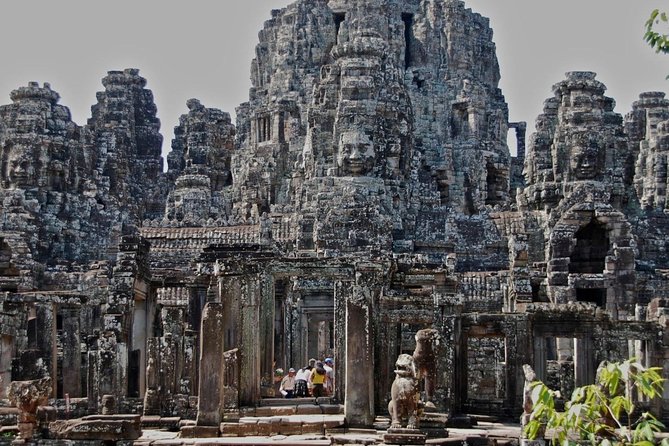
The first temple stop is Bayon, reached after visiting the south gate of Angkor Thom. This is a strong opening because the gate and the temple introduce two of Angkor’s most recognizable images: monumental stone guardians and towers carved with calm faces.
Bayon is described as having 54 towers and 216 faces associated with Avalokitesvara, a Buddhist figure linked with compassion. The numbers help you understand the scale, but the real pleasure is looking up and finding another face partly hidden behind a tower or framed by a narrow passage.
You are scheduled to spend about two hours here, including Angkor Thom and Baphuon. That gives your guide room to explain the layout and point out details you might otherwise miss. It also gives you time to walk carefully, since the site is not just one single building.
Baphuon adds a different look, with its long approach and tall temple form. I like this pairing because Bayon can feel visually crowded with towers and faces, while Baphuon gives you a broader sense of royal planning and scale.
Admission is not included. You will need to account for the required temple ticket separately. Ask about ticket arrangements before the morning begins so you know exactly what is covered by your pass and what is not.
Ta Prohm, where stone meets trees
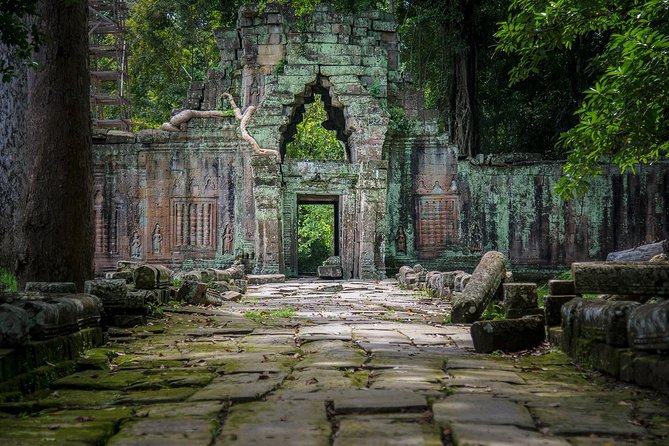
Ta Prohm is the most atmospheric stop on the first day. It is often identified as the jungle or tree temple because large roots grip and wrap around sections of the ruins. The contrast is immediate: carefully cut stone walls meet thick tree trunks and roots that seem to pull the architecture back into the forest.
You have about two hours here. That is useful because Ta Prohm is easy to reduce to one famous root-covered doorway. The site has more to offer, including corridors, enclosed spaces, fallen blocks, and views of how vegetation has affected the temple over time.
Your guide can help separate the original religious and architectural purpose from the modern image of an abandoned ruin. That context makes the visit more meaningful. The trees are not simply decoration. They are part of the reason the temple feels so different from Bayon and Angkor Wat.
The practical issue is footing. You should expect uneven temple surfaces and a fair amount of walking. Bring shoes that are comfortable for stone paths and steps. Since the tour supplies cold water and a cold towel, you can use the vehicle break to cool down before continuing.
Banteay Kdei offers a quieter afternoon
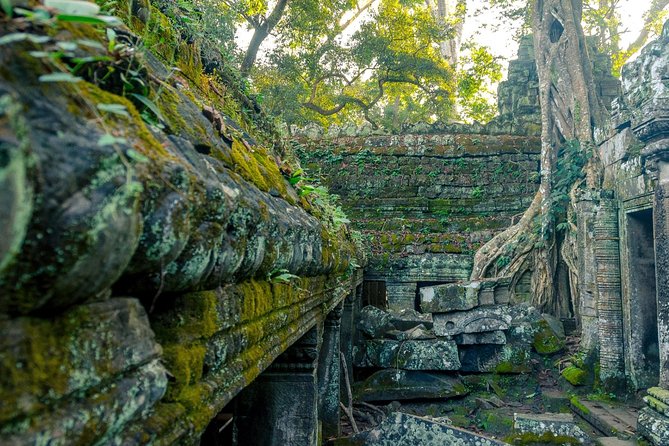
Banteay Kdei receives one hour in the afternoon. It was built by King Jayavarman VII in the late 12th century, placing it in the same broad period of Khmer temple building as several better-known sites in the itinerary.
This stop is shorter and less grand than Angkor Wat, but that is part of its value. After two hours at Bayon and two at Ta Prohm, a smaller temple can give you a change of scale. You can pay attention to doorways, galleries, carvings, and the feel of the ruins without trying to absorb another enormous monument.
I would not expect Banteay Kdei to replace the major temples on your list. Think of it as a useful middle chapter. It fills out your understanding of the Angkor area and prevents the day from becoming only a parade of headline sites.
The one-hour schedule also means you should keep your expectations realistic. This is an introduction, not an exhaustive examination. If you are especially interested in temple architecture, use the drive or walking time to ask your guide which details deserve your attention.
More Tonle Sap floating village trips:
- From Siem Reap: Kampong Phluk Floating Village Tour by Boat
★ 4.9 · 6,979 reviews - Sunset tour of Kampong Phluk stilts home village on the Tonle Sap
★ 5.0 · 4,865 reviews - Siem Reap: Kampong Phluk Floating Village Tour with Boat
★ 4.9 · 3,843 reviews - Siem Reap Floating Village Kampong Phluk Sunset with Boat
★ 5.0 · 1,962 reviews
Angkor Wat and the long first day
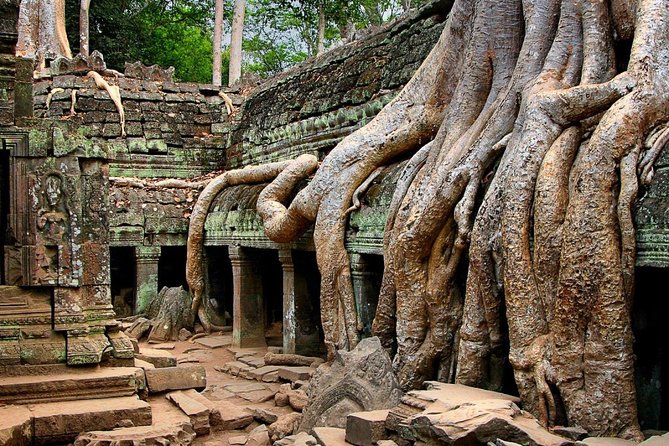
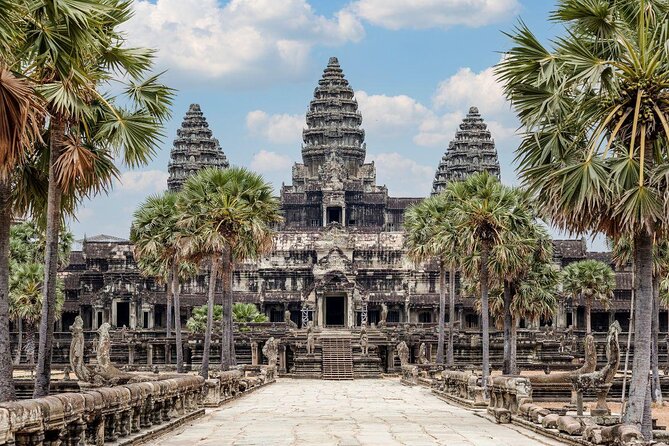
Angkor Wat receives about three hours, making it the centerpiece of day one. The temple is a UNESCO World Heritage Site and one of Southeast Asia’s most important archaeological places. Its scale is difficult to grasp from a single viewpoint, so the longer visit matters.
You can expect time to look at the great approach, outer structures, galleries, towers, and interior spaces. Angkor Wat rewards patience. The first view is grand, but smaller carvings and changes in perspective become more noticeable as you move through the complex.
The tour is designed to end the day with sunset over Angkor Wat. Sunset conditions can never be guaranteed, of course, but the timing gives you a memorable finish and lets the temple change character as the light softens.
This is also the point where the day may feel long. Four temple stops add up, and Angkor Wat alone can involve substantial walking. I would treat the schedule as full rather than leisurely. The private vehicle, cold water, and towel help, but you should still pace yourself.
The entrance fee is not included, and meals are not included either. Plan your budget around those extra costs instead of treating the $92 price as the complete cost of the two days.
Kompong Phluk on Tonle Sap
Day two turns away from stone temples and toward life on Tonle Sap, Southeast Asia’s largest freshwater lake. The tour visits Kompong Phluk, about 30 kilometers from Siem Reap, for roughly four hours.
The village is known for tall stilted houses and floating structures. You are scheduled to see a floating hospital, fishing activity, older local ways of life, and the natural setting around the village. This makes the stop more than a scenic boat ride or a quick photograph.
I like this part of the tour because it adds social and geographic context. Angkor shows the power of Cambodia’s ancient kings. Kompong Phluk shows how communities make a living around water today. The contrast gives you a fuller picture of the area than temples alone can provide.
The four-hour timing is a good sign for anyone who wants more than a rushed visit. Still, the exact feel of the village may depend on conditions at the lake and how the visit is organized that day. Admission is not included, so confirm the additional cost before you go.
Kompong Phluk is also the stop where respectful attention matters most. You are visiting a working community, not a stage set. Listen to the guide, follow local instructions, and remember that homes, fishing areas, and public services are part of everyday life.
Angkor National Museum puts the temples in context
The Angkor National Museum is scheduled for one hour after the lake visit. Its collection includes Buddha statues and religious relics, giving you a chance to see sculpture and objects away from the heat and open courtyards.
An hour is enough for an introduction, though not enough for every gallery and label. I would use this stop to reinforce what you saw at Bayon, Ta Prohm, Banteay Kdei, and Angkor Wat. A museum visit can make the stone temples easier to read because you are seeing related religious art in a controlled setting.
This order also works well physically. After four hours at Kompong Phluk, an indoor museum gives you a calmer change of pace. The admission fee is separate, so include it in your planning.
Artisans Angkor and trying stone carving
The final stop is Artisans Angkor, a local nongovernmental organization that works to improve the lives of disadvantaged Cambodians from rural areas. You visit its workshop and are given the chance to try your hand at stone carving.
That hands-on element makes this stop different from a standard craft-shop visit. You are not only looking at finished objects. You can get a small sense of the patience and control required to shape stone.
I also value the social purpose described for the workshop. It connects the polished artistic tradition associated with Angkor to present-day training and work opportunities. You should approach the stop as a cultural visit first, not simply as a shopping opportunity.
The scheduled time is one hour. That is long enough for an introduction and a practical activity, while still keeping day two manageable after the museum and village.
What the $92 price really covers
At $92 per person, this is not the cheapest way to see Angkor. But price comparisons can be misleading if they ignore what is included. You are paying for two days of private touring, an English-speaking guide, an air-conditioned vehicle, transport to all listed stops, cold water, and cold towels.
The private format is the biggest value point. If you are traveling with family or a small group, you avoid sharing the experience with strangers and can direct questions to your own guide. Group discounts may also be available, which could improve the per-person value for a larger private party.
The exclusions are important:
- Temple entrance tickets are not included.
- Kompong Phluk admission is not included.
- Angkor National Museum admission is not included.
- Meals are not included.
- Breakfast, lunch, and dinner are all your responsibility.
Because the main admission costs are outside the package, ask for the current total before finalizing your budget. The tour is best value for people who want reliable transport and a dedicated guide, rather than people whose only goal is finding the lowest possible price.
Service, guide style, and practical comfort
The strongest service feedback centers on Sen and the driver. Sen is described as positive, upbeat, accommodating, and easy to contact. Those qualities matter in Siem Reap because a good guide can help you understand why one temple feels different from the next instead of letting the visit become a series of names and photographs.
The tour has received a five-star overall rating from seven reviews. That is encouraging, though it is still a small sample. I would take it as evidence of consistently positive early feedback, not as a guarantee that every detail will suit every person.
Communication before the tour is described as easy, and confirmation is provided at booking. Most people can participate, but children must be accompanied by an adult. Since the tour includes long temple visits and several hours at the floating village, consider your group’s walking stamina before booking.
Free cancellation is available if you cancel at least 24 hours before the local start time. Changes or cancellations inside that window are not accepted for a refund. The tour is commonly booked about six days ahead, so booking roughly a week in advance is sensible if your dates are fixed.
Who should book this two-day experience
I would recommend this tour to first-time visitors who want the major Angkor temples without arranging transport each day. It also suits families and small private groups that value a dedicated guide, a cool vehicle, and a clear schedule.
It is a good fit if you want more than temple photographs. The combination of Angkor, Tonle Sap, the museum, and Artisans Angkor gives you ancient monuments, present-day village life, religious art, and local craft work.
I would look elsewhere if you want a very flexible, unscheduled visit or if the $92 price feels high before adding admission tickets and meals. Independent visitors may prefer to arrange each site separately, especially if they already have transport and a guide.
Should you book it?
Book this tour if you want a private two-day overview of Siem Reap with the main temples handled in a sensible order and Tonle Sap added to the plan. The best reasons are the dedicated guide, air-conditioned transport, long visits at Bayon, Ta Prohm, and Angkor Wat, and the chance to see more than monuments.
Before you pay, confirm the complete cost of entrance tickets and ask exactly how the Kompong Phluk visit will be handled. If that added expense fits your budget, this is a well-rounded choice for seeing both the stone legacy of Angkor and the living communities around Siem Reap.
FAQ
How long does the tour last?
The experience lasts approximately two days. Day one covers four temple stops, and day two covers Kompong Phluk, the Angkor National Museum, and Artisans Angkor.
What time does the tour start?
The stated start time is 8:30 a.m.
Is hotel pickup available?
Pickup is offered. The provided information does not specify the exact pickup area, so confirm the pickup details when booking.
Is the tour private?
Yes. Only your group participates in this private tour or activity.
Is transportation included?
Yes. Transport on both days is included in an air-conditioned vehicle.
Is an English-speaking guide included?
Yes. An English tour guide is included.
Are entrance tickets included?
No. All entrance ticket fees are excluded from the tour price.
Are meals included?
No. Breakfast, lunch, and dinner are not included.
Can I cancel for a full refund?
Yes, if you cancel at least 24 hours before the experience start time. Cancellations or changes made less than 24 hours before the start time are not refunded or accepted.
Just added around Siem Reap
- Private Battambang Full-Day Guided Tour★ 4.5 · 3 reviews
- Kulen Mountain, Beng Mealea and Banteay Srei Full Day Tour★ 5.0 · 3 reviews
- Kompong Pluk Tour★ 5.0 · 3 reviews
- Private 3 Day Tour to Discover the ancient temples★ 5.0 · 3 reviews
- Kulen National Park Ticket -Waterfall & 1000 Lingas★ 5.0 · 3 reviews
- Cambodia: Absolute Traditional Dance Show with Buffet Dinner★ 5.0 · 3 reviews
- Border Transfer (Siem Reap to Laos/Laos to Siem Reap)★ 3.5 · 3 reviews
- Beng Melea, Rolous Group & Kompong Phluk Floating Village★ 5.0 · 3 reviews
Angkor Wat Tours, compared.

Angkor Wat Sunrise or Sunset Tour with Guide from Siem Reap
Read our review →
Angkor Wat: Small-Group Sunrise or Sunset Tour
Read our review →
Angkor Wat 2-Day Tour with Sunrise and Sunset
Read our review →

Angkor Wat Sunrise tour with Small – Group and Guide tours
Read our review →
Angkor Wat Highlights and Sunrise Guided Tour from Siem Reap
Read our review →
Angkor Wat Sunset Small Group Tour with Lunch Included
Read our review →
Full-Day Angkor Wat Sunrise Private Tour with Guide from Siem Reap
Read our review →Browse the lists this tour appears in