
Reviewed · ANGKOR WAT TOURS
3-Day Angkor Wat Tour with Kulen Mountain & Floating Village
Angkor rewards an early alarm. This three-day tour combines sunrise at Angkor Wat with the major temples around Siem Reap, then moves beyond the usual circuit to Kulen Mountain, Beng Melea, and Kampong Phluk. I like the mix of famous monuments and ordinary Cambodian life, especially the village breakfast and rural drives between the sites.
I also like the attentive service built into the day. Guides such as Sam, Phanne, Kamsan, and Moni have been praised for clear explanations, patience, and flexibility, while drivers regularly provide cold water and chilled towels. The main drawback is the pace: three long sightseeing days, including a 4:30 to 5:00 am start, can leave you tired, and Day 3 covers a lot of ground.
In This Review
- Key points at a glance
- What the three days really cover
- Day 1: sunrise at Angkor Wat and the famous temple circuit
- Day 2: quiet circuits, Banteay Srei, and Cambodia’s difficult past
- Day 3: Kulen Mountain, waterfalls, and the River of Thousand Lingas
- The guides and drivers make the schedule work
- What the $139 price really means
- Practical advice before you go
- Who should book this Angkor Wat tour?
- FAQ
- How long is the tour?
- What time does pickup begin on Day 1?
- Is hotel pickup and drop-off included?
- Is an English-speaking guide included?
- How large is the group?
- Is breakfast included?
- Is lunch included?
- Which admission fees are extra?
- What clothing should I wear?
Key points at a glance
- Sunrise before the crowds: Reach Angkor Wat early, then spend about 90 minutes inside the temple before the busiest hours.
- A full Angkor sweep: See the Small Circuit and Grand Circuit, including Ta Prohm, Bayon, Preah Khan, Neak Pean, Ta Som, and East Mebon.
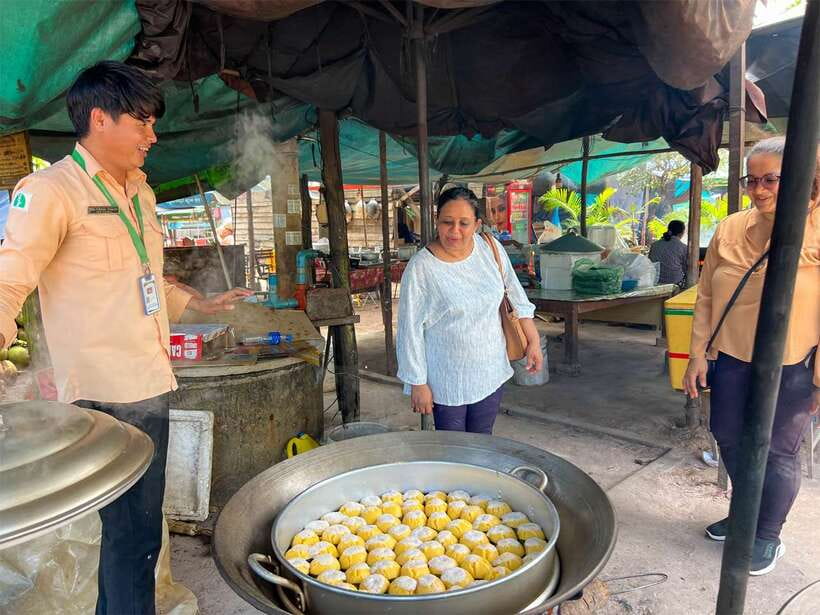
- Breakfast with local flavor: Try Khmer noodle soup, palm cake, and steamed rice dumplings with palm sugar in a village setting.
- Kulen Mountain adds ancient origins: Waterfalls, a reclining Buddha, and the River of Thousand Lingas give the temple trip a different focus.
- Beng Melea feels rough and atmospheric: This partly unrestored temple is heavily covered by trees, vines, and moss.
- A clear extra-cost calculation: The tour is $139 per person, but listed admissions and the boat add $97, before other meals and drinks.
What the three days really cover
This is a packed introduction to Siem Reap Province. You get Angkor’s best-known monuments, less-visited temples outside Angkor Thom, rural Cambodia, a mountain park, a jungle temple, and life on Tonle Sap Lake.
That range is the tour’s greatest strength. You are not spending three days looking at one type of ruin. One morning is about royal temples and carved faces. Another is about farm roads and small villages. The final day shifts again, toward waterfalls, forest, and floating homes.
The tradeoff is time. The itinerary is designed to show you a lot, not to give you long, quiet hours at every monument. If you want to study each carving slowly, a custom private plan with fewer stops may suit you better. If you want a strong first look at the region, this schedule makes good use of three days.
The group is limited to 10 people. A private option is also available, and that is worth considering if you want to change the order of stops, request extra visits, or take breaks when the heat catches up with you. One guide, Kamsan, was praised for arranging additional visits when requested, which shows why flexibility matters here.
More Phnom Kulen day trips:
- Kulen Waterfall Join-in Tour (local Picnic lunch)
★ 5.0 · 2,434 reviews - Kulen Mountain: Small-Group Tour and Picnic lunch
★ 4.9 · 1,802 reviews - Siem Reap: Kulen Mountain, Beng Mealea and Tonle Sap Tour
★ 5.0 · 1,483 reviews
Day 1: sunrise at Angkor Wat and the famous temple circuit
Pickup begins between 4:30 and 5:00 am from your hotel lobby. You should be ready early and wait in the lobby at least 10 minutes before the arranged time. This is not a gentle start, but sunrise is one of the best reasons to accept the lost sleep.
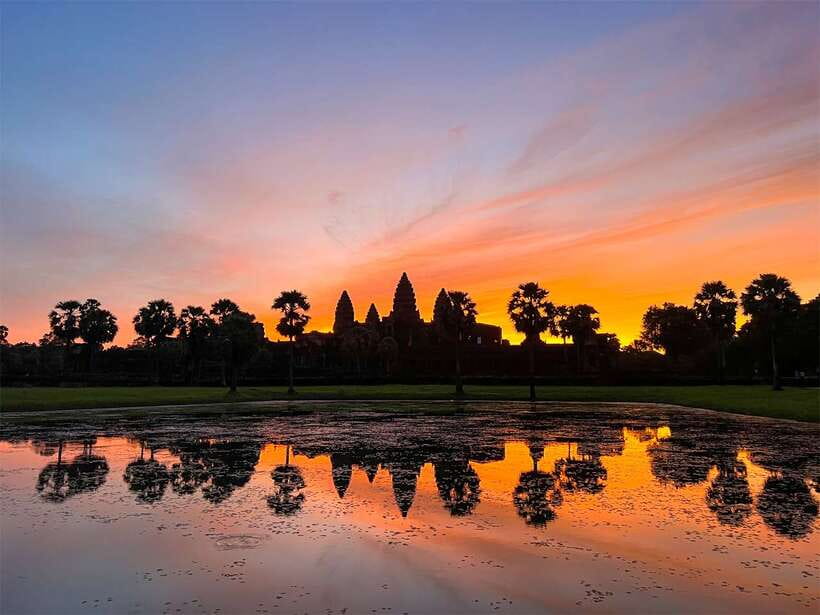
At Angkor Wat, you watch the sky brighten behind the temple towers. The exact view depends on the morning conditions and your position, but the early arrival gives you the right atmosphere: dim light, reflected towers, and fewer people inside the monument than later in the morning.
After sunrise, the tour spends about 90 minutes exploring the temple itself. That matters. Some sunrise visits are little more than a photo stop, but this one gives you time to look through the full building before the crowds build.
Angkor Wat was built as a major temple dedicated to Vishnu and later became a Buddhist site. Its galleries, towers, courtyards, and carved walls can feel confusing at first, so a good guide makes a real difference. Guides such as Moni and Phanne have been praised for explaining the monuments clearly and checking when people need a rest.
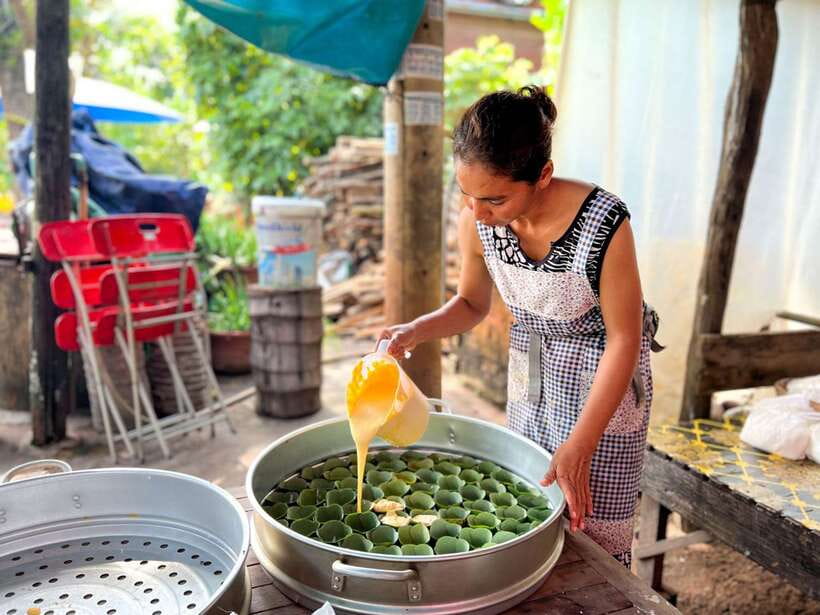
After the temple, you take a short break in a village for breakfast. The included meal features local food such as Khmer noodle soup, along with palm cake and steamed rice dumplings with palm sugar. This is a small but valuable touch because it gives you something more genuine than a standard hotel breakfast or a rushed snack in a tourist café.
You then visit an interesting local market before continuing to the temples. The market stop helps connect the stone monuments with daily life in Siem Reap Province. It is also a chance to see local produce and food before the afternoon heat becomes too strong.
The day continues at Pre Run temple, followed by Ta Prohm. Ta Prohm is the temple most closely linked with jungle imagery, since trees and enormous roots have grown through parts of the structure. It has been left largely in its original state, so you see collapsed stone, vegetation, and narrow passages rather than a fully rebuilt monument.
That rough condition is precisely what makes Ta Prohm memorable. It also means you should watch your footing and expect uneven ground. The site can be crowded, but the guide can help you understand which parts are original, damaged, or overtaken by roots.
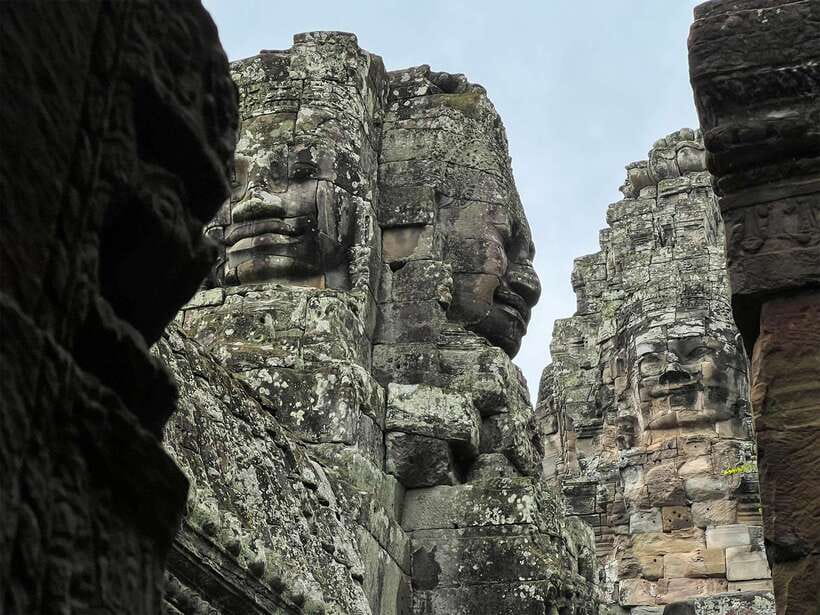
The final major stops are Bayon and the Victory Gate of Angkor Thom. Bayon is famous for its smiling stone faces, which appear on the towers at different angles. The effect is more personal than the broad scale of Angkor Wat, since the faces seem to follow you through the temple.
Angkor Thom was a major walled city, and the Victory Gate gives you a sense of its ceremonial scale. By this point, you will have seen several of the best-known Angkor sites in one day. You will also be ready for an early night.
Day 2: quiet circuits, Banteay Srei, and Cambodia’s difficult past
Day 2 starts at 8:00 am, which feels luxurious after the sunrise morning. After breakfast at your hotel, you leave the central area and travel through the countryside with your guide.
The rural drive is not filler. You may see rice paddies, village homes, and people going about everyday work. It gives you a better sense of the region beyond the temple zone and makes the stops feel connected to a living province rather than an open-air museum.
The morning focuses on temples outside Angkor Thom. Preah Khan is a large complex with long corridors, courtyards, and a mixture of religious imagery. Its scale can be hard to grasp without a guide, and it rewards a slower look at the layout.
Neak Pean is smaller and more unusual. Its central sanctuary is associated with a set of pools and water symbolism, giving the site a calmer, more geometric feel than the larger temple complexes.
Ta Som is another partly overgrown temple. It has a quieter character than Ta Prohm, and the tree growth helps show how vegetation has shaped the appearance of Angkor’s ruins over time.
East Mebon completes the morning with a temple that once stood on an island in a reservoir. Its raised position and stone guardian figures give it a distinct look, although the exposed setting can feel hot during the middle of the day.
Lunch is included on Day 2. You order an individual dish from a menu, and the meal is based on local food. That arrangement is useful because you can choose rather than receive one fixed plate, though food and soft drinks beyond the stated lunch are not included.
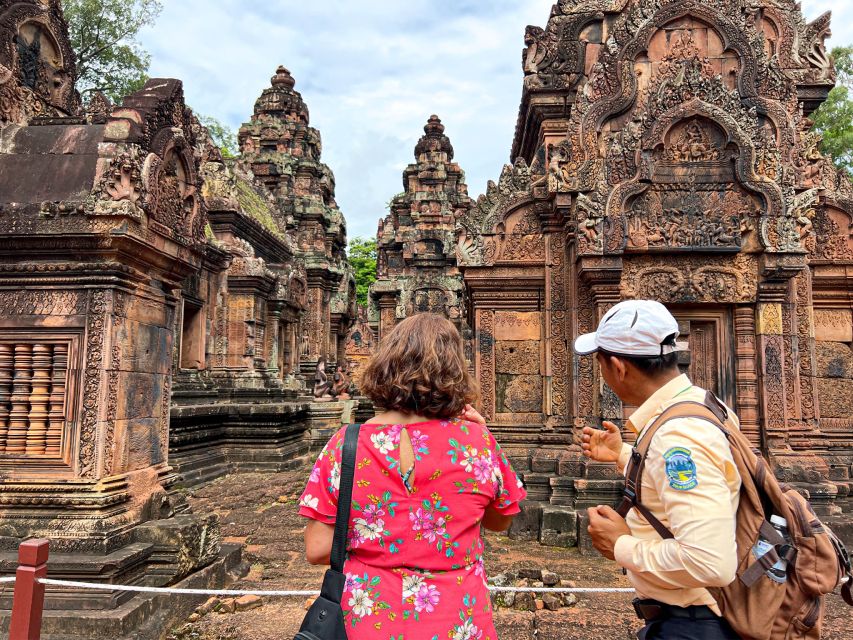
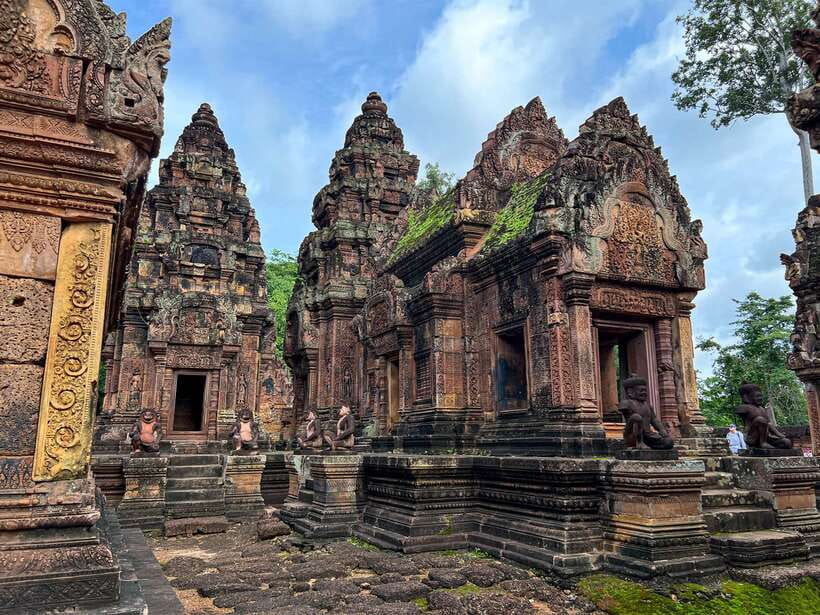
In the early afternoon, you travel to Banteay Srei. This smaller sandstone temple is known for its fine, detailed reliefs. The carvings are unusually delicate, and the scale makes it easier to appreciate individual figures, floral patterns, and decorative borders.
Banteay Srei is often a favorite stop for people who enjoy close-looking. It is not as monumental as Angkor Wat, but its craftsmanship is the point. Build in time to walk slowly and listen to the explanation instead of treating it as another quick photo stop.
The final visit is the Cambodian Landmine Museum. This changes the tone of the day. After temples and village scenes, you confront a painful part of Cambodia’s recent past and the lasting effects of landmines.
I consider this an important inclusion because it adds context to the country you are seeing. The Angkor monuments are only one part of Cambodia’s story. Allow yourself a little quiet time after the museum rather than rushing straight back into sightseeing mode.
Day 2 is probably the most balanced day of the three. It starts later, includes major and smaller temples, shows rural life, and ends with a serious modern history stop. If you choose the private version, this is also a good day to adjust the pace.
Day 3: Kulen Mountain, waterfalls, and the River of Thousand Lingas
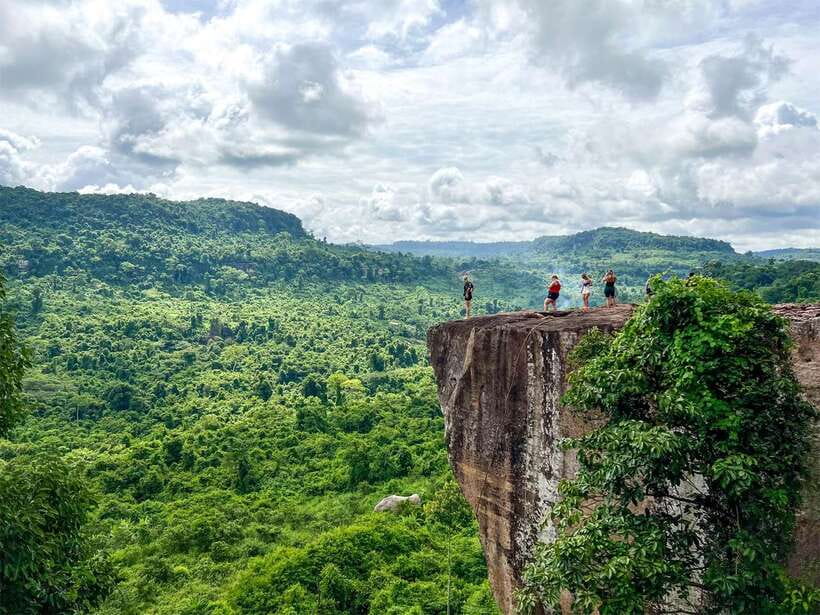
You leave at 8:00 am for Phnom Kulen National Park. The drive takes about an hour and passes through rural Cambodian villages and rice-growing areas.
Kulen Mountain is important because it is presented as the birthplace of the Khmer Empire. This gives the day a different historical angle from Angkor. Instead of seeing the empire at its great temple center, you visit a place linked with its early formation.
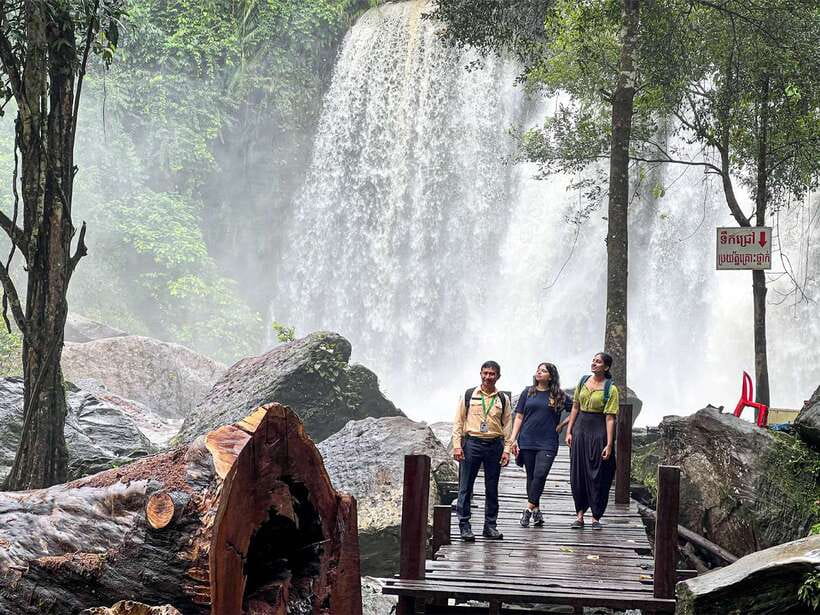
Your guide leads you to the park’s main sights, including the largest and most attractive waterfalls, a reclining Buddha sculpture, and the River of Thousand Lingas. The riverbed carvings date to 802 AD and connect water, kingship, and religious belief in a way that is difficult to understand from temple towers alone.
The waterfalls provide a welcome change from carved stone. Depending on conditions, you might want to bring a change of clothes, but the supplied information only specifically recommends sunglasses, a hat, insect repellent, and sunscreen. Wear practical shoes, since the day includes natural ground as well as temple paths.
A local restaurant stop follows in the afternoon. Unlike Day 2, lunch is not included in the stated package, so plan to pay for this meal and any drinks yourself.
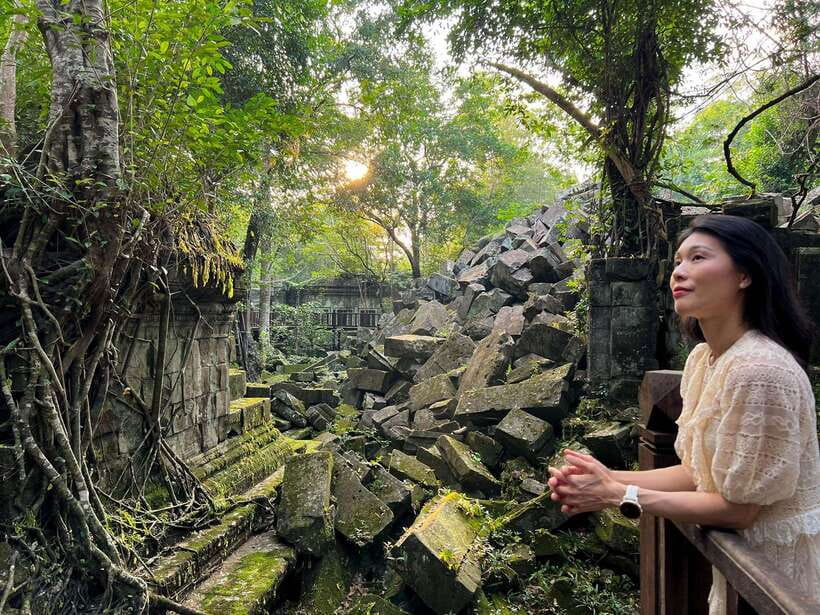
Next comes Beng Melea, a 12th-century temple deep in the forest. The site is heavily covered by vegetation, trees, vines, and moss, and it has not been fully restored. That gives it a rawer feel than the more managed monuments around Angkor.
Beng Melea can be especially rewarding if you like ruins that look partly reclaimed by nature. It can also feel less tidy and harder to read. Listen closely to your guide, since the scattered stones and blocked passages do not always reveal the original plan on their own.
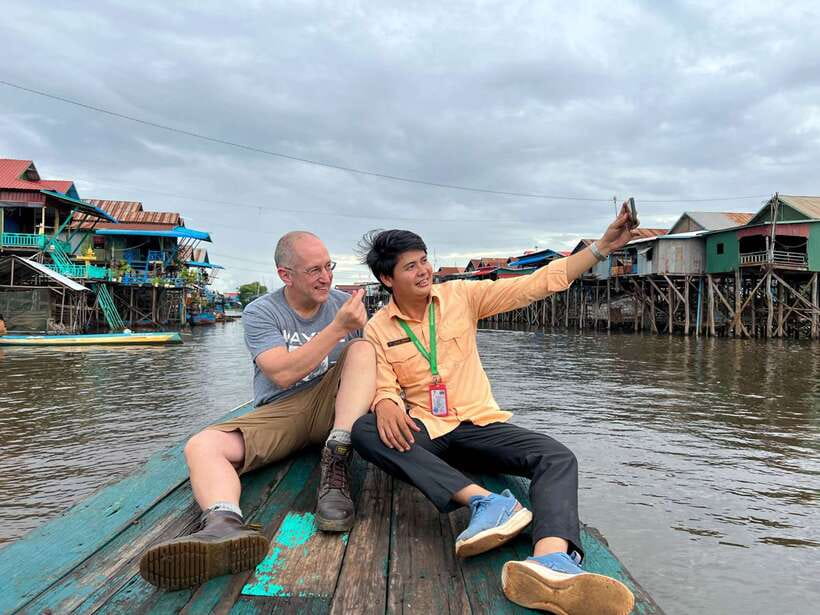
The final stop is Kampong Phluk on Tonle Sap Lake. You take a boat from the ferry area and see how families make their living, mainly through fishing. Many homes are built on long poles near the lake shore, allowing them to cope with high water during the rainy season.
This boat ride is more than a scenic add-on. It shows how people adapt their homes and work to a lake whose water levels change greatly. You may also see brightly painted houses and daily activity along the waterways.
The floating village can be an emotional finish because it brings the tour back to present-day life. After three days of royal temples and ancient monuments, you see a community still shaped by the same water systems that mattered centuries ago.
One caution: Day 3 is long and includes the most driving. The mountain, waterfalls, Beng Melea, and Kampong Phluk are all worthwhile, but the final afternoon may feel slower than the first two days. One rating described the last day as less energetic than the temple-heavy opening days, and that is a fair expectation.
More Angkor Wat tours we have reviewed:
- Angkor Wat Sunrise or Sunset Tour with Guide from Siem Reap
★ 5.0 · 12,109 reviews - Siem Reap: Angkor Wat: Small-Group Sunrise or Sunset Tour
★ 5.0 · 9,444 reviews - Siem Reap: Angkor Wat 2-Day Tour with Sunrise and Sunset
★ 4.9 · 4,429 reviews - Siem Reap: Full-Day Angkor Wat Guided Tour with Sunset
★ 4.9 · 3,803 reviews
The guides and drivers make the schedule work
The service is one of the strongest parts of this tour. Guides named in the feedback include Sam, Phanne, Tha, Dara, Mony, Kamsan, Sa, Ho, Seila, and Moni. The repeated praise is specific: clear explanations, patience, humor, flexibility, and careful attention.
Moni, in particular, helped resolve a difficult first morning when a booking name and hotel information caused confusion. He searched several hotel lobbies and then helped sort out the temple ticket process. That kind of calm problem-solving is useful when you are tired and trying to reach Angkor before sunrise.
Drivers also receive consistent praise for safe driving, cold water, chilled face cloths, and being ready when you finish a temple visit. Those details may sound minor at home, but after walking in heat and dust, a cold towel can feel like first-class service.
Because the guide is with you for several days, the relationship matters. Ask questions as you go. You will get more from the temples if you understand what you are looking at rather than simply collecting photographs.
What the $139 price really means
The advertised price is $139 per person. That is a reasonable starting price for three days of a guide, air-conditioned private transportation, hotel pickup and drop-off, water, towels, one village breakfast, and one included lunch.
But the real cost is higher. The listed required extras are:
- Three-day Angkor pass: $62 per person
- Tonle Sap Lake ticket and private boat cruise: $15 per person
- Kulen National Park admission: $20 per person
That adds $97, bringing the listed tour and admission total to $236 per person before other meals and soft drinks. Day 1 breakfast and Day 2 lunch are included, but other food is not.
At that total, the value depends on how much you want to see. You are paying for three full days, transport over a wide area, a live English-speaking guide, and a schedule that would be difficult to arrange efficiently on your own. The price is less attractive if you plan to skip several stops or prefer a slow, self-guided visit.
The group limit of 10 keeps the arrangement smaller than a large coach tour. If your budget allows, the private option may offer better value for families or couples who want more control over breaks and extra stops.
Practical advice before you go
The first morning is the key test. Set out your clothes, camera, temple pass information, and water the night before. Pickup is from the hotel lobby, and the arranged time is very early.
Dress for temple rules and hot weather. Short skirts and sleeveless shirts are not allowed, so wear clothing that covers your shoulders and knees. Bring sunglasses, a hat, sunscreen, and insect repellent.
Take the supplied water and towels seriously. The tour covers open courtyards, forest paths, stone stairways, and outdoor sites. You will be more comfortable if you treat the day as active sightseeing rather than a series of car rides.
The schedule can be tiring, especially on Day 1 and Day 3. If you have a choice, keep the evening before Day 1 quiet and do not plan a late night after sunrise. On Day 2, use the later start to recover.
The tour offers free cancellation up to 24 hours before departure and allows you to reserve now and pay later. Those terms are useful if your Siem Reap plans are still changing, but the most important decision is choosing a pace that matches your energy.
Who should book this Angkor Wat tour?
I would choose this tour if you have three days in Siem Reap and want a broad introduction without arranging separate drivers, guides, park admissions, and boat transport. It suits first-time visitors who want the major Angkor temples but also care about villages, food, modern history, and life on Tonle Sap.
It is also a good fit if you prefer having an English-speaking guide explain the carvings and religious sites. The guides have been praised for patience and warmth, and that matters when the itinerary is this full.
I would hesitate if you dislike early mornings, long drives, or structured schedules. The first day begins before sunrise, and the final day has the most travel. Someone returning to Siem Reap for a second visit may prefer a shorter custom plan focused on fewer temples.
For most first visits, though, this is a strong value. You see the essential Angkor monuments, then add places many short temple packages leave out. Book it if you want variety and expert help. Choose the private option if flexibility matters more than keeping the price down.
FAQ
How long is the tour?
The tour lasts three days.
What time does pickup begin on Day 1?
Hotel pickup is scheduled between 4:30 am and 5:00 am for the Angkor Wat sunrise.
Is hotel pickup and drop-off included?
Yes, pickup and drop-off at your hotel are included. You should wait in the hotel lobby 10 minutes before pickup.
Is an English-speaking guide included?
Yes. A professional English-speaking guide accompanies the tour.
How large is the group?
The tour is described as a small group with a maximum of 10 participants. A private option is also available.
Is breakfast included?
Breakfast in a village is included on Day 1. It may include Khmer noodle soup and traditional desserts such as palm cake and steamed rice dumplings with palm sugar.
Is lunch included?
One local lunch is included on Day 2, with an individual dish ordered from a menu. Food and soft drinks on other parts of the tour are not included.
Which admission fees are extra?
The three-day Angkor pass costs $62 per person, Kulen Mountain National Park admission costs $20 per person, and the Tonle Sap Lake ticket with private boat cruise costs $15 per person.
What clothing should I wear?
Short skirts and sleeveless shirts are not allowed at the sites. Bring sunglasses, a hat, insect repellent, and sunscreen.
More 3-Day Experiences
- From Siem Reap: Angkor Wat and Floating Village 3-Day Trip
★ 5.0 · 100 reviews - 3-Day Angkor Wat with All Interesting Major Temples, Banteay Srei & Beng Mealea
★ 5.0 · 70 reviews - 3-Day Angkor Wat & All Interesting Major Temples & Kulen Mount Waterfall
★ 5.0 · 63 reviews - 3 Days Siem Reap Explorer – Small Group
★ 5.0 · 50 reviews
More Floating Village Tours
- From Siem Reap: Kampong Phluk Floating Village Tour by Boat
★ 4.9 · 6,979 reviews - Sunset tour of Kampong Phluk stilts home village on the Tonle Sap
★ 5.0 · 4,865 reviews - Siem Reap: Kampong Phluk Floating Village Tour with Boat
★ 4.9 · 3,843 reviews - Siem Reap Floating Village Kampong Phluk Sunset with Boat
★ 5.0 · 1,962 reviews
Just added around Siem Reap
- Private Battambang Full-Day Guided Tour★ 4.5 · 3 reviews
- Kulen Mountain, Beng Mealea and Banteay Srei Full Day Tour★ 5.0 · 3 reviews
- Kompong Pluk Tour★ 5.0 · 3 reviews
- Private 3 Day Tour to Discover the ancient temples★ 5.0 · 3 reviews
- Kulen National Park Ticket -Waterfall & 1000 Lingas★ 5.0 · 3 reviews
- Cambodia: Absolute Traditional Dance Show with Buffet Dinner★ 5.0 · 3 reviews
- Border Transfer (Siem Reap to Laos/Laos to Siem Reap)★ 3.5 · 3 reviews
- Siem Reap Countryside Sunset Vespa Tour or Tuk Tuk★ 4.5 · 3 reviews
Angkor Wat Tours, compared.

Angkor Wat Sunrise or Sunset Tour with Guide from Siem Reap
Read our review →
Angkor Wat: Small-Group Sunrise or Sunset Tour
Read our review →
Angkor Wat 2-Day Tour with Sunrise and Sunset
Read our review →

Angkor Wat Sunrise tour with Small – Group and Guide tours
Read our review →
Angkor Wat Highlights and Sunrise Guided Tour from Siem Reap
Read our review →
Angkor Wat Sunset Small Group Tour with Lunch Included
Read our review →
Full-Day Angkor Wat Sunrise Private Tour with Guide from Siem Reap
Read our review →Browse the lists this tour appears in