
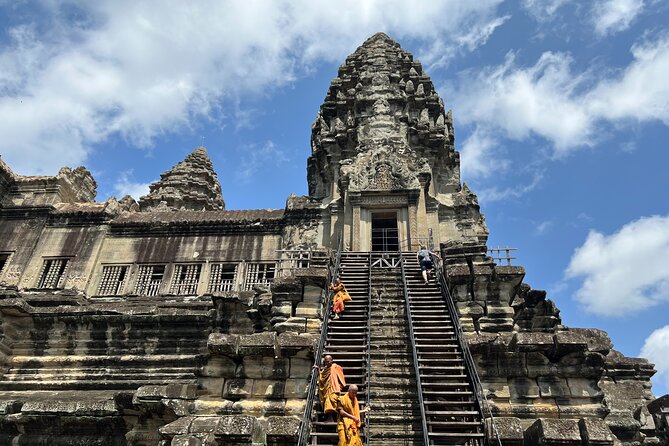
Reviewed · ANGKOR WAT TOURS
Angkor Wat Bike Tour with Lunch Included
Pedal past stone faces and tree roots. This full-day ride gives you a more active way to see Angkor Wat, Angkor Thom, Bayon, Ta Nei, and Ta Prohm, with an English-speaking guide to explain what you are seeing. I especially like the small-group format and the chance to reach Ta Nei by bicycle, rather than spending the entire day in a vehicle.
The $40 price includes a modern bicycle, guide, bottled water, transportation, hotel pickup and drop-off, and lunch at a local restaurant. The main drawbacks are clear: your temple pass is extra, breakfast is not included, and the exact pickup timing needs checking because the tour details mention both approximately 7:30 am and an 8:30 am start.
In This Review
- Key points before you book
- Why cycling works well at Angkor
- The morning begins with tickets and Angkor Wat
- Angkor Thom and the many faces of Bayon
- Ta Nei offers a rougher, quieter temple visit
- Ta Prohm brings the famous tree roots
- Lunch helps make the $40 price reasonable
- Group size, bicycles, and practical comfort
- What the guide adds to the experience
- Who should book this Angkor bike tour?
- Should you book it?
- FAQ
- Is the temple pass included in the tour price?
- How long does the tour last?
- What time does the tour begin?
- What temples are included?
- Is lunch included?
- Is hotel transportation provided?
- What happens if bad weather cancels the tour?
Key points before you book
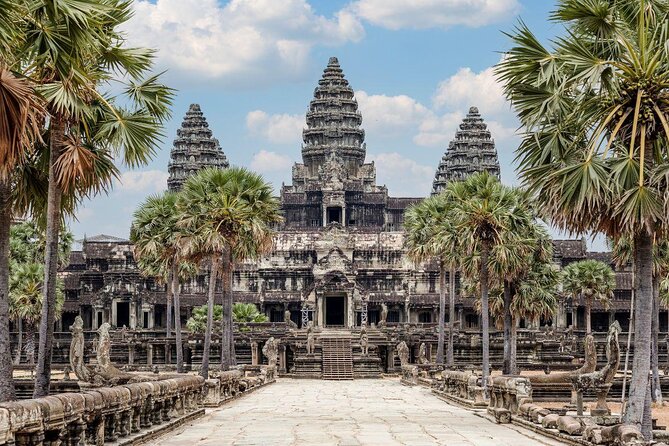
- Four major temple stops: Spend time at Angkor Wat, Bayon, Ta Nei, and Ta Prohm rather than rushing through one or two sites.
- A small-group ride: The tour is described as serving groups of two to seven, though another booking note gives a maximum of 10. Confirm the group size before booking if that matters to you.
- Lunch and water are included: You do not need to arrange midday food, though breakfast is your responsibility.
- Ta Nei adds a quieter stop: This ruined jungle temple offers a change from the busiest monuments on the circuit.
- The temple pass costs extra: Budget separately for admission before you arrive at the entrance booth.
- Weather can change the plan: Poor weather may lead to a new date or a full refund.
Why cycling works well at Angkor
Angkor is spread across a large area, and a bicycle gives the day a useful rhythm. You are not simply stepping out of a car, taking photographs, and climbing back in. The ride links the temples and gives you time between the big sights to reset.
That matters most at Angkor Wat and Angkor Thom. Both can feel overwhelming because of their size and importance. A bicycle lets you approach them gradually, then leave the crowds and stone behind for a while before the next stop.
I also like the balance between famous monuments and a less visited site. Angkor Wat, Bayon, and Ta Prohm are the places most people want to see. Ta Nei gives the day a quieter middle chapter and shows a more weathered, rough-edged side of the temple complex.
This is not a short sightseeing outing. Plan on about eight hours, including temple visits, cycling, lunch, and transportation. The pace should suit you if you want a full day at Angkor and are comfortable being active in the heat.
More Bike Tours in Siem Reap
- Siem Reap Countryside Bike Tour / E-Bike or Tuk Tuk
★ 5.0 · 935 reviews - Angkor Sunrise Bike Tour / E-Bike or Tuk Tuk
★ 5.0 · 615 reviews - Siem Reap: Bike the Angkor Temples – Full-Day 30km Tour
★ 5.0 · 463 reviews
The morning begins with tickets and Angkor Wat
Hotel pickup is offered, with the schedule listing an approximate 7:30 am pickup and an 8:30 am start time. Since those times do not perfectly match, confirm your exact pickup time when you book. You will first go to the ticket booth to buy your temple pass, and admission is not part of the $40 price.
That extra cost is important when judging the tour value. The fee covers much more than a bicycle: you also receive a guide, transportation, lunch, water, and hotel transfers. Still, the pass is a required separate expense, so do not treat $40 as the complete cost of the day.
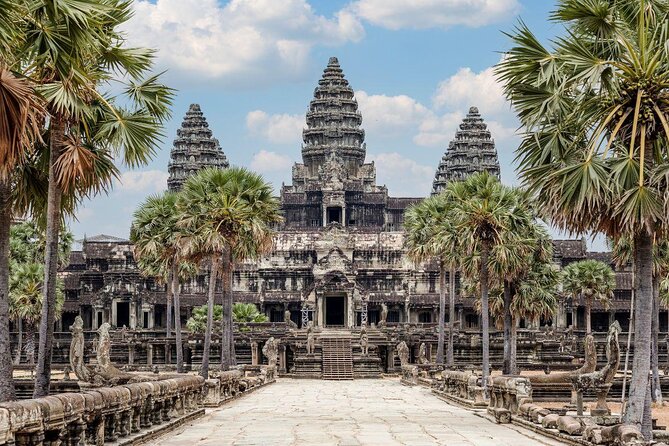
The first temple stop is Angkor Wat, the best-known monument in the complex. You have about two hours here. That is enough time for a guided visit without turning the opening stop into a quick photo stop, though the monument is large enough that you cannot see every corner in detail.
Your guide will introduce Angkor Wat as a world heritage ruin and explain its place in the Khmer Empire. This is where a guide earns the fee. Without context, the towers, galleries, carvings, and courtyards can blur together. With an explanation of what you are looking at, the building becomes easier to read.
Bring water, wear practical clothing, and choose shoes that work for both cycling and uneven temple surfaces. Bottled water is included, but breakfast is not, so eat before pickup or arrange something in advance.
Angkor Thom and the many faces of Bayon
From Angkor Wat, the ride continues to the south gate of Angkor Thom. This ancient capital city was grounded by the prosperous Khmer Empire in the 12th century, and its scale helps explain the power of the city that once occupied it.
The Bayon is the main stop here, with about 90 minutes set aside for the visit. Its best-known feature is the collection of large stone faces associated with Avalokiteshvara and the Buddhist King Jayavarman VII. The faces give Bayon a very different mood from Angkor Wat.
I would pay close attention to how the guide explains the connection between the monument and Jayavarman VII’s Mahayana Buddhist rule. Bayon is not just a pile of carved towers. Its imagery reflects a particular religious and political vision, and that context makes the unusual faces far more meaningful.
Ninety minutes is a helpful amount of time. Bayon has tight passages, towers, and carvings that reward slow looking. You may find the site more confusing than Angkor Wat, so this is another place where a guide can help you understand the layout.
The south gate itself also provides a useful transition. Rather than treating Angkor Thom as a single temple, you begin to see it as an ancient urban center with several important monuments inside its walls.
Ta Nei offers a rougher, quieter temple visit
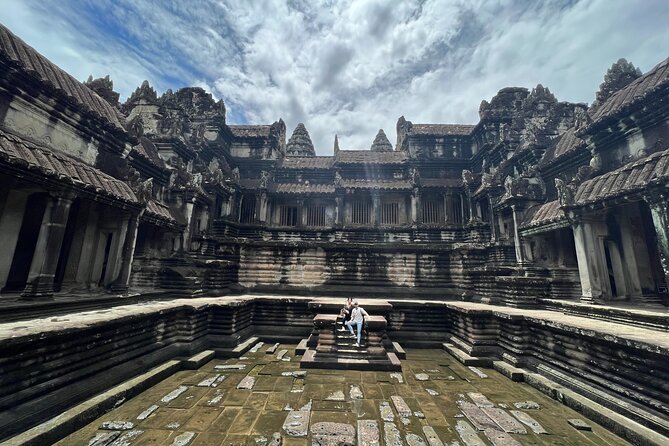
The ride then reaches Ta Nei, a ruined temple in the jungle area. The scheduled stop lasts about an hour and includes time to relax and enjoy fresh local fruit.
Ta Nei is valuable because it changes the tone of the day. Angkor Wat and Bayon are grand and highly organized. Ta Nei feels more weathered and tucked away, with the surrounding jungle forming part of the experience. The tour description presents it as a place many people do not reach, which makes it a useful addition for anyone who wants more than the standard major stops.
Do not expect Ta Nei to replace Angkor Wat in scale or preservation. Its appeal is the opposite. You come here for the quieter setting, the ruined stone, and the sense of seeing a less polished part of the complex.
The fruit break is a small but welcome touch during a long cycling day. It gives you a chance to pause before the final major stop. Since the ride lasts about eight hours, these brief rests matter more than they might on a short temple excursion.
More Angkor Wat tours we have reviewed:
- Angkor Wat Sunrise or Sunset Tour with Guide from Siem Reap
★ 5.0 · 12,109 reviews - Siem Reap: Angkor Wat: Small-Group Sunrise or Sunset Tour
★ 5.0 · 9,444 reviews - Siem Reap: Angkor Wat 2-Day Tour with Sunrise and Sunset
★ 4.9 · 4,429 reviews - Siem Reap: Full-Day Angkor Wat Guided Tour with Sunset
★ 4.9 · 3,803 reviews
Ta Prohm brings the famous tree roots

The final listed temple is Ta Prohm, with about an hour for the visit. This is the monument known for trees clasping the stone structures with thick roots. The temple was left in the condition in which it was found, giving you one of Angkor’s most memorable combinations of architecture and forest growth.
Ta Prohm is highly photogenic, but its appeal is not only visual. The roots show how the site changed after its original use, while the broken galleries and stone passages give you a sense of time and exposure. Your guide can help separate the real structure from the famous images you may already know.
One hour is enough for a focused visit, but you should not expect to explore every passage. Ta Prohm can be one of the day’s most popular stops, so the allotted time may feel short if you want to linger at every root-covered doorway.
The order of the day also makes sense. After the formal scale of Angkor Wat and Bayon, Ta Nei provides a quieter interlude, then Ta Prohm finishes with one of the most distinctive sights in the complex.
Lunch helps make the $40 price reasonable
Lunch is included at a local restaurant, along with bottled water. That makes the tour easier to manage because you do not need to spend part of the day searching for food or negotiating where to stop.
The available description does not give a set menu, restaurant name, or information about dietary requests. If you have allergies or strict food needs, contact the provider before booking. The tour does specifically mention local food, so lunch is intended to be part of the cultural experience, not just a quick packaged meal.
The value depends on what you would otherwise pay for. A separate temple pass is required, but your tour fee also covers the bicycle, guide, transport, hotel transfers, lunch, and water. For a full eight-hour day, that is a fair package if you want an organized visit and do not want to arrange each part yourself.
The price is per person. Private tours are also available, with custom itineraries for groups of four or more. That option may suit families or friends who want to adjust the balance between the major temples and quieter sites.
Group size, bicycles, and practical comfort
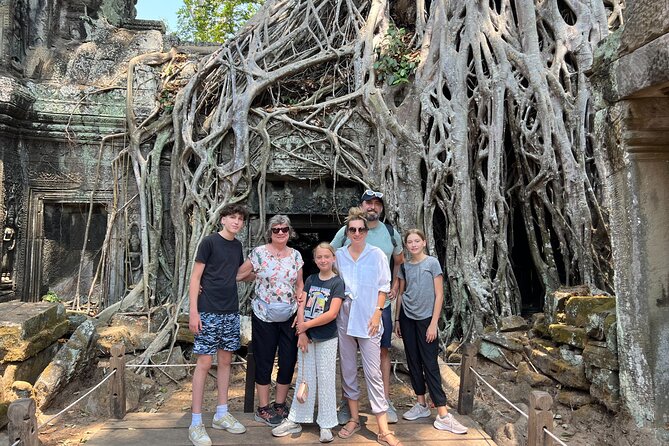
The experience is described as a small-group tour, with a minimum of two people and a usual maximum of seven. A separate note gives a maximum of 10 travelers, so I would confirm the actual group limit before paying if a smaller group is a priority.
A small group can make a real difference at Angkor. It is easier to hear the guide, ask questions, and keep a comfortable pace. It may also make stops and bicycle handling less awkward than they would be with a large convoy.
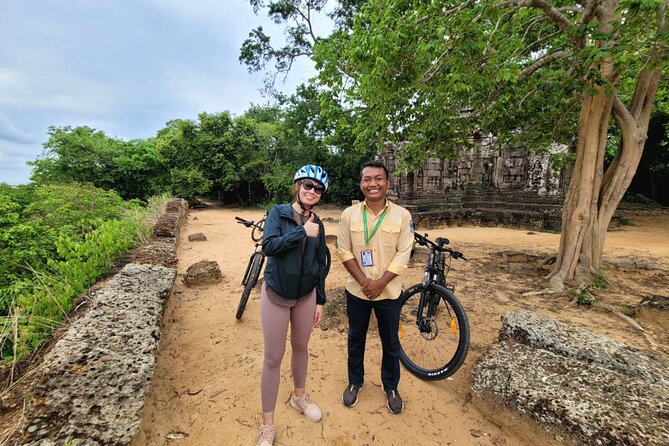
The included bicycles are described as modern giant bikes. The wording is unusual, but the important point is that a bicycle is provided rather than rented separately. If you have concerns about bicycle fit, riding ability, or the day’s physical demands, ask the operator before booking.
The tour is suitable for most people according to the supplied booking information. Still, you should be comfortable riding for part of a full day and walking around temple grounds. This is not the best choice if you want a completely passive sightseeing day.
Transportation is included, as are hotel pickup and drop-off. That reduces the number of arrangements you need to make in Siem Reap. The meeting information also says the tour is near public transportation, though hotel pickup is the more useful option for most people.
What the guide adds to the experience
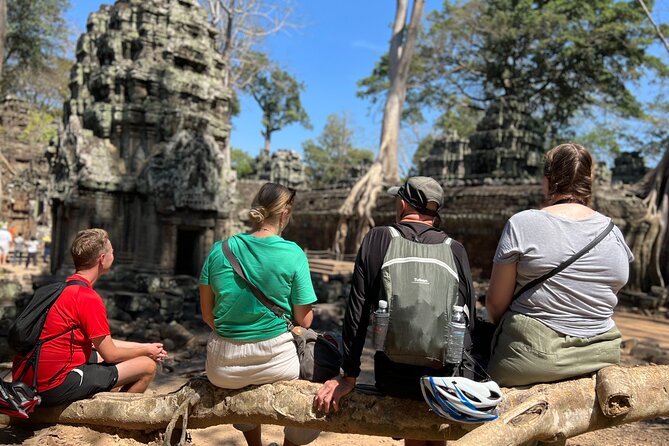
The guide speaks English and accompanies you through the temples. That is especially useful at Angkor because the ruins are impressive but not always self-explanatory.
At Angkor Wat, the guide can give structure to the largest and most famous visit. At Bayon, an explanation of the faces and Jayavarman VII’s Buddhist state helps you understand why the temple looks so different. At Ta Prohm, the guide can point out how the preserved ruins and tree roots fit together.
The positive response to the guide-led format is easy to understand. Cycling alone would give you freedom, but it would not necessarily give you the same historical context. This tour combines movement with interpretation, which is its strongest feature.
The supplied feedback also praises the back-road cycling approach and the chance to visit Angkor Wat, Ta Prohm, and Bayon by bicycle. That is a useful clue about the tour’s character: the ride itself is not just transport between monuments. It is part of the appeal.
Who should book this Angkor bike tour?
I would recommend this tour to you if you want:
- A full day rather than a quick temple circuit
- A more active alternative to riding in a vehicle
- A guide who can explain the Khmer Empire, Angkor Wat, Angkor Thom, Bayon, and Jayavarman VII
- A mix of famous temples and a quieter ruined site
- Lunch, water, transportation, and hotel transfers included in one price
- A small group, provided you confirm the final group size
I would think twice if you dislike cycling, want to set your own pace at every temple, or prefer a short morning visit. The tour is also less attractive if you already have a temple pass and your own bicycle, since several included services may not add much value for you.
The weather policy also matters. The experience requires good weather, and poor conditions can lead to a different date or a full refund. Free cancellation is available up to 24 hours before the start time. Changes or cancellations made less than 24 hours ahead are not accepted for a refund.
Should you book it?
Book this Angkor Wat bike tour if you want the major temples with a little more air, movement, and local connection between them. The strongest reasons are the small-group design, the inclusion of lunch and transport, and the addition of Ta Nei alongside the essential Angkor Wat, Bayon, and Ta Prohm.
Before booking, confirm three things: your exact pickup time, the final group size, and the separate temple-pass cost. If those details work for you, $40 is a sensible price for an eight-hour, guide-led day that covers the main highlights without making the ride itself feel like an afterthought.
FAQ
Is the temple pass included in the tour price?
No. The temple pass is not included. You will go to the ticket booth to buy it, and the pass is an additional personal cost.
How long does the tour last?
The experience lasts approximately eight hours.
What time does the tour begin?
The meeting information gives an 8:30 am start time, while the itinerary mentions hotel pickup at approximately 7:30 am. Confirm your exact pickup time with the provider.
What temples are included?
The route includes Angkor Wat, Bayon Temple, Ta Nei Temple, and Ta Prohm.
Is lunch included?
Yes. Lunch and bottled water are included. Breakfast is not included.
Is hotel transportation provided?
Yes. Hotel pickup and drop-off are included, along with transportation during the experience.
What happens if bad weather cancels the tour?
If poor weather causes a cancellation, you will be offered a different date or a full refund. You can also cancel up to 24 hours before the start time for a full refund.
More Lunch Experiences
- Angkor Wat Sunset Small Group Tour with Lunch Included
★ 5.0 · 3,059 reviews - Kulen Waterfall Join-in Tour (local Picnic lunch)
★ 5.0 · 2,434 reviews - Kulen Mountain: Small-Group Tour and Picnic lunch
★ 4.9 · 1,802 reviews - Phnom Kulen Waterfall & the Sacred 1000 Lingas (with Lunch)
★ 4.8 · 974 reviews
Just added around Siem Reap
- Private Battambang Full-Day Guided Tour★ 4.5 · 3 reviews
- Kulen Mountain, Beng Mealea and Banteay Srei Full Day Tour★ 5.0 · 3 reviews
- Kompong Pluk Tour★ 5.0 · 3 reviews
- Private 3 Day Tour to Discover the ancient temples★ 5.0 · 3 reviews
- Kulen National Park Ticket -Waterfall & 1000 Lingas★ 5.0 · 3 reviews
- Cambodia: Absolute Traditional Dance Show with Buffet Dinner★ 5.0 · 3 reviews
- Border Transfer (Siem Reap to Laos/Laos to Siem Reap)★ 3.5 · 3 reviews
- Beng Melea, Rolous Group & Kompong Phluk Floating Village★ 5.0 · 3 reviews
Angkor Wat Tours, compared.

Angkor Wat Sunrise or Sunset Tour with Guide from Siem Reap
Read our review →
Angkor Wat: Small-Group Sunrise or Sunset Tour
Read our review →
Angkor Wat 2-Day Tour with Sunrise and Sunset
Read our review →

Angkor Wat Sunrise tour with Small – Group and Guide tours
Read our review →
Angkor Wat Highlights and Sunrise Guided Tour from Siem Reap
Read our review →
Angkor Wat Sunset Small Group Tour with Lunch Included
Read our review →
Full-Day Angkor Wat Sunrise Private Tour with Guide from Siem Reap
Read our review →Browse the lists this tour appears in