
Reviewed · ANGKOR WAT TOURS
Angkor Wat & Floating Village 3-Day Private Tour
Three days gives Angkor room to breathe. This private Siem Reap tour combines Cambodia’s grandest temples with smaller sites, a jungle trek, a floating village, and a cultural dinner. I like the private format, since you can ask questions and adjust the pace, and I like the range of places covered, from famous Angkor Wat to the older Roluos group and Kbal Spean.
The main drawback is cost planning. The tour price is $198.98 per person, but the three-day temple pass costs another $62 per person, and lunches, drinks, and tips are extra. Day 2 also includes a moderate trek at Kbal Spean, so you should be comfortable walking on uneven ground in warm weather.
In This Review
- Key points at a glance
- Why this three-day plan works in Siem Reap
- Day 1: Ta Prohm, Angkor Thom, and Angkor Wat
- Day 2: Preah Khan, Banteay Srei, and Kbal Spean
- Day 3: Roluos temples and Kampong Phluk
- What the $198.98 price really covers
- Guides, drivers, and the private-tour advantage
- Who should book this tour?
- Should you book it?
- FAQ
- How long is the tour?
- What time does the tour start?
- Is hotel pickup available?
- Is this a private tour?
- Does the price include the Angkor temple pass?
- Is the floating village boat ride included?
- Are meals included?
- Is the Kampong Phluk admission included?
- How physically demanding is the tour?
- Can I cancel for a full refund?
Key points at a glance
- Ta Prohm begins the temple story: Tree roots, stone corridors, and the Tomb Raider II connection make this an atmospheric first stop.
- Angkor Thom packs in several monuments: You see the Bayon, Elephant Terrace, Terrace of the Leper King, Royal Enclosure, Phimean Akas, and Baphuon.
- Banteay Srei rewards the longer drive: Its detailed carving gives you a very different view of Khmer temple art.
- Kbal Spean adds a short outdoor trek: The forest path leads to a river associated with one thousand lingas.
- The Tonle Sap day changes the rhythm: Roluos temples come first, followed by a wooden boat through Kampong Phluk and its flooded forest.
- Private guiding is the strongest feature: Guides such as Sambath, Mork, Long, Chhoeum, and Visovitou have been praised for flexibility, clear explanations, and thoughtful service.
Why this three-day plan works in Siem Reap
Angkor is not one monument. It is a large collection of temples spread around Siem Reap, with very different moods and periods. A rushed one-day visit can leave you with impressive photographs but little sense of how the sites relate to one another.
This plan gives you three distinct days. Day 1 handles the essential Angkor sights. Day 2 reaches farther out to Preah Khan, Banteay Srei, and Kbal Spean. Day 3 moves beyond the central temple circuit to the Roluos group and Tonle Sap Lake.
That variety matters. You are not spending three straight days looking at one style of ruin. You move from huge ceremonial spaces to delicate carvings, from jungle growth to a living fishing community.
The 8:00 AM pickup each day is practical. It gives you a full morning and afternoon at the sites, although the days will still feel busy. Since this is a private activity, you have a better chance of pausing when you need water, asking for another explanation, or spending less time at a stop that does not hold your interest.
Guides named in past bookings include Sambath, Visovitou, Long, Mork, Chhoeum, Smith, and Paul. Their praised qualities are useful clues about what to expect from the best guide pairing: clear English, patience, historical explanations, good timing, and flexibility. Mork was also praised for photo suggestions and local advice, while Chhoeum and driver Veasna were described as a funny, capable team.
More Angkor Wat tours we have reviewed:
- Angkor Wat Sunrise or Sunset Tour with Guide from Siem Reap
★ 5.0 · 12,109 reviews - Siem Reap: Angkor Wat: Small-Group Sunrise or Sunset Tour
★ 5.0 · 9,444 reviews - Siem Reap: Angkor Wat 2-Day Tour with Sunrise and Sunset
★ 4.9 · 4,429 reviews
Day 1: Ta Prohm, Angkor Thom, and Angkor Wat
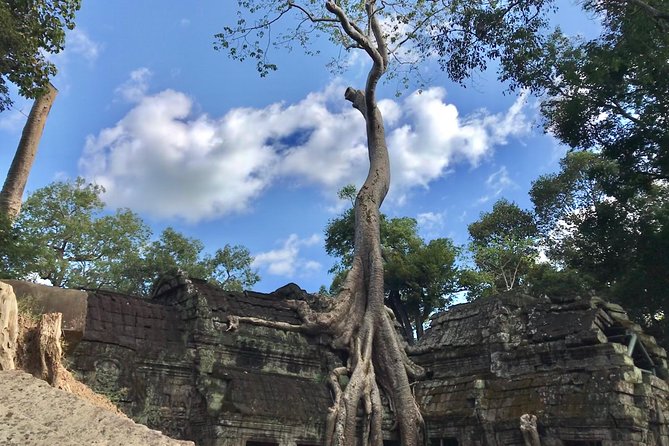
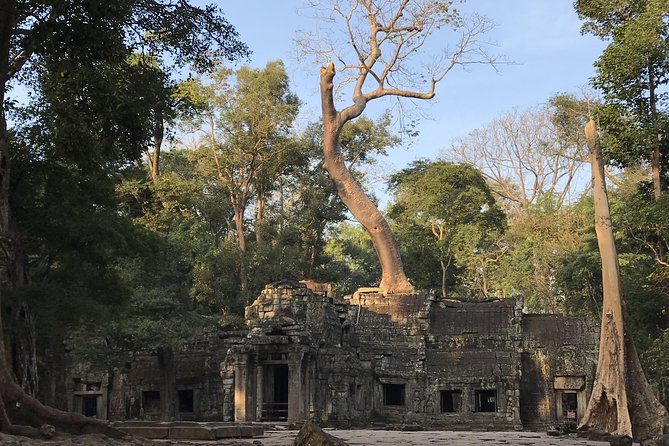
Your first stop is Ta Prohm, one of the most visually memorable temples in the area. Large strangler fig roots grip the stone walls and push through galleries, creating the famous jungle-and-ruin effect. The connection to Tomb Raider II adds a film-location angle, but the temple is more than a movie backdrop.
Ta Prohm shows how nature and architecture can collide over time. You can look for carved details in the walls while also noticing how tree roots have become part of the site’s identity. Give yourself time to take in both elements. A guide is especially useful here because it is easy to focus only on the largest roots and miss the meaning of the carvings and layout.
The visit is listed at about one hour. That is enough for a focused look, but not a slow examination of every corner. Comfortable shoes and water matter, even though the walking time at this stop is not extreme.
From Ta Prohm, the tour continues to Angkor Thom, the last capital of the Khmer Empire. The route passes through the Victory Gate, then takes in several monuments inside the old city.
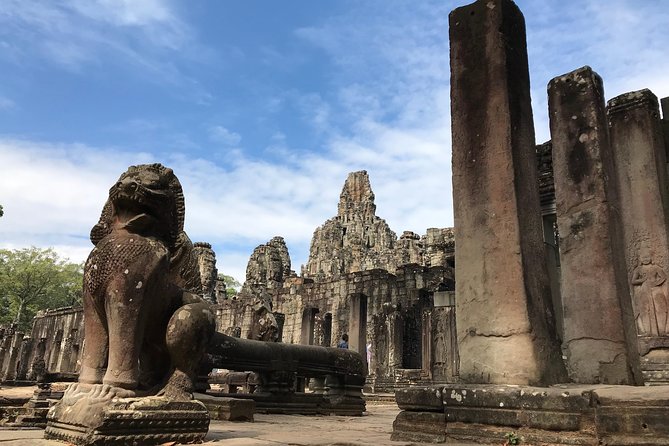
The Bayon is the centerpiece. Its stone towers carry many carved faces, and the effect changes as you move around the temple. The faces are the reason most people remember Bayon, but the site also rewards a closer look at its corridors and reliefs.
The two terraces offer a different experience. The Elephant Terrace and Terrace of the Leper King are long, open architectural spaces with carved surfaces. You also see the Royal Enclosure, Phimean Akas, and Baphuon. The two-hour visit allows more room here than at Ta Prohm, but Angkor Thom covers a lot of ground.
I would ask your guide to explain how the different structures fit into the old capital rather than treating each one as a separate photo stop. That context turns a string of ruins into a functioning royal city in your imagination.
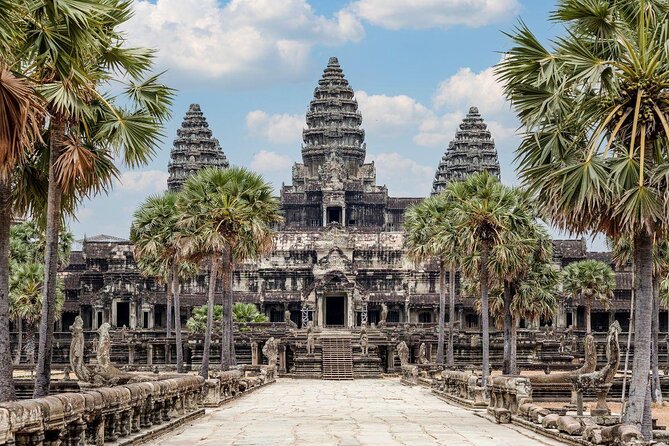
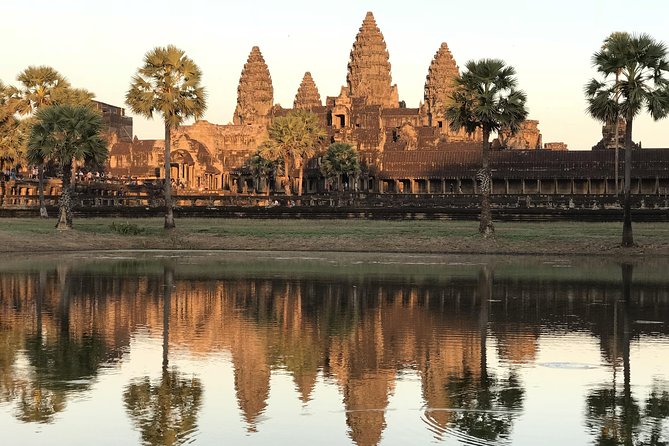
Angkor Wat is the final major temple of the day. It is the site most associated with Siem Reap and the world’s largest religious site. Its scale can be hard to grasp at first, so take time to look beyond the familiar front view.
The schedule places lunch around noon, with local restaurants near the temples. Lunch is not included, but your guide can recommend a place. You may also choose to return to town for lunch, though that could affect the day’s pace. Ask about the timing before setting off, especially if you want a longer visit at Angkor Wat.
A cultural dinner with a performance is included. After a full day outdoors, this gives the evening a clear shape without requiring you to arrange another activity. The supplied details do not specify the performance style or venue, so ask your operator for the exact dinner arrangements before the day begins.
Day 2: Preah Khan, Banteay Srei, and Kbal Spean
Day 2 begins with Preah Khan, part of the Grand Circuit. It is described as an ancient Buddhist university, which gives the site a different character from the royal and ceremonial focus of Angkor Thom and Angkor Wat.
Preah Khan is a good place to pay attention to layers. You see a major religious complex, but your guide can also help you understand how Buddhist and Hindu elements appear across the Angkor sites. The planned visit lasts about one hour, so use the guide time well and ask about the building’s purpose and decoration.
The route then continues to Banteay Srei, often called the Women’s Citadel. It is especially valued for its fine carving, and it provides a sharp contrast with the enormous scale of Angkor Wat.
Banteay Srei is not the largest temple on this route. Its appeal comes from the detail. I would slow down here and look closely at the carved surfaces rather than judging the stop by size. The itinerary lists admission here as free, while the separate three-day temple pass is listed at $62 per person. Because those details can appear confusing together, confirm at booking how the pass applies to your visit.
The longer drive to Banteay Srei is part of the tradeoff. You spend more time reaching it than you would at another central Angkor monument, but the change in scale and carving style makes the journey worthwhile for many people.
After a lunch break at your own expense, you continue to Kbal Spean. The stop includes a trek of about two hours to see the river associated with one thousand lingas.
This is the most physically demanding part of the tour. The description calls for a moderate fitness level, and that is important advice. You should be ready for a forest walk rather than a simple roadside temple visit. Wear shoes suited to uneven ground, carry the mineral water provided, and keep your pace steady.
Kbal Spean changes the day from temple touring to an outdoor walk. The river setting also helps explain why sacred symbols were placed in or near flowing water. A guide can give the carvings meaning instead of leaving you to search for them along the route.
Day 2 is likely the best fit for people who want more than the standard Angkor circuit. It is also the day most likely to feel tiring, because it combines a longer outing, a remote temple, and a trek.
Day 3: Roluos temples and Kampong Phluk
The last day begins with the Roluos group, a collection of three monuments connected with the former capital known as Hari-Hara and dating to the ninth century. This gives you an earlier chapter in the region’s temple development.
The three sites include Preah Ko, identified as a Hindu temple, along with the other Roluos monuments. Compared with the celebrated central Angkor sites, Roluos can feel quieter and less overwhelming. That makes it a useful final temple morning, especially after two days of large monuments.
The planned visit lasts two hours. Ask your guide to point out what makes these earlier structures different from the later temples you saw on Days 1 and 2. The value here is not only the individual buildings. It is the chance to see the area’s architectural story develop over time.
After lunch at a local restaurant, paid separately, you visit Kampong Phluk floating village. The boat trip is included, and the route takes you through the flooded forest on Tonle Sap Lake.
This is a welcome change from stone temples. You see a fishing community connected to the seasonal water system, and the wooden boat provides a closer view than a quick lakeside photo stop. The floating village visit is planned for about two hours, giving you time to observe the setting without turning the entire day into a boat excursion.
The Tonle Sap portion also adds a human side to the trip. Angkor explains Cambodia through monuments and royal power. Kampong Phluk shows a community shaped by water, fishing, and changing conditions on the lake. I value that contrast because it keeps the tour from becoming only an archaeological checklist.
As with any community visit, approach it with attention and respect. Your guide can help explain what you are seeing and how the local setting works. The supplied details do not promise a specific interaction or activity beyond the boat trip, so keep expectations focused on the ride, flooded forest, and village environment.
More Tonle Sap floating village trips:
- From Siem Reap: Kampong Phluk Floating Village Tour by Boat
★ 4.9 · 6,979 reviews - Sunset tour of Kampong Phluk stilts home village on the Tonle Sap
★ 5.0 · 4,865 reviews - Siem Reap: Kampong Phluk Floating Village Tour with Boat
★ 4.9 · 3,843 reviews - Siem Reap Floating Village Kampong Phluk Sunset with Boat
★ 5.0 · 1,962 reviews
What the $198.98 price really covers
At $198.98 per person, the price makes the most sense for people who value a private vehicle, guide, and a ready-made three-day route. You receive hotel pickup, an air-conditioned vehicle, an expert guide, mineral water, cold tissues, the Tonle Sap boat trip, and the included dinner.
The $62 temple pass is extra, bringing the known cost to $260.98 per person before lunches, drinks, personal expenses, and tips. That is the figure I would use when comparing this experience with shorter tours.
The value improves if you are sharing the private vehicle with a small party or qualify for a group discount. A private tour also reduces the planning work. You do not need to arrange separate transport for distant Banteay Srei, Kbal Spean, Roluos, and Kampong Phluk.
The price is less attractive if you want only Angkor Wat and Bayon. In that case, a shorter temple tour may fit better. This package earns its cost by covering the wider Siem Reap area and adding a guide throughout the three days.
Guides, drivers, and the private-tour advantage
The strongest praise attached to this experience concerns the people running it. Sambath was praised for arranging the days around personal wishes, arriving on time, and explaining both Cambodian history and local life. Long was praised for excellent English, patience, friendliness, and professional service.
Mork has been singled out for local advice, useful photo spots, and careful attention to personal needs. Smith and Paul were praised for organization, humor, help with Hinduism and Buddhism, and a sense that the service delivered more than expected.
The driver matters too. Veasna was praised for professional driving, and Mr. Phal was noted for safe driving and a cooler of cold water. These details may sound small, but three days of temple roads and long transfers are much easier with a reliable driver and a cool vehicle.
Guide assignments can vary, so you should not assume a particular person will lead your booking. Still, the repeated praise for flexibility, clear explanations, punctuality, and cold water gives you a useful standard. If your guide asks what you want from the tour, be specific. Tell them if you prefer carvings, photography, religious context, fewer stops, or a slower pace.
Who should book this tour?
I would recommend it to first-time visitors who want a broad introduction to Siem Reap without arranging transport and guides separately. It suits couples, families, and small private groups that want control over the pace.
It is also a good fit if you want more than the famous temples. Banteay Srei, Kbal Spean, Roluos, and Kampong Phluk give the trip more range and help you see the area beyond Angkor Wat.
You should think twice if you dislike early starts, long temple days, or outdoor walking. Kbal Spean requires moderate fitness, and the three-day pass plus meals can push the final cost well above the headline price.
The private setup is useful for families and mixed-interest groups. One person can ask for more temple detail while another takes a short break, subject to the day’s route and timing. The air-conditioned vehicle, water, and cold tissues are practical comforts in Cambodia’s heat.
Free cancellation is available if you cancel at least 24 hours before the experience start time. Changes or cancellations inside that window are not accepted for a refund.
Should you book it?
Book this tour if you want a well-rounded three-day introduction to Siem Reap, with major temples, less familiar sites, a forest trek, and Tonle Sap. The guide and driver service are the main reasons to choose it over piecing together separate day trips.
Before paying, confirm the temple-pass arrangements, dinner venue, pickup details, and the amount of walking expected at Kbal Spean. If you accept the extra costs and a full schedule, this is a strong choice for seeing both Cambodia’s monumental past and its living water-based communities.
FAQ
How long is the tour?
The experience lasts approximately three days.
What time does the tour start?
Pickup begins at 8:00 am each day.
Is hotel pickup available?
Yes. Pickup from your hotel is offered.
Is this a private tour?
Yes. Only your group participates in the private activity.
Does the price include the Angkor temple pass?
No. The three-day temple pass costs US$62 per person. Children below 12 years old are listed as free of charge for the pass.
Is the floating village boat ride included?
Yes. The boat trip to the floating village on Tonle Sap Lake is included.
Are meals included?
Dinner is included. Lunches, other meals, and beverages are not included.
Is the Kampong Phluk admission included?
The Kampong Phluk stop lists the admission ticket as included. Lunch at a local restaurant is paid separately.
How physically demanding is the tour?
A moderate level of physical fitness is recommended. The Kbal Spean visit includes a trek lasting about two hours.
Can I cancel for a full refund?
Yes, if you cancel at least 24 hours before the experience start time. Cancellations made less than 24 hours in advance are not refunded.
More 3-Day Experiences
- From Siem Reap: Angkor Wat and Floating Village 3-Day Trip
★ 5.0 · 100 reviews - 3-Day Angkor Wat with All Interesting Major Temples, Banteay Srei & Beng Mealea
★ 5.0 · 70 reviews - 3-Day Angkor Wat & All Interesting Major Temples & Kulen Mount Waterfall
★ 5.0 · 63 reviews - 3 Days Siem Reap Explorer – Small Group
★ 5.0 · 50 reviews
Just added around Siem Reap
- Private Battambang Full-Day Guided Tour★ 4.5 · 3 reviews
- Kulen Mountain, Beng Mealea and Banteay Srei Full Day Tour★ 5.0 · 3 reviews
- Kompong Pluk Tour★ 5.0 · 3 reviews
- Private 3 Day Tour to Discover the ancient temples★ 5.0 · 3 reviews
- Cambodia: Absolute Traditional Dance Show with Buffet Dinner★ 5.0 · 3 reviews
- Kulen National Park Ticket -Waterfall & 1000 Lingas★ 5.0 · 3 reviews
- Border Transfer (Siem Reap to Laos/Laos to Siem Reap)★ 3.5 · 3 reviews
- Best Taxi Siem Reap to Battambang – English Speaking Driver★ 4.5 · 3 reviews
Angkor Wat Tours, compared.

Angkor Wat Sunrise or Sunset Tour with Guide from Siem Reap
Read our review →
Angkor Wat: Small-Group Sunrise or Sunset Tour
Read our review →
Angkor Wat 2-Day Tour with Sunrise and Sunset
Read our review →

Angkor Wat Sunrise tour with Small – Group and Guide tours
Read our review →
Angkor Wat Highlights and Sunrise Guided Tour from Siem Reap
Read our review →
Angkor Wat Sunset Small Group Tour with Lunch Included
Read our review →
Full-Day Angkor Wat Sunrise Private Tour with Guide from Siem Reap
Read our review →Browse the lists this tour appears in