
Reviewed · COOKING CLASSES
City Tour & Cooking Class
Cambodia’s past and its food meet here. This Siem Reap experience combines Wat Thmey, local markets, Buddhist art, and Khmer cooking in one private outing, with guide pickup and a meal included. I like the mix of serious history and practical food culture, and I like that the cooking class begins at a market before moving into a local home setting. The main consideration is time: with several stops, the day can feel brisk, and entrance fees are extra.
Guide Kosorl receives especially warm praise for his friendly manner, prompt service, and personal connection to Siem Reap. Mr. K is also part of the guiding team, and the cooking teacher provides patient, hands-on help. If you are comfortable with a simple homestay-style setting, including basic bathroom facilities rather than an ensuite bathroom, the class offers a closer look at daily Khmer life than a standard restaurant lesson.
In This Review
- Key details that shape the experience
- Why this Siem Reap combination works
- Wat Thmey and Cambodia’s painful past
- Psar Chaa, where ingredients become part of the story
- Angkor National Museum and the Khmer timeline
- Wat Preah Prom Rath and Buddhist stories
- The market-to-kitchen cooking class
- What the private format changes
- Guides Kosorl and Mr. K
- Timing, cost, and practical tradeoffs
- Who should book this experience
- Should you book the City Tour and Cooking Class?
- FAQ
- How much does the City Tour and Cooking Class cost?
- How long does the experience last?
- Is hotel pickup included?
- Is this a private tour?
- Is the cooking class included in the price?
- Is food included?
- Is drinking water included?
- What dish is prepared during the class?
- How much is admission to the Angkor National Museum?
- How much is admission to Wat Thmey?
- Can I cancel for a full refund?
Key details that shape the experience
- Five different sides of Siem Reap: Visit Wat Thmey, Psar Chaa, Angkor National Museum, Wat Preah Prom Rath, and a local cooking setting.
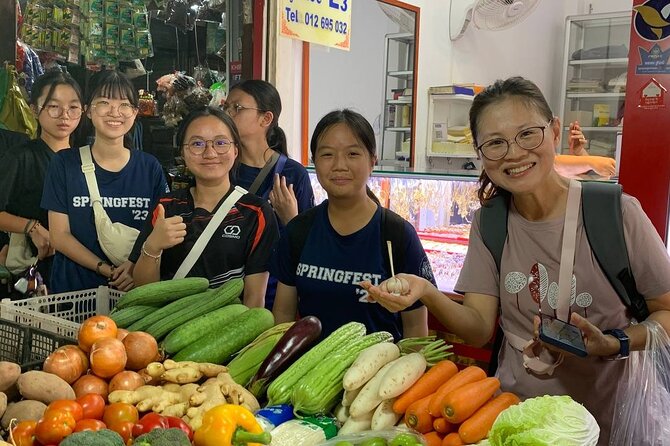
- A market comes before the meal: Shop for fresh fruit, vegetables, herbs, sweets, and other ingredients with your chef.
- Fish amok is part of the lesson: You get hands-on practice with one of Cambodia’s best-known traditional dishes.
- Private rather than shared: Only your own group participates, which allows the guide and chef to adjust their help to you.
- $40 covers the main experience: Pickup, drop-off, guide service, cooking class, meal, and cold drinking water are included.
- Budget for two entrance fees: The National Museum costs $12 per person and Wat Thmey costs $4 per person.
Why this Siem Reap combination works
Many city tours leave you with a string of temples and a blur of names. Many cooking classes give you a recipe but little sense of the place where the food comes from. This experience tries to connect the two.
You begin with Siem Reap’s difficult past and religious traditions, then move through a local market before cooking a Khmer meal. That order matters. You see the ingredients in their everyday setting, learn how they fit into local food habits, and then use them yourself.
I especially like the private format. Your group does not have to match the pace of a large busload, and the guide can spend more time answering questions. The schedule is listed as roughly three to five hours, so expect the exact length to depend on how long you spend at each stop and how the cooking portion develops.
The tour costs $40 per person. That is a fair price if you want both sightseeing and a meal-based cultural activity, since pickup, drop-off, guide service, the class, food, and cold water are included. It is less attractive if you only want a quick cooking lesson or if you already plan to visit the museum and Wat Thmey separately.
More City Tours in Siem Reap
- Siem Reap: City Walking Tour
★ 4.6 · 583 reviews - Angkor Wat Sunrise & Ancient City Discovery
★ 5.0 · 124 reviews - Siem Reap City Walking Tour
★ 4.5 · 114 reviews
Wat Thmey and Cambodia’s painful past
The first stop is Wat Thmey, often called Siem Reap’s Killing Field. This is a quiet and serious place connected to the Khmer Rouge period from 1975 to 1979, when forced displacement, imprisonment, starvation, and mass killing devastated Cambodia.
The stop is planned for about one hour. That gives you time to listen, look around, and ask questions without treating the site like a quick photo stop. I would approach this part with respect and patience. It is not entertainment, and the subject may be difficult, especially if you have little prior knowledge of Cambodia’s recent past.
An admission fee of $4 per person is not included. The guide can provide context, but the quality of this stop depends partly on how much explanation you want and how openly you ask questions. If you prefer a lighter first activity after hotel pickup, you may find the opening emotionally heavy. Still, placing Wat Thmey near the beginning gives the rest of the day a useful sense of place and perspective.
Psar Chaa, where ingredients become part of the story
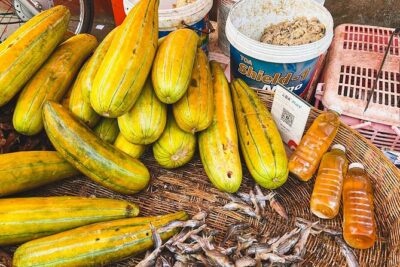
Psar Chaa, or the Old Market, brings you into the practical side of Cambodian life. The market sells the everyday goods you would expect from a large town market, with a Khmer character: fruit, vegetables, flowers, sweets, cakes, and other local products.
You have about an hour here. That is enough time to look carefully rather than simply walk through. The market is also useful preparation for the cooking class, because you begin to see the raw ingredients before they appear on your plate.
I like the way this stop links sightseeing with the meal. A market visit can otherwise feel like a short wander through unfamiliar stalls. Here, it has a clear purpose: you are selecting and discussing ingredients with the chef.
The supplied details do not promise a set shopping list or a particular menu beyond traditional Khmer food and fish amok. That is worth keeping in mind. You should expect to learn about the ingredients chosen for your class, but you should not assume that every market item will be used or that you can request any dish you like.
Angkor National Museum and the Khmer timeline
The Angkor National Museum is the most formal museum stop. Its collection covers periods before the Khmer Empire, the Khmer Empire itself, and the years after it. The museum sits along the route toward Angkor Wat, making it a useful place to connect Siem Reap’s temples with the wider story of Cambodia.
Plan for about one hour here. That is enough for an introduction, though not enough to examine every object in detail. If you enjoy museums, you may wish for more time. If museums are not your favorite part of a city tour, the guide can help direct your attention toward the objects and periods most relevant to the places you are seeing.
Admission costs $12 per person and is not included. This is the largest additional expense in the itinerary, so add it to the advertised $40 when comparing the total price. With both entrance fees, the basic cost becomes $56 per person before any other personal spending.
The museum is valuable because it gives you background that a cooking lesson cannot provide. It also helps make later temple visits more meaningful. The tradeoff is that an hour in a museum takes time away from the cooking class or other city stops, so this itinerary suits people who want a broad introduction rather than a single main attraction.
More Cooking Classes in Siem Reap
- Khmer Cooking Class at a Local’s Home in Krong Siem Reap
★ 5.0 · 2,731 reviews - Siem Reap: Khmer Cooking Class at a Local’s Home
★ 5.0 · 1,108 reviews - Award-Winning Cooking Class Experience with Professional Teacher
★ 5.0 · 745 reviews - Cambodian Village Cooking Class
★ 5.0 · 265 reviews
Wat Preah Prom Rath and Buddhist stories
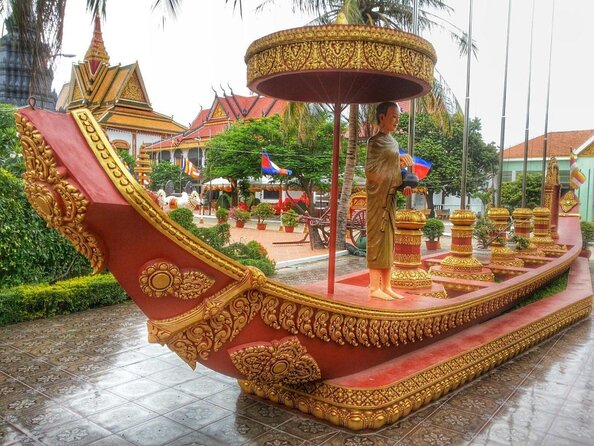
Wat Preah Prom Rath is centrally located near the Old Market and Pub Street. The temple is known here for painted scenes in the Buddha Hall, which the guide can explain as you look around.
This is another planned one-hour stop, though the visit may feel more relaxed than the museum or Wat Thmey. The temple gives you a chance to see religious art and hear how Buddhist stories are presented in Cambodia. It also adds a living place of worship to a day that includes a museum and a memorial site.
There is no admission charge listed for this stop. That makes it an easy addition to the itinerary, but it does not mean the visit is a filler. The temple helps balance the day. You move from tragedy to market life, then to objects from the past and an active religious setting before sitting down to cook.
As with any temple visit, modest, respectful behavior is appropriate. The provided information does not specify a dress code or restrictions, so ask the guide if you are unsure about anything when you arrive.
The market-to-kitchen cooking class
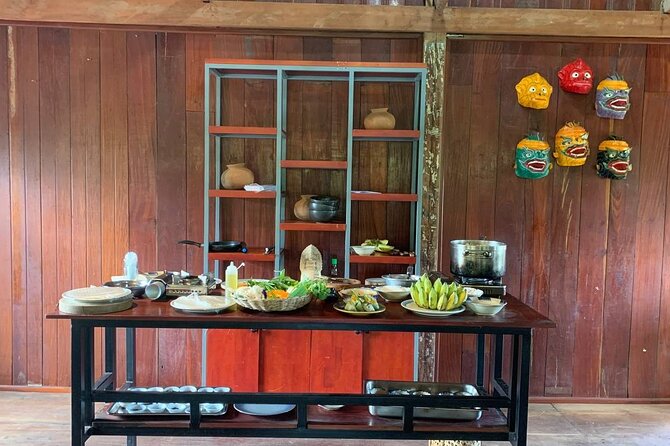
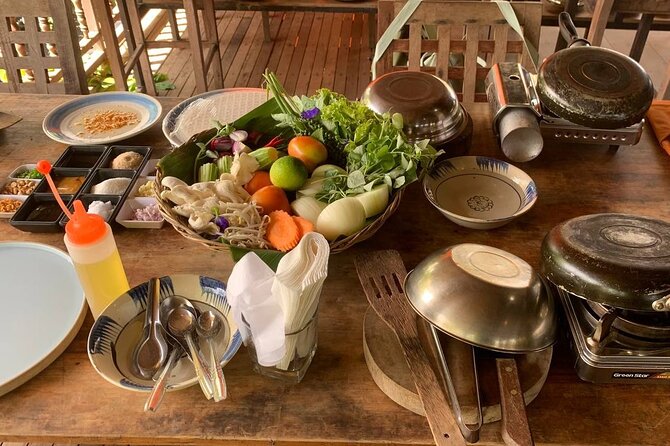
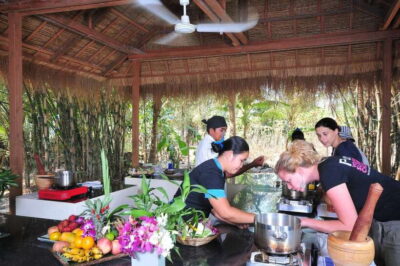
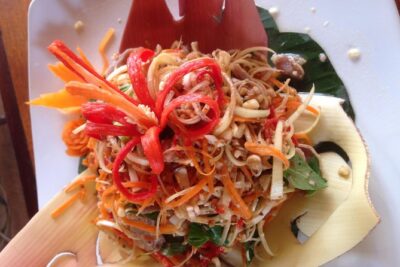
The cooking portion is the heart of the experience for anyone who wants to do more than look at Cambodian food. Before class, you visit a local market with a home-style chef and select fresh ingredients. You then prepare a traditional Khmer meal and eat what you cook.
That hands-on sequence is the right approach. You learn not only how a dish is assembled, but also what the ingredients look like before preparation. Aromatic spices, herbs, vegetables, and other traditional items become familiar through touch and smell, not just through a printed recipe.
Fish amok is specifically mentioned as one dish prepared during the class. It is an important detail because it gives you a clear taste of Khmer cooking rather than a generic Southeast Asian lesson. The available information does not state every dish on the menu, so treat fish amok as a highlight, not a guarantee that it will be the only recipe or the full menu.
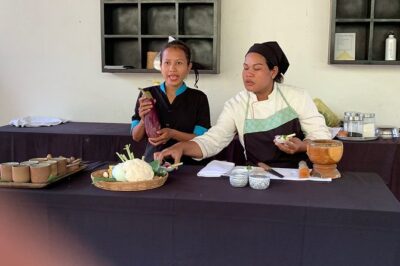
The cooking instructor’s role seems particularly important. You receive direct help rather than being left to manage unfamiliar ingredients on your own. One account describes the chef as a good guide whose instruction made the food successful, even for people who did not consider themselves natural cooks. That is exactly what you want in a short class.
The class may take place in a local family home or a simple homestay setting. This is a strong cultural feature, but it also comes with a clear practical warning. One home setting has basic bathroom facilities, without an ensuite bathroom, hot and cold running water, or a flushing toilet. If you want a polished cooking school with restaurant-style facilities, this may not suit you. If you want a look at ordinary Khmer family life, the simplicity is part of the point.
What the private format changes
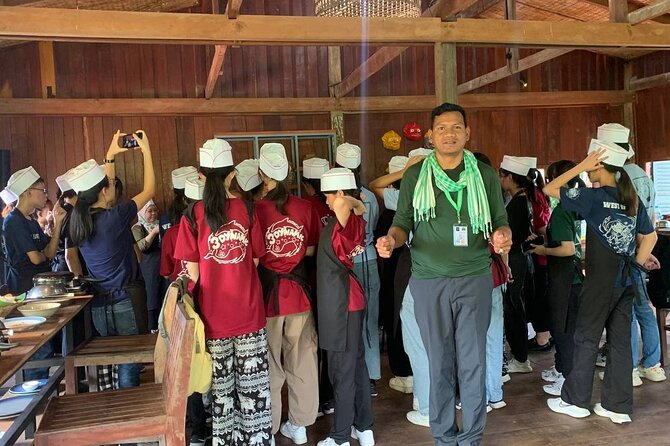
This is a private tour, so only your group participates. That makes a real difference during both the city portion and the cooking class.
At Wat Thmey or the museum, you can ask the guide to slow down or explain a point again. At the market, you can spend more time on ingredients that interest you. In the kitchen, the chef can offer more direct help with chopping, mixing, and preparing fish amok.
The tour suits couples, families, and small groups that want one flexible experience instead of arranging several separate activities. It also worked well for a student group, since the cooking class offered direct contact with local people and a practical way to learn about Khmer culture.
A private tour does not automatically mean luxury. Transport and service are private, but the home-style kitchen may be modest, and the schedule contains several one-hour stops. Think of it as a personal introduction to Siem Reap, not a high-end food tour.
Guides Kosorl and Mr. K
The guide can shape the day as much as the sites do. Kosorl is praised for being friendly, engaging, attentive, and prompt. Those qualities matter when the itinerary moves between serious history, markets, temples, and a cooking class.
His strength appears to be conversation. The day can cover food, history, politics, family, and ordinary life, giving you more than a memorized explanation at each stop. That personal exchange is one of the better reasons to choose this tour rather than simply hiring transport between sights.
Mr. K also guides the experience and is described as friendly and well-informed, with an easy conversational style. If you are assigned one of these guides, do not hesitate to ask about the city beyond the formal points on the schedule. The information provided suggests that both guides add character to the outing.
Naturally, a guide’s exact approach can vary from day to day. The strongest benefit comes when you participate actively. Ask questions, show interest in the food, and tell the guide if you want more time at a particular stop.
Timing, cost, and practical tradeoffs
The stated duration is approximately three to five hours. The itinerary lists five stops, each with about an hour, so the actual flow may not match a strict five-hour timetable. Pickup, driving time, museum admission, conversation, and cooking can all affect the final length.
Pickup and drop-off are included, which makes the experience easier to arrange in Siem Reap. Cold drinking water is also included, a small but useful touch in Cambodia’s warm climate.
At $40 per person, the tour offers solid value for a private outing with a guide, transportation, a cooking class, and a meal. Add $12 for the Angkor National Museum and $4 for Wat Thmey, making the known total $56 per person if you visit both paid sites.
The price works best for people who want variety. You receive cultural context, local shopping, temple art, and food preparation in one booking. The value is weaker if you dislike moving between several short stops, prefer a restaurant kitchen, or want a long, quiet museum visit.
Free cancellation is available if you cancel at least 24 hours before the start time. Cancellations within 24 hours are not refunded, and changes during that period are not accepted. Keep that rule in mind before confirming your plans.
Who should book this experience
I would choose this tour if you have limited time in Siem Reap and want a broad introduction beyond the major temple circuit. It is especially suitable for first-time visitors, food lovers, small private groups, and anyone who prefers personal conversation to a large organized group.
Families and students may also appreciate the practical cooking element. Preparing food gives younger participants something active to do, while the guide can explain difficult historical subjects at an appropriate pace.
I would think twice if you need modern facilities, dislike basic home settings, or want an itinerary focused only on temples. The Wat Thmey stop is serious, and the museum and temple visits may feel compressed for someone who wants detailed study.
Should you book the City Tour and Cooking Class?
Book it if you want your Siem Reap introduction to include people, food, memory, and religion, not just monuments. The strongest features are the private format, the market visit before cooking, the patient kitchen instruction, and the chance to work with guides such as Kosorl or Mr. K.
Before booking, add the $16 in entrance fees to the $40 price and decide how you feel about a simple homestay-style kitchen. If those tradeoffs suit you, this is a thoughtful, good-value half-day experience with a meal you help create yourself.
FAQ
How much does the City Tour and Cooking Class cost?
The experience costs $40 per person. The Angkor National Museum admission of $12 and Wat Thmey admission of $4 are not included.
How long does the experience last?
The approximate duration is three to five hours.
Is hotel pickup included?
Yes. Pickup and drop-off are included.
Is this a private tour?
Yes. Only your own group participates in the activity.
Is the cooking class included in the price?
Yes. The cooking class and meal are included.
Is food included?
Yes. You eat the meal prepared during the cooking class.
Is drinking water included?
Yes. Cold drinking water is included.
What dish is prepared during the class?
Fish amok is specifically included among the dishes prepared during the cooking experience. The full menu is not specified.
How much is admission to the Angkor National Museum?
Admission costs $12 per person and is paid separately.
How much is admission to Wat Thmey?
Admission costs $4 per person and is paid separately.
Can I cancel for a full refund?
Yes, if you cancel at least 24 hours before the experience start time. Cancellations or changes made less than 24 hours before the start time are not refunded.
More Workshops
- Siem Reap: Cambodian Pottery Class
★ 4.9 · 339 reviews - Cambodian Cooking Class from Siem Reap
★ 4.9 · 190 reviews - Siem Reap Cooking Class
★ 5.0 · 170 reviews - Cambodian Pottery Class in Siem Reap
★ 4.5 · 157 reviews
Just added around Siem Reap
- Private Battambang Full-Day Guided Tour★ 4.5 · 3 reviews
- Kulen Mountain, Beng Mealea and Banteay Srei Full Day Tour★ 5.0 · 3 reviews
- Kompong Pluk Tour★ 5.0 · 3 reviews
- Private 3 Day Tour to Discover the ancient temples★ 5.0 · 3 reviews
- Cambodia: Absolute Traditional Dance Show with Buffet Dinner★ 5.0 · 3 reviews
- Kulen National Park Ticket -Waterfall & 1000 Lingas★ 5.0 · 3 reviews
- Border Transfer (Siem Reap to Laos/Laos to Siem Reap)★ 3.5 · 3 reviews
- Best Taxi Siem Reap to Battambang – English Speaking Driver★ 4.5 · 3 reviews
Cooking Classes, compared.
Khmer Cooking Class at a Local’s Home in Krong Siem Reap
Read our review →
Award-Winning Cooking Class Experience with Professional Teacher
Read our review →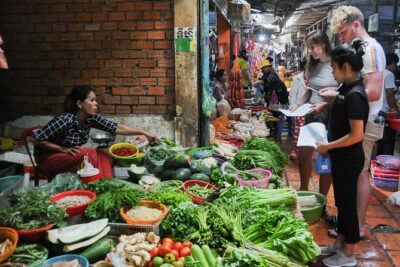
Browse the lists this tour appears in