
Reviewed · 5-DAY EXPERIENCES
Private Cambodia 5 Days Tour from Siem Reap to Phnom Penh
Ancient temples, modern Cambodia. This private five-day route links Angkor’s great monuments with Phnom Penh’s royal and historical sites, giving you a strong first look at the country without having to arrange every transfer yourself. I especially like the careful mix of major sights and quieter stops, including Ta Nei, and the choice of three, four, or five-star hotels. The possible drawback is the pace: Day 2 and Day 4 pack in many stops, so this is not a slow, restful holiday.
I also like the human side of the experience. Guides such as Leap, Tokk, Rain, and Sara have been praised for clear explanations, humor, and real enthusiasm, while drivers including Pheap, Leng, Barang, and Ching have helped make long sightseeing days feel safe and orderly. You should still allow time for heat, stairs, walking, and the serious emotional weight of Tuol Sleng and Choeung Ek.
In This Review
- Key points to know before booking
- Why this five-day Cambodia route works
- Day 2: Angkor Thom brings the Khmer Empire into view
- Ta Nei and Ta Prohm offer two different kinds of atmosphere
- Two hours at Angkor Wat reward a careful pace
- Day 3: The road south adds useful local context
- Day 4: Phnom Penh combines ceremony and painful memory
- Tuol Sleng and Choeung Ek require time and care
- Guides and drivers are a major part of the value
- Is $616.55 per person good value?
- Who should choose this private tour?
- Final verdict: a strong first Cambodia trip
- FAQ
- Where does the tour begin?
- Where does the tour end?
- Is this a private tour?
- How long is the experience?
- Are hotels included?
- Is breakfast included?
- Is a guide included?
- Are entrance fees and transport included?
Key points to know before booking
- Two major Cambodian centers in five days: Start among Siem Reap’s temples and finish with Phnom Penh’s palaces, markets, monasteries, and museums.
- Private transport and guiding: Only your group takes part, with an English-speaking licensed guide, driver, water, and fresh tissues included.
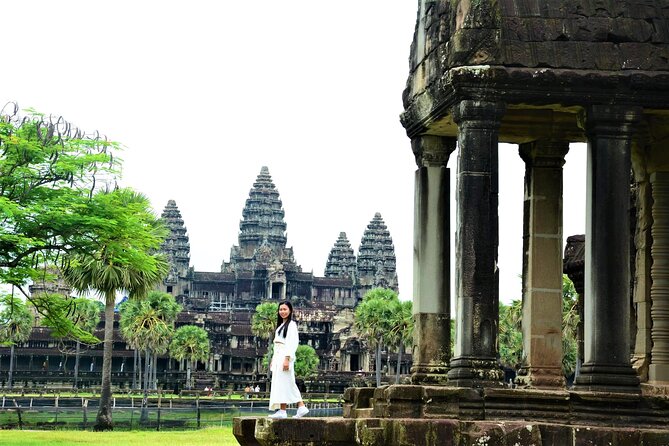
- A strong Angkor day: Angkor Thom, Bayon, Baphuon, Ta Prohm, Ta Nei, and Angkor Wat all appear on Day 2.
- A useful overland route: Kampong Kdei Bridge, Prasat Kuhak Nokor, and Skun break up the journey toward Phnom Penh.
- Hotels at three price levels: You can select a three-star, four-star, or five-star option, subject to the listed similar hotel arrangement.
- A serious look at recent history: Tuol Sleng Genocide Museum and Choeung Ek add essential context beyond Cambodia’s ancient monuments.
Why this five-day Cambodia route works
Cambodia is easier to understand when you see both its ancient achievements and its recent struggles. This tour gives you that contrast in a compact route from Siem Reap to Phnom Penh.
You begin at Siem Reap Angkor International Airport. A guide and driver meet you there, then take you into Siem Reap City while introducing the area’s culture. Day 1 is intentionally light, with airport pickup and hotel check-in rather than a rushed sightseeing program.
That is sensible. After a flight, you can settle into your room, eat, and prepare for the long temple day ahead. The first night is at Royal Crown Hotel & Spa, Regency Angkor Hotel, or Angkor Paradise Hotel, depending on your chosen hotel level or a similar property.
The tour is private, so you do not have to match the pace of a large coach group. That matters at temple sites, where a little flexibility can make the difference between a thoughtful visit and a tiring march from one monument to the next.
A few more trips worth weighing up
- Angkor Wat Sunrise and Tonle Sap Lake 1.5 Days
★ 5.0 · 39 reviews - 5-Day All Major Temples & Kulen Mount Waterfall & Koh Ker & Beng Mealea
★ 5.0 · 13 reviews - 5-Day ‘All The Sights’ Tour
★ 5.0 · 11 reviews
Day 2: Angkor Thom brings the Khmer Empire into view
Day 2 is the centerpiece of the trip. After breakfast, you head to Angkor Thom, the walled royal city that contains several of the most memorable monuments in the Angkor area.
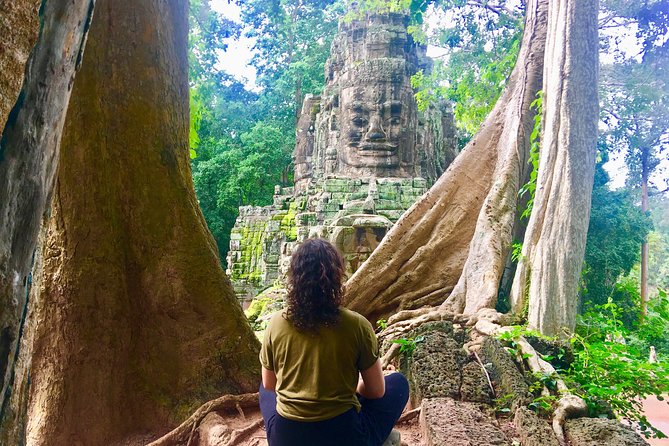
The South Gate of Angkor Thom is a brief but striking opening stop. Its restored approach and rows of sculpted figures introduce the grand scale of the former royal city. You have about 30 minutes here, enough for photographs and a first explanation from your guide.
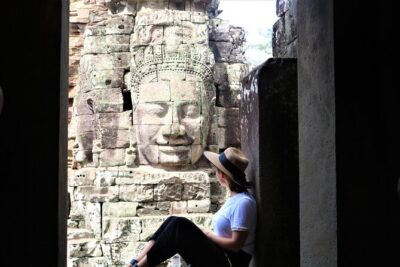
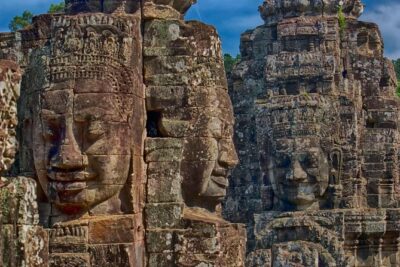
At Bayon Temple, the mood changes. The monument is known for its large carved faces, and the close arrangement of towers makes it feel more enclosed and mysterious than Angkor Wat. Your guide’s commentary is useful here because the temple’s design, purpose, and construction developed over time.
You have about an hour at Bayon, followed by another hour at Baphuon. Baphuon rises on a long sandstone base with several levels, giving you a sense of how Khmer builders used height, procession, and controlled views. Watch your footing and take the visit at a steady pace.
Phimeanakas follows with a shorter 30-minute stop. Located near the center of the former Royal Palace area, this temple helps fill in the picture of Angkor Thom as a working royal city rather than a collection of isolated ruins.
The Terrace of the Elephants and Terrace of the Leper King each receive about 30 minutes. These are not conventional enclosed temples. They are ceremonial platforms lined with carvings, and your guide can help you read the carved scenes instead of simply treating them as photo stops.
Ta Nei and Ta Prohm offer two different kinds of atmosphere
Ta Nei is one of the smartest inclusions in the program. It is a smaller temple in the forest and is less frequently visited than the headline monuments. You get about an hour there, which gives the stop more weight than a quick roadside pause.
The appeal is its relative quiet and setting. The drawback is also clear: the temple can be difficult to find, and the route may feel less polished than the main Angkor circuit. That is part of its charm, but you should not expect the same easy access as Angkor Wat.
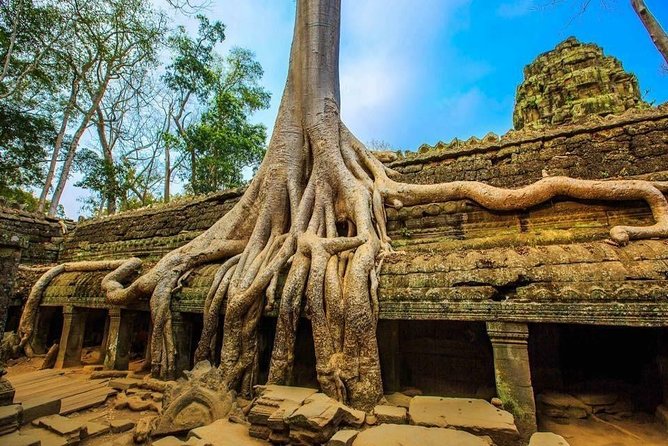
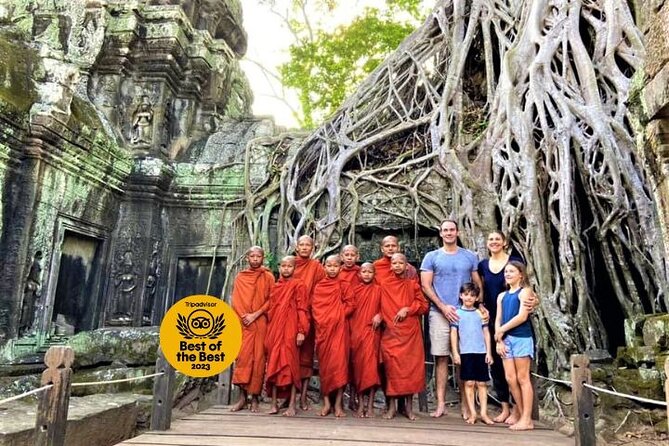
Ta Prohm then provides a dramatic contrast. Trees have grown through and around the stonework, creating the image most people associate with the jungle temples of Cambodia. Archaeological work has focused on clearing paths and strengthening the structure, while much of the overgrown character remains.
You have about an hour at Ta Prohm. Expect uneven surfaces, shade in some areas, and plenty to examine at close range. The site can feel theatrical, but it is also a real historical structure that needs protection, so stay on the established paths.
Two hours at Angkor Wat reward a careful pace
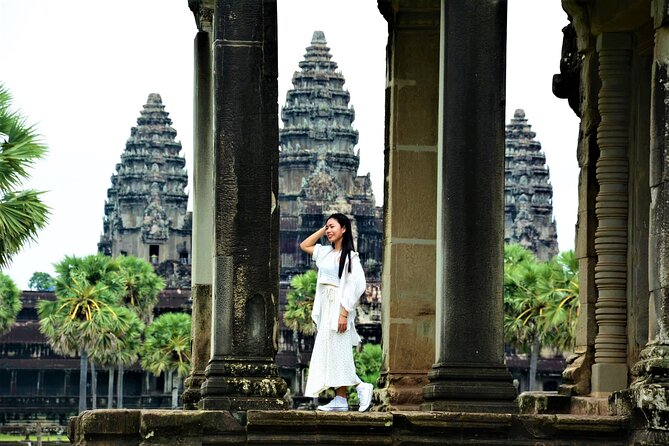
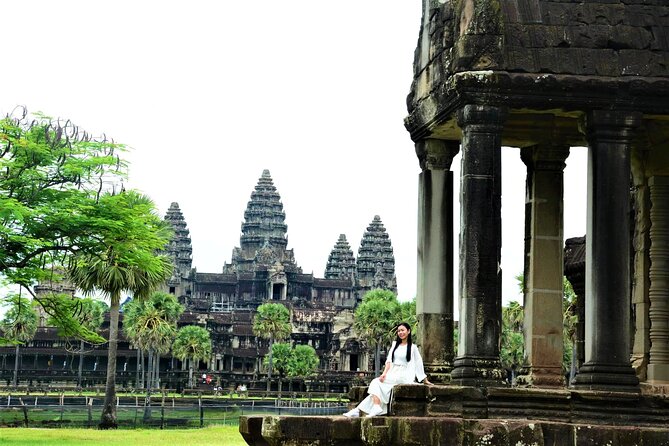
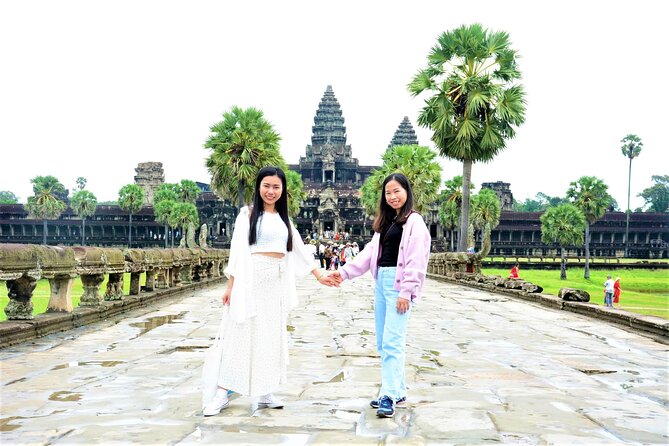
The final major stop of Day 2 is Angkor Wat, with about two hours set aside. That is enough to see the main architectural features without pretending you can understand every corner in one visit.
Angkor Wat is the largest and best-preserved monument in the Angkor group. Its balance, proportions, reliefs, and sculpture explain why it has become Cambodia’s defining symbol. The scale can be hard to grasp from photographs. Approaching it in person, you see how the galleries, towers, courtyards, and long approach work together.
A guide is especially valuable here. Without context, it is easy to spend the visit chasing familiar views. With good explanations, you can pay attention to the monument’s design and the stories carved into its walls.
The schedule says Day 2 includes sunset over the ancient ruins in the tour overview, although the detailed stop list does not give a separate sunset duration. Confirm the exact timing with the operator before booking if sunset is a main reason for choosing this trip.
This is a full day. You visit nine temple-related stops, with several hours on foot and repeated movement in and out of the vehicle. Wear practical shoes, carry sun protection, and do not count on seeing every detail. The goal is a strong selection of Angkor’s major and less familiar places.
A completely different kind of day out from Siem Reap:
- Angkor Wat Sunrise or Sunset Tour with Guide from Siem Reap
★ 5.0 · 12,109 reviews - Siem Reap: Angkor Wat: Small-Group Sunrise or Sunset Tour
★ 5.0 · 9,444 reviews - From Siem Reap: Kampong Phluk Floating Village Tour by Boat
★ 4.9 · 6,979 reviews - Sunset tour of Kampong Phluk stilts home village on the Tonle Sap
★ 5.0 · 4,865 reviews
Day 3: The road south adds useful local context
Day 3 shifts from temple concentration to an overland journey toward Phnom Penh. The first stop is Spean Praptos, also called Kampong Kdei Bridge or Dragon Bridge.
This old laterite bridge is associated with the Angkor period and is said to be more than 1,000 years old. You have 30 minutes, which is enough to see its structure and hear why bridges mattered to movement across the old Khmer realm.
Prasat Kuhak Nokor follows in Kampong Thom province. Built on a square sandstone and laterite terrace, it offers another look at Khmer architecture away from the most famous Angkor sites. The one-hour stop helps break up the road and gives you a quieter temple experience.
The final listed stop is Skun Spider Sanctuary, where the local market is known for fried spiders. This is an unusual cultural stop, not a polished monument. You can look, ask questions, and decide for yourself how adventurous your snack choices will be. You do not have to treat the food as a dare, but the market offers a glimpse of a Cambodian specialty that you will not encounter at every tourist site.
Your Phnom Penh hotel is listed as King Grand Boutique Hotel, Sun & Moon Urban Hotel, or Sun & Moon Riverside, depending on the selected category or a similar property. Daily breakfast is included, with four breakfasts listed for the five-day trip.
The tour information does not give a precise driving time for Day 3. Plan for a substantial transfer day, and ask the operator for the expected road schedule before you book if you prefer short travel periods.
Day 4: Phnom Penh combines ceremony and painful memory
Day 4 is packed with Phnom Penh highlights. The city sits where the Mekong and Tonlé Sap rivers meet, and its riverfront, colonial past, royal buildings, and modern streets give it a different feel from Siem Reap.
The Royal Palace receives two hours. Construction began in 1886 after King Norodom moved the royal capital to Phnom Penh. The complex presents the Cambodian monarchy through formal buildings, courtyards, gardens, and ceremonial spaces.
Next door, the Silver Pagoda receives an hour. Its garden setting offers a pause from the city, while the interior provides a closer look at Cambodia’s Buddhist traditions and royal religious art. Dress respectfully for both royal and religious sites, and follow any local rules about photography.
Wat Phnom gives you another hour. Built on a tree-covered hill, it is linked to the traditional story of Lady Penh and the Buddha statues found in the river. The raised setting also provides a change in pace after the palace complex.
The Independence Monument is a quick 30-minute stop. Built in 1958, it commemorates Cambodia’s independence from France in 1953. Wat Ounalom, one of Phnom Penh’s five original monasteries, follows for about 30 minutes and sits near the riverfront, close to the Royal Palace.
Tuol Sleng and Choeung Ek require time and care
The most serious part of the tour comes at Tuol Sleng Genocide Museum and Choeung Ek Genocidal Center. These sites document the Khmer Rouge period from 1975 to 1979, and they should not be treated as ordinary sightseeing stops.
Tuol Sleng occupies a former secondary school used as Security Prison 21, or S-21. Two hours allow you to take in the exhibits at a measured pace. The setting makes the history especially difficult because the site was once built for ordinary education.
Choeung Ek, about 17 kilometers south of Phnom Penh, was a former orchard and mass grave site. Another two hours are scheduled here. The visit adds context to Tuol Sleng by showing one of the locations connected with the killing and burial of victims.
I appreciate that the schedule gives these places substantial time rather than squeezing them into a quick drive-by. Still, you should consider your own comfort with genocide museums before booking. This portion is emotionally heavy, and the day already contains several earlier stops.
The final stops are lighter in tone. Central Market occupies a large domed building constructed in 1937, with four arms extending into corridors of stalls. You have an hour to browse. The Norodom Sihanouk Memorial is a 20-minute stop honoring the former king with a bronze statue.
Guides and drivers are a major part of the value
The listed service includes a professional English-speaking licensed guide, private transport, entrance fees, bottled water, and fresh tissues. Those basics matter in Cambodia’s heat, especially on Day 2 when temple walking fills much of the day.
The strongest guide names associated with this experience are Leap, Tokk, Rain, and Sara. Leap is repeatedly praised for detailed explanations, humor, good restaurant suggestions, and answers to questions. Tokk is noted for enthusiasm and clear information, while Sara is praised for helping visitors understand Angkor Wat rather than merely photographing it.
Drivers named in the feedback include Pheap, Leng, Barang, and Ching. Pheap is described as careful and safe, Leng as part of a well-run Siem Reap and Phnom Penh route, and Ching as an especially good Phnom Penh driver.
You cannot guarantee a specific guide or driver from the information provided. It is reasonable to request one when booking, but the operator may assign someone else.
Is $616.55 per person good value?
At $616.55 per person, the price is not simply paying for temple admission. It covers four nights of hotel accommodation based on double, twin, or triple sharing, four breakfasts, private transport, a licensed English-speaking guide, entrance fees, water, and fresh tissues.
That can be good value if you want a guided door-to-door route and plan to visit both cities in only five days. Booking hotels, airport transfers, a private vehicle, Angkor admissions, Phnom Penh admissions, and the long southbound transfer separately could take considerable time.
The price needs more careful thought for solo visitors because the accommodation basis is shared. The supplied information does not explain the solo supplement, exact hotel room allocation, or which hotel level is included at the quoted price. Ask those questions before paying.
Tips and any expense not listed in the itinerary are extra. Meals other than the included breakfasts are not listed, so budget separately for lunch, dinner, and personal purchases.
Who should choose this private tour?
I would point this tour toward first-time visitors who want Cambodia’s two most important urban bases in one organized trip. It also suits couples, families, and small groups that value a private vehicle and the ability to travel with their own group.
History-minded visitors will appreciate the range. You move from Angkor’s monumental architecture to royal Cambodia, Buddhist sites, French-era Phnom Penh, the Khmer Rouge period, and everyday market life.
You may want a different plan if you prefer slow mornings, long meals, or several free afternoons. Day 2 and Day 4 are demanding, and Day 3 is partly a transfer day. The tour gives you breadth, but not much unstructured time.
Cancellation terms are worth noting before you commit. A full refund requires cancellation at least six full days before the start time. Cancellation two to six full days ahead receives a 50 percent refund, while cancellation less than two full days ahead is nonrefundable. The operator does not accept changes inside those cutoffs.
Final verdict: a strong first Cambodia trip
I would book this tour if you want an efficient, private introduction to Cambodia and you are comfortable with a full schedule. The best features are the excellent Angkor coverage, the less common Ta Nei stop, hotel choice, and the serious time given to Phnom Penh’s genocide sites.
I would not choose it for a lazy temple holiday. You will walk, ride, change hotels, and absorb difficult history in quick succession. But if you want a clear route, an English-speaking guide, private transport, and the major cultural pieces handled in one booking, $616.55 can represent solid value. Ask about the exact hotel category, departure timing, and possible guide assignment, then pack light clothes, sturdy shoes, patience, and an open mind.
FAQ
Where does the tour begin?
The tour begins with pickup at Siem Reap Angkor International Airport in Siem Reap, Cambodia.
Where does the tour end?
The final transfer is from your Phnom Penh hotel to Techo International Airport, also identified as KTI.
Is this a private tour?
Yes. Only your group participates in the activity.
How long is the experience?
The tour lasts approximately five days.
Are hotels included?
Yes. Hotel accommodation is included based on double, twin, or triple sharing. Three-star, four-star, and five-star options are listed.
Is breakfast included?
Yes. Four breakfasts are included during the five-day tour.
Is a guide included?
Yes. A professional English-speaking licensed tour guide is included.
Are entrance fees and transport included?
Yes. Transport and all entrance fees are included, along with drinking water and fresh tissues. Tips and expenses not listed in the program are not included.
Just added around Siem Reap
- Private Battambang Full-Day Guided Tour★ 4.5 · 3 reviews
- Kulen Mountain, Beng Mealea and Banteay Srei Full Day Tour★ 5.0 · 3 reviews
- Kompong Pluk Tour★ 5.0 · 3 reviews
- Private 3 Day Tour to Discover the ancient temples★ 5.0 · 3 reviews
- Kulen National Park Ticket -Waterfall & 1000 Lingas★ 5.0 · 3 reviews
- Cambodia: Absolute Traditional Dance Show with Buffet Dinner★ 5.0 · 3 reviews
- Border Transfer (Siem Reap to Laos/Laos to Siem Reap)★ 3.5 · 3 reviews
- Beng Melea, Rolous Group & Kompong Phluk Floating Village★ 5.0 · 3 reviews
5-Day Experiences, compared.
5-Day All Major Temples & Kulen Mount Waterfall & Koh Ker & Beng Mealea
Read our review →
Angkor Wat: Sunrise 2.5 Days Temples & Tonle Sap-Small Group
Read our review →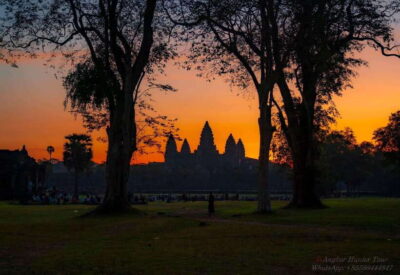
Angkor Wat: Sunrise 2.5 Days with Tonle Sap Lake Tour
Read our review →
5 Days – Cambodia Ancient Trails & Jungle Temples
Read our review →Browse the lists this tour appears in