
Reviewed · ANGKOR WAT TOURS
Angkor Wat: Sunrise 2.5 Days with Tonle Sap Lake Tour
Wake before dawn for Cambodia’s greatest view. This $69, 2.5-day tour combines Angkor’s major temples, quieter Grand Circuit sites, and a boat trip through Kampong Phluk’s flooded forest. I like the way it gives you both the famous monuments and a look at daily life beyond the temple zone. I also like the private-feeling pace, even when you book a small group.
The main catch is the extra cost. You must pay $62 for the two or three-day temple pass, and meals are not included, so the real cost is closer to $131 per person before food. The schedule is also full, with early starts and plenty of walking, but careful guides and air-conditioned transport make the long days easier.
In This Review
- Key Points Before You Book
- What the $69 Price Really Covers
- Day One: Pre Rub and the Fine Stonework of Banteay Srei
- Neak Pean and Preah Khan on the Grand Circuit
- Bakheng Mountain at Sunset
- Day Two: Sunrise at Angkor Wat
- Ta Prohm and the Quieter Ta Nei
- Day Three: Kampong Phluk and Tonle Sap Lake
- Guides, Drivers, and the Human Side of the Tour
- Clothing, Walking, and Who Should Book
- Should You Book This Angkor Tour?
- FAQ
- How long does the tour last?
- What is the price per person?
- Are meals included?
- Is hotel pickup provided?
- Is an English-speaking guide included?
- Is transport air-conditioned?
- Does the tour include Angkor Wat sunrise?
- Which temples are included?
- Is Tonle Sap Lake included?
- What happens at Tonle Sap from March through July?
- Is the tour wheelchair accessible?
- What should I wear and bring?
Key Points Before You Book
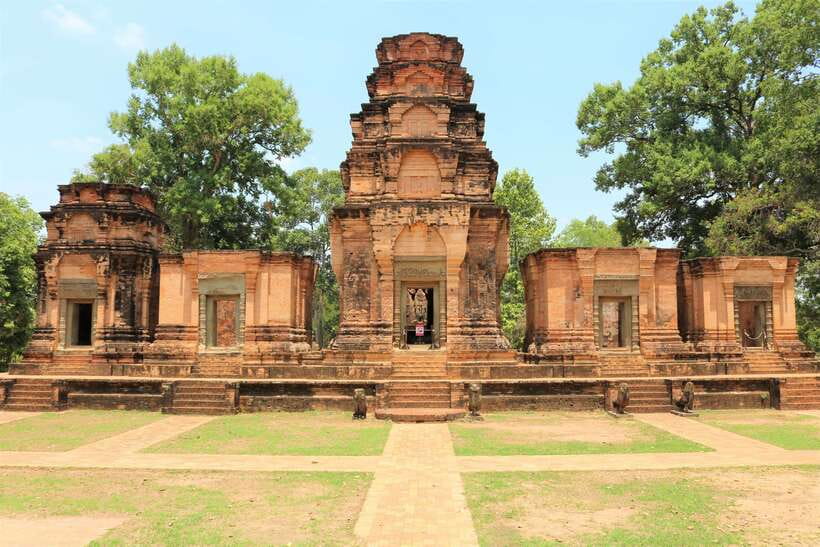
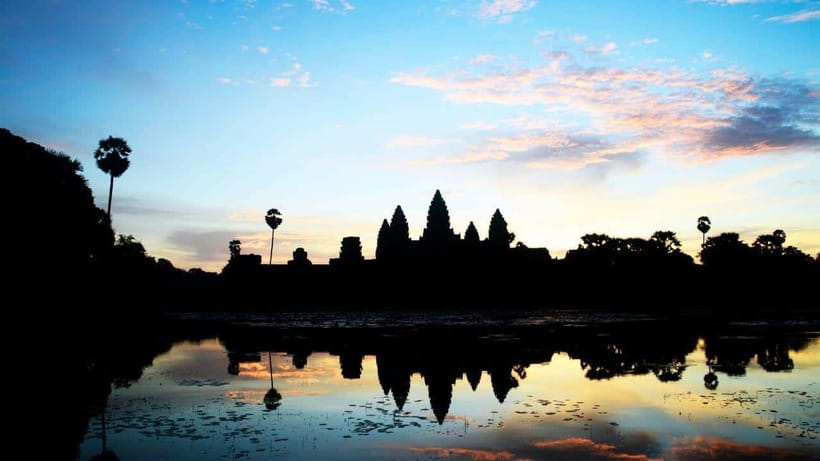
- Sunrise at Angkor Wat: Leave before dawn and watch the first light from beside the temple pools before exploring the interior.
- Banteay Srei’s fine carvings: This smaller sandstone temple is one of Cambodia’s most carefully decorated monuments.
- Ta Prohm and Ta Nei: See the famous Tomb Raider temple, then visit a quieter late 12th-century Buddhist temple.
- Sunset from Bakheng Mountain: Finish the first temple day with a high view over the Angkor area.
- Kampong Phluk by boat: Visit a fishing community and flooded forest on Tonle Sap Lake.
- Guides who shape the experience: Sopheap Rath, Sokpee, Chhay, Rom, Ruom, Sam, Pal Saruon, and So have all led this trip, with repeated praise for their explanations, photography help, and care.
What the $69 Price Really Covers
At first glance, $69 for two and a half days looks like an excellent deal. The price includes hotel pickup and drop-off in Siem Reap City, an English-speaking guide, an air-conditioned vehicle, bottled water, cool towels, the Angkor sunrise, the Bakheng sunset, and the listed temple and lake visits.
The temple pass is separate. The supplied price says $62 per person for a two or three-day pass covering the temples. Add meals, and you should budget well above the advertised figure. Even so, the package can be good value if you want a guide and transport rather than arranging separate tuk-tuks or cars for each day.
I especially value the included vehicle on the long first day. Banteay Srei is well beyond the central Angkor cluster, while Tonle Sap requires a separate trip through the countryside. Having one arrangement for these distances saves time and avoids repeated bargaining.
The tour also offers free cancellation up to 24 hours before departure and reserve-now, pay-later booking. Pickup is available from accommodation in Siem Reap City. A small group option is available, and some bookings may feel nearly private. Chhay, for example, adjusted the order and choices for one group that had booked a shared tour but received a private-style experience.
More Angkor Wat tours we have reviewed:
- Angkor Wat Sunrise or Sunset Tour with Guide from Siem Reap
★ 5.0 · 12,109 reviews - Siem Reap: Angkor Wat: Small-Group Sunrise or Sunset Tour
★ 5.0 · 9,444 reviews - Siem Reap: Angkor Wat 2-Day Tour with Sunrise and Sunset
★ 4.9 · 4,429 reviews
Day One: Pre Rub and the Fine Stonework of Banteay Srei
Your first temple morning begins at Pre Rub, a Hindu temple built as the state temple of King Rajendravarman and dedicated in 961 or early 962. It is a temple mountain made from brick, laterite, and sandstone, with a strong, formal shape.
Pre Rub is a useful opening stop because it introduces the basic form of Angkor architecture without the crowds and scale of Angkor Wat. You can focus on the raised levels, the materials, and the way the temple was built as a symbolic mountain. Bring shoes with a good grip, since this tour involves repeated temple steps and uneven stone.
The day then moves to Banteay Srei, often the artistic high point for visitors who enjoy carved detail. It is smaller than the main Angkor temples, but its pinkish sandstone reliefs are exceptionally fine. Figures, floral patterns, and mythic scenes cover the walls with a level of care that can be harder to appreciate in a huge monument.
Your guide matters here. Pal Saruon explained construction periods and temple design in detail for one group, while guides such as Sopheap Rath and Sokpee were praised for finding good photography positions. That help is valuable at Banteay Srei, where the best details are easy to miss if you only walk around the outer walls.
The drawback is distance. This is not a quick central circuit. You spend part of the day in the vehicle, but the payoff is a temple with a very different character from Angkor Wat, Bayon, or Ta Prohm.
Neak Pean and Preah Khan on the Grand Circuit
Neak Pean gives the first day a change of mood. The temple sits on a circular island in Jayatataka Baray, an artificial reservoir. The approach across the water is part of the experience, and the setting feels more open and unusual than the enclosed temple sites.
The monument is associated with a Buddhist design and is best understood as a carefully planned sacred island rather than a sprawling complex. It is a shorter visit than Preah Khan, but it breaks up the day and gives you a different view of how water shaped Angkor’s religious and civic planning.
Preah Khan follows, and I would give this stop time rather than rushing through it. It is a large, ruined complex with tree roots, crumbling stone, long corridors, and a sense of disorder that makes it highly atmospheric. The worn condition is part of its appeal. You are not simply looking at polished towers. You are seeing how the jungle and weather have altered the site over time.
The guide-led format is particularly useful at Preah Khan because the complex can feel confusing. Sam, Rom, Ruom, and other guides were praised for explaining both the temples and Cambodian life beyond the stones. That wider context helps you see the monuments as more than a series of photo stops.
Bakheng Mountain at Sunset
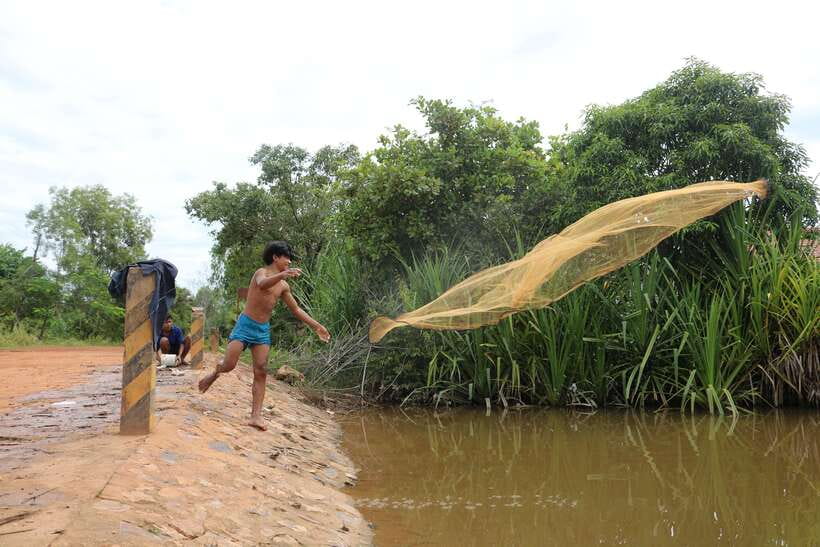
The first day ends at Bakheng Temple for sunset. This gives you a high viewpoint after a long circuit of ruins and creates a natural pause before the early start the next morning.
Sunset access can be one of the most popular moments of an Angkor visit, so expect this stop to feel less quiet than the smaller temples. The practical advantage of having a guide is that you do not need to work out the timing and route alone. Your driver is also ready to take you back to Siem Reap once the temple visit ends.
Do not treat this as a relaxed evening. Day one includes several temples, a distant trip to Banteay Srei, and a climb or walk at Bakheng. Comfortable walking shoes are essential, and insect repellent is specifically recommended.
More Tonle Sap floating village trips:
- From Siem Reap: Kampong Phluk Floating Village Tour by Boat
★ 4.9 · 6,979 reviews - Sunset tour of Kampong Phluk stilts home village on the Tonle Sap
★ 5.0 · 4,865 reviews - Siem Reap: Kampong Phluk Floating Village Tour with Boat
★ 4.9 · 3,843 reviews - Siem Reap Floating Village Kampong Phluk Sunset with Boat
★ 5.0 · 1,962 reviews
Day Two: Sunrise at Angkor Wat
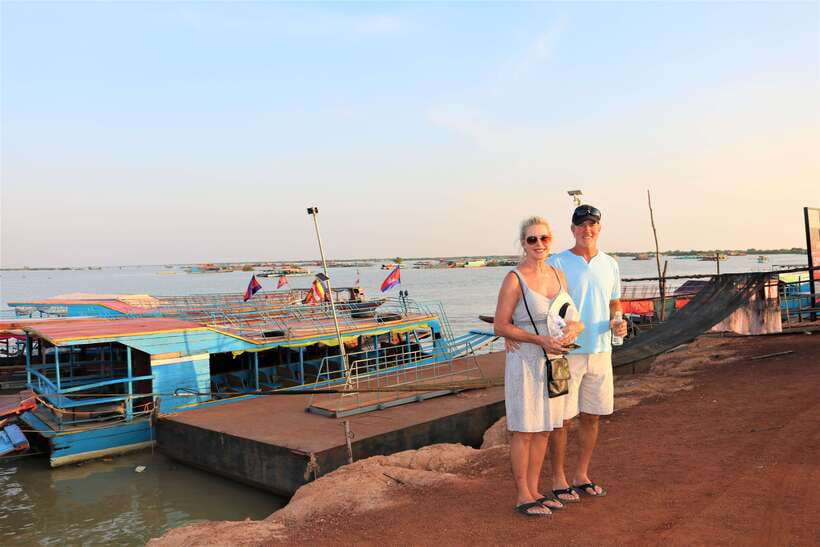
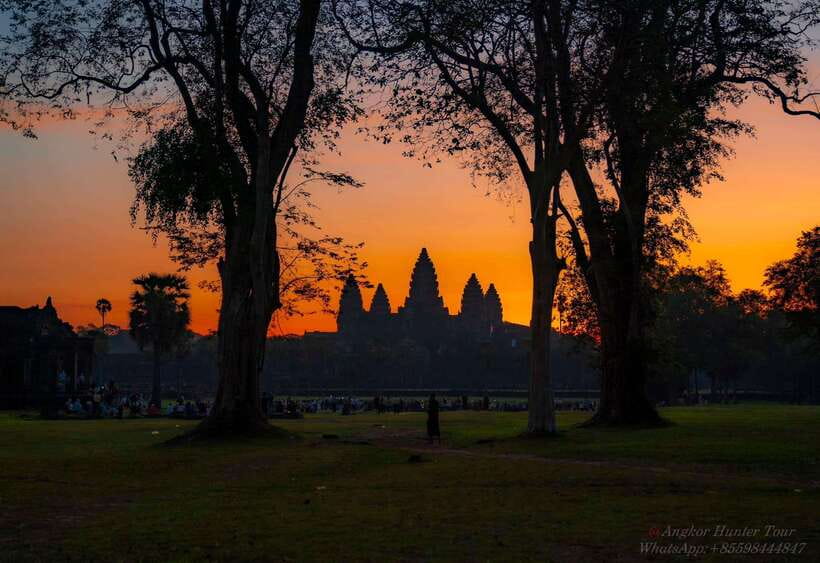
The second day starts before dawn. You travel to Angkor Wat and wait near one of the ancient library pools for sunrise. The familiar reflection view is the main draw, but the quieter minutes before daylight may be just as memorable. The temple gradually changes from a dark outline into a detailed structure as the sky brightens.
Sunrise is not a good time for a slow breakfast or extra sleep. You need to accept the early departure, and the experience works best if you are ready for waiting, walking, and then a full temple visit immediately afterward.
After sunrise, the guide takes you inside Angkor Wat for about two hours. You explore corridors, central chambers, and upper terraces, rather than stopping only at the famous front view. This is where an English-speaking guide adds real value. The monument is so large that it is easy to wander without understanding how the spaces connect or why the upper levels mattered.
Sokpee was praised for giving enough explanation to make each temple understandable without overloading the day with facts. That balance is important at Angkor Wat. You want clear information about the building, religion, kings, and artwork, but you also need time to look around.
A local restaurant near the temple area provides breakfast at your own expense. The arrangement gives you flexibility, but remember that food is not part of the tour price. Carry some cash for meals and plan for a short rest before the next temples.
Ta Prohm and the Quieter Ta Nei
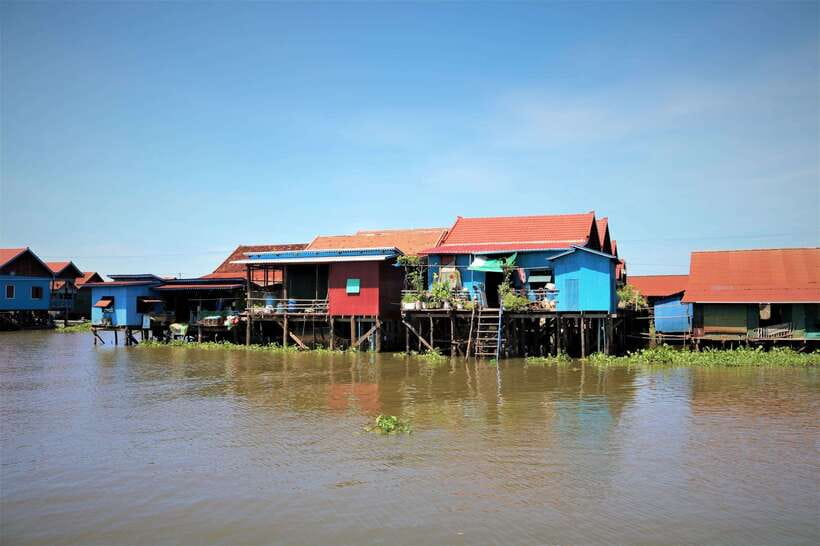
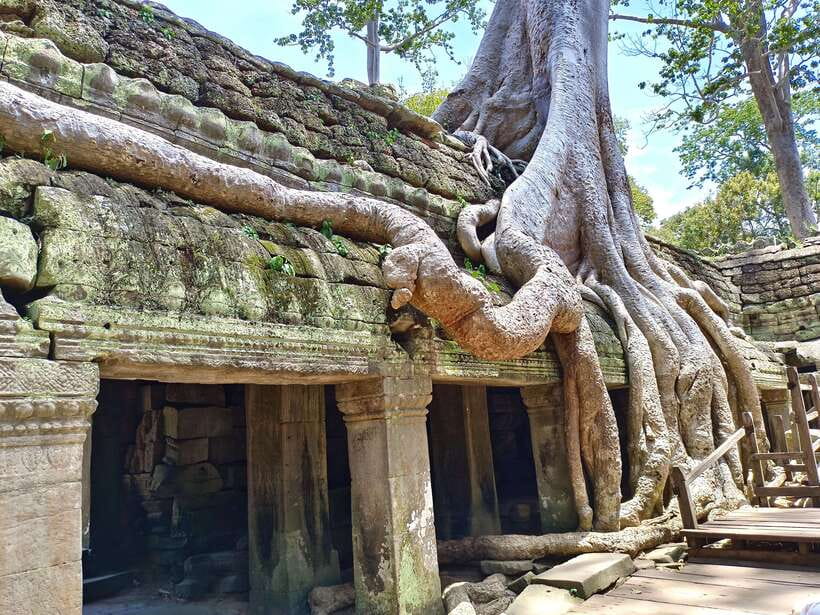
After breakfast, you visit Ta Prohm, widely known as the Tomb Raider temple. Its appeal comes from the collision between carved stone and giant tree roots. Corridors feel enclosed, damaged sections reveal the age of the site, and the vegetation gives the temple a mood that is very different from the ordered grandeur of Angkor Wat.
Ta Prohm is also one of the busiest stops on the route. The famous name brings many visitors, so your guide’s timing and choice of photo spots can make a difference. Sopheap Rath was singled out for photography skills, and several guides were praised for knowing useful places to stop for pictures.
Ta Nei offers a quieter finish. This late 12th-century stone temple was dedicated to the Buddha and has a more subdued feel than Ta Prohm. The visit is described as long but rewarding, which is a fair warning after two days of temple walking.
I like the pairing of these two sites. Ta Prohm gives you the iconic trees and atmosphere. Ta Nei gives you a chance to slow down and see a less famous monument without relying only on the best-known Angkor images.
The included list also covers Angkor Thom and Bayon, although the day-by-day description does not clearly assign them to a particular time. Confirm the exact order with the operator before departure. Bayon’s carved faces and Angkor Thom’s monumental entrances are important parts of the central Angkor experience, but a packed schedule may affect how long you spend at each.
Day Three: Kampong Phluk and Tonle Sap Lake
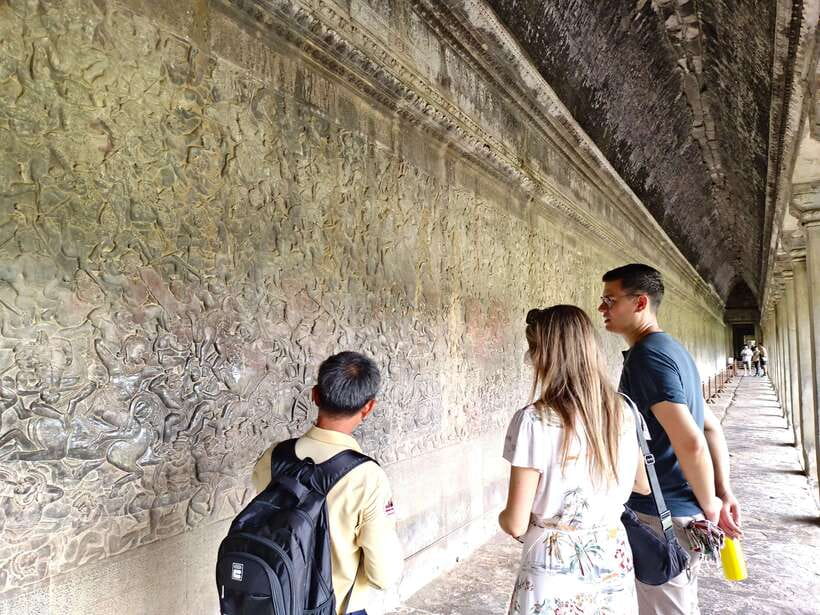
The final outing begins around 8:00 AM with a drive through the countryside to Tonle Sap Lake. The lake changes dramatically during the year. In the wet season, it can expand to about 12,000 square kilometers. During the dry half of the year, it shrinks to roughly 2,500 square kilometers and drains into the Tonle Sap River.
The boat trip reaches Kampong Phluk, a group of three small fishing villages set among flooded forest. This is a different kind of Cambodian visit. Instead of stone monuments and royal construction, you see a lake-based community shaped by changing water levels and fishing.
The village visit is best approached with respect. It is a working community, not a theme park, and the value lies in seeing how homes, boats, and local routines fit a water environment. The tour also includes countryside views, rice fields, and a local market on some arrangements, as described by the guide experience.
Lunch is at your own expense, followed by a short rest. That break is welcome after two days of temples, especially if you have been starting before sunrise.
There is an important seasonal change. From March through July, low water levels can make the Tonle Sap option impractical. During that period, the alternative is Cambodia Phare Circus, Seat C. If the lake is a priority, ask about current conditions before booking.
Guides, Drivers, and the Human Side of the Tour
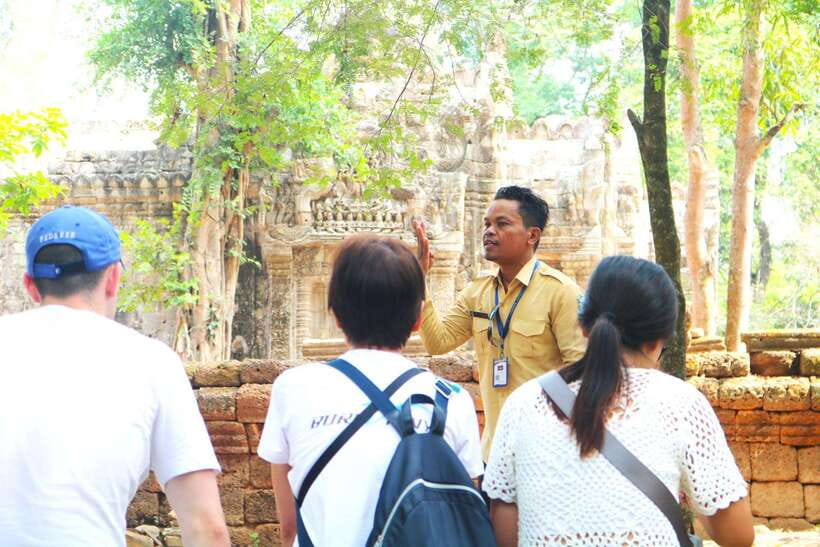
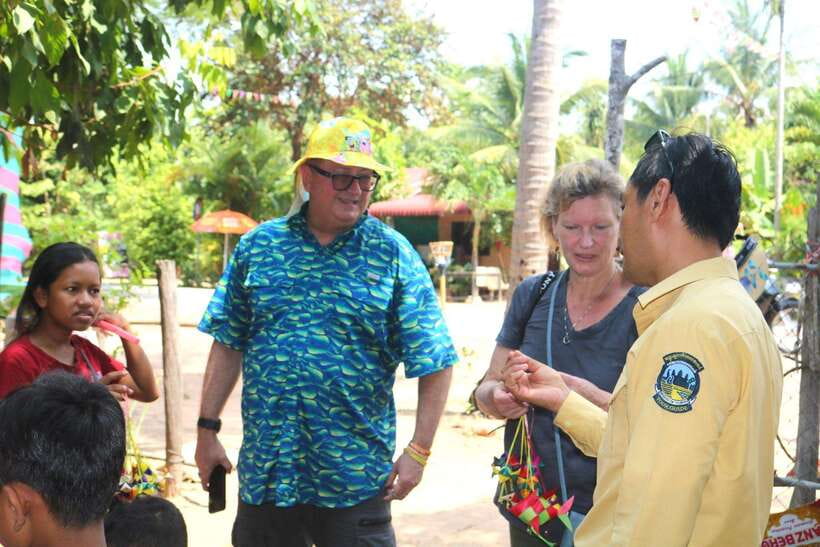
The strongest part of this experience is the guide service. Names vary by departure, but guides including Chhay, Sopheap Rath, Sokpee, Pal Saruon, Rom, Ruom, Sam, and So have been praised for clear English, temple knowledge, historical explanations, and help with photography.
Chhay was described as patient with questions and able to explain both ancient Cambodia and present-day life. That combination is worth seeking. Angkor can become a blur of towers and stones unless someone connects the monuments to the people, beliefs, and rulers who created them.
Drivers also contribute to the comfort of the trip. Vichhet was praised for safe driving, cold water, cool towels, and even holding an umbrella during rain. Ro and Kea were also described as careful and attentive. These details matter when you spend long hours getting in and out of a vehicle in hot weather.
Because the vehicle is air-conditioned and bottled water and cool towels are provided, you have a practical place to recover between sites. Still, do not mistake comfort for ease. This is a demanding program with early starts, uneven surfaces, temple steps, and substantial time outdoors.
Clothing, Walking, and Who Should Book
Angkor’s temples are religious sites, so cover your shoulders and knees. Shorts are not allowed according to the tour information. Wear comfortable walking shoes, and bring insect repellent for the temple grounds and the lake visit.
The tour suits you best if you want to see a lot in a short Siem Reap stay and prefer explanations over exploring alone. It is also a good fit if sunrise, sunset, Banteay Srei, Ta Prohm, Bayon, and Tonle Sap all sit high on your list.
It is less suitable if you want long, unstructured mornings or only a few temple visits each day. The activity is not wheelchair accessible, and the full program requires steady walking and getting in and out of the vehicle.
Should You Book This Angkor Tour?
I would choose this tour if you have about three days in Siem Reap and want a broad introduction without arranging transport yourself. You get Angkor Wat at sunrise, Bakheng at sunset, major temples, smaller sites, Banteay Srei, and a Tonle Sap village in one coordinated plan.
Book it with the understanding that $69 is not the final cost. Add the $62 temple pass, meals, and the possibility of the Phare Circus alternative in the dry season. Ask which guide and driver are assigned, confirm the Bayon timing, and check the lake conditions.
For an active visitor who values a strong guide, photo help, safe transport, and a full schedule, this is a very solid choice. If you prefer a slow pace, split the temples over more days instead.
FAQ
How long does the tour last?
The experience is advertised as 2.5 days, with temple visits on the first two days and the Tonle Sap outing on the third day.
What is the price per person?
The listed tour price is $69 per person. The Angkor temple pass costs an additional $62 per person for two or three days.
Are meals included?
No. Meals are not included, including breakfast near the temple area and lunch during the Tonle Sap day.
Is hotel pickup provided?
Yes. Pickup and drop-off are provided from accommodation in Siem Reap City.
Is an English-speaking guide included?
Yes. An English-speaking live guide is included.
Is transport air-conditioned?
Yes. The tour includes an air-conditioned vehicle, bottled water, and a cool towel.
Does the tour include Angkor Wat sunrise?
Yes. The second day begins before dawn for sunrise outside Angkor Wat, followed by an interior visit.
Which temples are included?
The listed temples and sites include Pre Rub, Banteay Srei, Neak Pean, Preah Khan, Bakheng, Angkor Wat, Ta Prohm, Ta Nei, Angkor Thom, and Bayon.
Is Tonle Sap Lake included?
Yes. The third day includes a boat trip to Kampong Phluk fishing village and its flooded forest setting.
What happens at Tonle Sap from March through July?
During the dry season from March through July, the alternative to Tonle Sap Lake is Cambodia Phare Circus, Seat C, because of the lower water level.
Is the tour wheelchair accessible?
No. The activity is not suitable for wheelchair users.
What should I wear and bring?
Wear clothing that covers your shoulders and knees, along with comfortable walking shoes. Insect repellent is recommended.
More 5-Day Experiences
- Angkor Wat Sunrise and Tonle Sap Lake 1.5 Days
★ 5.0 · 39 reviews - Private Cambodia 5 Days Tour from Siem Reap to Phnom Penh
★ 5.0 · 19 reviews - 5-Day All Major Temples & Kulen Mount Waterfall & Koh Ker & Beng Mealea
★ 5.0 · 13 reviews - 5-Day ‘All The Sights’ Tour
★ 5.0 · 11 reviews
More Morning
- Angkor Wat Sunrise tour with Small – Group and Guide tours
★ 5.0 · 3,655 reviews - Angkor Wat Highlights and Sunrise Guided Tour from Siem Reap
★ 5.0 · 3,213 reviews - Full-Day Angkor Wat Sunrise Private Tour with Guide from Siem Reap
★ 5.0 · 2,920 reviews - Angkor Wat Sunrise & 3 Main Temples with Breakfast – Small Group
★ 5.0 · 2,857 reviews
Just added around Siem Reap
- Private Battambang Full-Day Guided Tour★ 4.5 · 3 reviews
- Kulen Mountain, Beng Mealea and Banteay Srei Full Day Tour★ 5.0 · 3 reviews
- Kompong Pluk Tour★ 5.0 · 3 reviews
- Private 3 Day Tour to Discover the ancient temples★ 5.0 · 3 reviews
- Kulen National Park Ticket -Waterfall & 1000 Lingas★ 5.0 · 3 reviews
- Cambodia: Absolute Traditional Dance Show with Buffet Dinner★ 5.0 · 3 reviews
- Border Transfer (Siem Reap to Laos/Laos to Siem Reap)★ 3.5 · 3 reviews
- Siem Reap Countryside Sunset Vespa Tour or Tuk Tuk★ 4.5 · 3 reviews
Angkor Wat Tours, compared.

Angkor Wat Sunrise or Sunset Tour with Guide from Siem Reap
Read our review →
Angkor Wat: Small-Group Sunrise or Sunset Tour
Read our review →
Angkor Wat 2-Day Tour with Sunrise and Sunset
Read our review →

Angkor Wat Sunrise tour with Small – Group and Guide tours
Read our review →
Angkor Wat Highlights and Sunrise Guided Tour from Siem Reap
Read our review →
Angkor Wat Sunset Small Group Tour with Lunch Included
Read our review →
Full-Day Angkor Wat Sunrise Private Tour with Guide from Siem Reap
Read our review →Browse the lists this tour appears in