
Reviewed · ANGKOR WAT TOURS
2-Day Angkor Wat, Banteay Srei & Floating Village Kampong Pluk
Angkor is best seen with a plan. This private two-day tour packs in Angkor Wat, Ta Prohm, Bayon, the terraces of Angkor Thom, a Phnom Bakheng sunset, an Angkor Wat sunrise, and the stilted village of Kampong Pluk. I like the mix of famous temples and quieter corners such as Ta Nei, and I like having an air-conditioned vehicle, drinking water, towels, and a guide included.
I also like the private format. Your group sets the pace, which matters when the day includes long walks, stairs, early starts, and eleven stops on the first day alone. Guides named in past bookings include Vanna, Chhay, Lonn, and Bun, with drivers such as Sreang, Dat, San, Path, and Lis receiving warm praise for friendly service and careful support.
The main drawback is the pace. This is a full, demanding itinerary, and the advertised $166 price does not include the $62 Angkor pass, the $20 Kampong Pluk boat ticket, or lunch. The real cost starts at $248 per person before meals, so the value depends on how much sightseeing you want to fit into two days.
In This Review
- Key points at a glance
- What the two days are really like
- Day one begins with Angkor Wat
- Ta Prohm brings the famous tree roots
- Ta Nei offers a quieter pause
- Angkor Thom: gates, faces, and royal platforms
- Elephants, the Leper King, and Preah Palilay
- Phnom Bakheng sunset requires patience
- Day two starts at 5:00am at Angkor Wat
- Kampong Pluk shows another side of Siem Reap
- Banteay Srei is the day’s fine-carving stop
- Banteay Samre, Pre Rup, and Banteay Kdei
- Guides, drivers, and the private format
- What the price really buys you
- Who should book this experience?
- FAQ
- Is hotel pickup included?
- How much does the Angkor temple pass cost?
- Is the Kampong Pluk boat ride included?
- Are meals included?
- What time does the tour begin on the first day?
- What time does the sunrise visit begin?
- Is this a shared group tour?
- Should you book the two-day Angkor tour?
Key points at a glance
- Sunrise and sunset are both included: You return to Angkor Wat at 5:00am on day two, then finish day one with the climb to Phnom Bakheng.
- The temple list is unusually broad: You see major sights such as Angkor Wat and Bayon, plus smaller stops including Ta Nei and Preah Palilay.
- Kampong Pluk adds a different Cambodia: A private boat takes you through the Tonle Sap floating village and its fishing community.
- Banteay Srei is the artistic highlight: Its pink sandstone carving gives it a look unlike the larger temple complexes.
- It is private, not a shared bus tour: Only your own group participates, with hotel pickup and drop-off.
- Budget for extra costs: The pass, boat ticket, and lunches are separate from the tour price.
What the two days are really like
This experience is built for people who want a lot of Angkor in a short stay. Day one begins at 8:00am, while day two starts at 5:00am for sunrise. That schedule gives you the cooler early hours at the most popular temple, but it leaves little room for sleeping in or wandering without a clock.
You ride in an air-conditioned vehicle with a driver and English-speaking licensed guide. Pickup and drop-off are provided at your hotel or guest house. Cool drinking water and towels are included, useful details in Cambodia’s heat, especially after several temple walks.
Because the tour is private, you can ask for explanations, pause for photographs, or skip the Phnom Bakheng sunset if you do not want to wait. Still, the route covers a great deal. I would treat this as a focused introduction to Siem Reap, not a slow archaeological study.
More Banteay Srei trips:
- Full-Day Banteay Srei & 4 Temples – Grand Tours Join-in Tour
★ 5.0 · 1,155 reviews - Siem Reap Tour: Angkor Wat Sunrise, Bayon, Ta Prohm, Banteay Srei
★ 5.0 · 931 reviews - 2-Day Angkor Wat With Small, Big Circuit and Banteay Srei Tour
★ 5.0 · 545 reviews
Day one begins with Angkor Wat
The first morning starts at your accommodation at 8:00am. You buy the temple pass along the way, then spend about two hours at Angkor Wat, the enormous religious monument that gives the whole park its name.
Angkor Wat rewards a guide who can explain more than the photo spots. You can expect time for the outer galleries, towers, courtyards, and carved scenes, though the exact route depends on crowd levels and the pace of your group. The scale can be hard to grasp at first. Two hours gives you a solid first look, but not every corner.
The temple pass costs $62 per person and is not included. That fee covers Angkor and the other temple stops on this tour, so it is an unavoidable addition rather than an optional extra.
Ta Prohm brings the famous tree roots
After Angkor Wat, you continue along the small circuit road to Ta Prohm. This is the temple associated with the film Tomb Raider, but its appeal is not only cinematic.
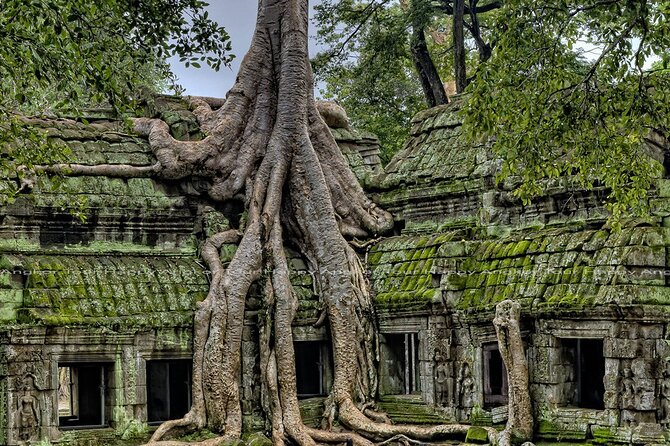
Large tree roots push over walls and galleries, creating the famous meeting of forest and stone. Ta Prohm can feel crowded, and the paths are uneven, so you will want practical footwear and patience around the best-known views. The schedule allows about two hours, enough to see more than one doorway and understand how much of the temple has been overtaken by vegetation.
I like that Ta Prohm follows Angkor Wat. The contrast is strong: Angkor Wat feels ordered and monumental, while Ta Prohm feels partly reclaimed by nature. You get both sides of the Angkor experience without needing to travel far.
Ta Nei offers a quieter pause
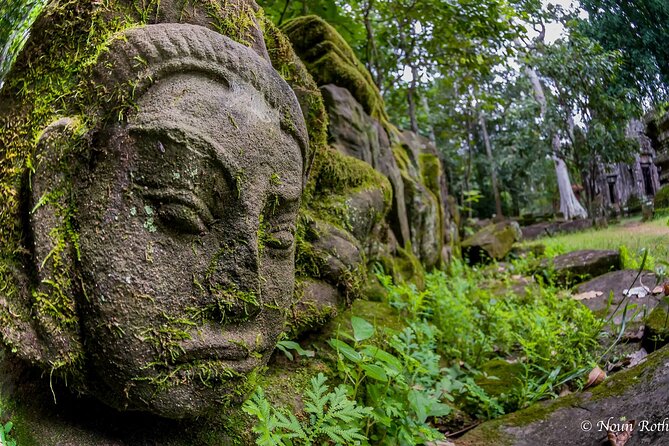
Ta Nei is a small temple with less restoration, surrounded by large trees. The stop lasts about 45 minutes and is intended for people who want to get away from the busiest temple paths.
Do not expect the polished scale of Angkor Wat or the instantly recognizable galleries of Ta Prohm. Ta Nei’s value is its quieter setting and unfinished character. It gives your guide room to explain how many Angkor structures are less complete or less visited than the famous headline sites.
This is one of the smartest inclusions in the route. After two major temples, a smaller stop helps keep the day from becoming a parade of enormous monuments.
More Angkor Wat tours we have reviewed:
- Angkor Wat Sunrise or Sunset Tour with Guide from Siem Reap
★ 5.0 · 12,109 reviews - Siem Reap: Angkor Wat: Small-Group Sunrise or Sunset Tour
★ 5.0 · 9,444 reviews - Siem Reap: Angkor Wat 2-Day Tour with Sunrise and Sunset
★ 4.9 · 4,429 reviews - Siem Reap: Full-Day Angkor Wat Guided Tour with Sunset
★ 4.9 · 3,803 reviews
Angkor Thom: gates, faces, and royal platforms
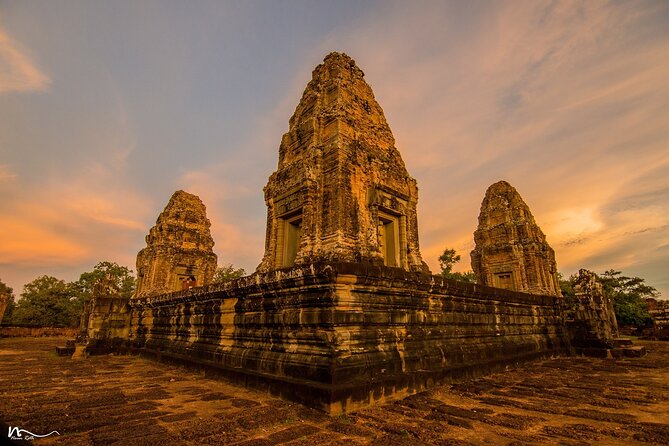
The afternoon continues into Angkor Thom, the great walled city. You first stop at the Victory Gate on the east side for photographs, then continue to Bayon at the center.
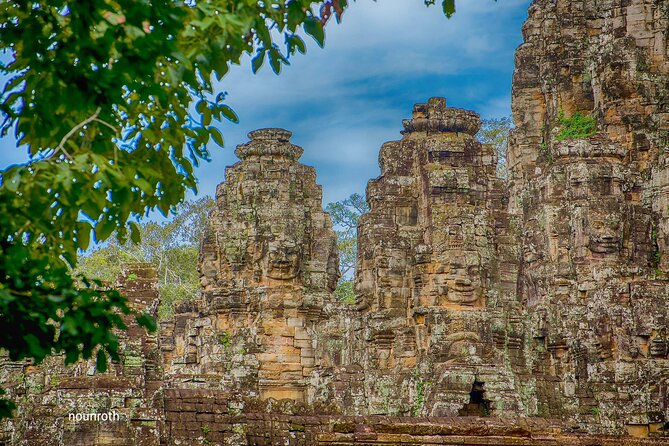
Bayon is famous for its towers carved with smiling faces. The tour description counts 49 towers and 196 faces connected with the Buddhist figure Avalokitesvara. The exact counting of faces can vary depending on how the towers are counted, but the visual effect is clear: faces look out from every direction, and the temple feels very different from Angkor Wat.
You have about 45 minutes at Bayon. That is enough for the main paths and photographs, but you may wish for more time if you enjoy close study of the carvings. Ask your guide to point out the bas-reliefs, not just the faces. They give a glimpse into daily life, conflict, ceremonies, and the world of the Khmer court.
Baphuon comes next, another 45-minute stop. This Hindu temple predates Angkor Wat, with construction in the 11th century. A reclining Buddha was added behind it in the 16th century, giving the monument more than one religious chapter to explain.
Phimeanakas, a pyramid temple from the 10th century, sits within the old royal palace area. The visit takes about 20 minutes and is paired with the ancient Royal Enclosure Wall. This is a shorter stop, but it helps you picture Angkor Thom as a living royal city rather than a collection of isolated temples.
Elephants, the Leper King, and Preah Palilay
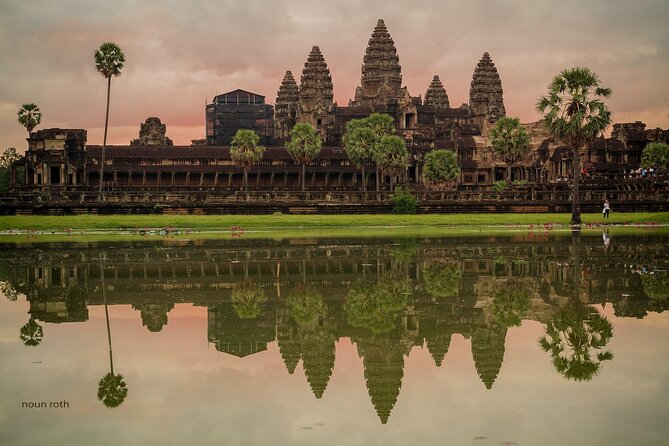
The Terrace of the Elephants was used by kings to watch returning armies. Its carved elephants give the platform its name, and the stop lasts about 15 minutes.
Nearby, the Terrace of the Leper King offers another brief look at Angkor Thom’s carved stonework. The two terraces are easy to combine, but do not confuse them with temples. They are ceremonial platforms, and their importance comes from how they fit into the old city’s public and royal life.
Preah Palilay is a small Buddhist sanctuary in a wooded area north of the royal palace. You have only about ten minutes here, so think of it as a short detour rather than a full visit. It is a pleasant change after the formal terraces and larger temple structures.
Phnom Bakheng sunset requires patience
The final stop is Phnom Bakheng, where you climb the hill and wait for sunset. The listed time is about two hours, including the climb and waiting period.
This is the least predictable part of the day. Sunset viewing involves waiting, and the climb adds effort after a long schedule. The tour allows you to skip it if you do not want to wait, which is a useful touch. You may prefer to return to town, eat early, or save your energy for the next morning.
If you stay, bring water and expect a slow finish. The attraction is the elevated sunset view, not another detailed temple visit. It can be worthwhile, but I would not make it the deciding reason to book the tour.
Day two starts at 5:00am at Angkor Wat
The second morning begins very early. Pickup is scheduled for 5:00am, taking you to Angkor Wat for sunrise. You have about one hour and 45 minutes at the temple, including time after sunrise before returning for breakfast.
Sunrise is one of the tour’s strongest features, but it also changes the practical rhythm of the trip. You will need to prepare the night before and accept that the day begins before most sightseeing schedules do. The reward is seeing the temple in the softer early light, followed by a return for breakfast before the longer drive to Tonle Sap.
This second visit also gives you a chance to notice parts of Angkor Wat missed during the first morning. Still, if you prefer quiet, unhurried visits, the combined sunrise and day-one schedule may feel intense.
Kampong Pluk shows another side of Siem Reap
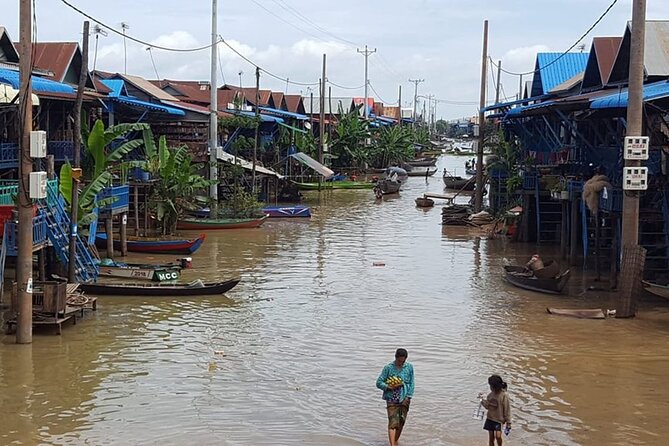
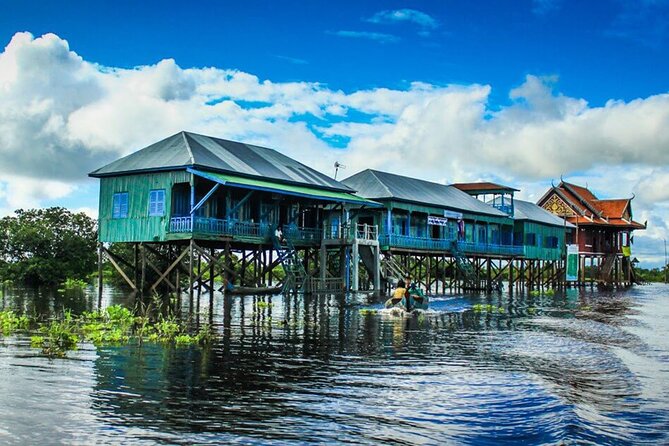
After breakfast, you travel to Kampong Pluk on Tonle Sap Lake. The visit lasts about four hours and includes a private boat ride through the floating village.
The village is known for stilt houses and fishing communities. The boat ride changes the subject completely. Instead of stone towers and royal courtyards, you see how people live around the lake and depend on its waters.
The Tonle Sap and floating village ticket costs $20 per person and includes the private boat ride. It is not part of the $166 tour price, so add it when calculating your budget. Four hours is a substantial portion of day two, but that is also what keeps the tour from becoming temples only.
Conditions at the village can vary with the season and water level. The supplied details do not promise a particular view of the houses or lake, so I would treat Kampong Pluk as a cultural and scenic boat visit rather than a fixed performance.
Banteay Srei is the day’s fine-carving stop
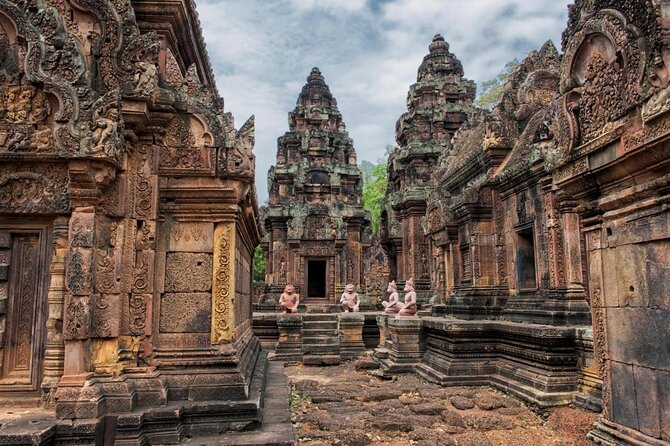
After lunch, you continue to Banteay Srei, also called the Ladies Temple. The temple was built from rare pink sandstone in the second half of the 10th century and is linked with King Rajendravarman II.
You have about one hour here. Banteay Srei is smaller than Angkor Wat, but its detailed carvings and pink stone make it one of the most distinctive stops in the region. It is often described as the jewelry of Angkor, a fair comparison for its delicate appearance.
The one-hour visit is sensible. It gives you time to look closely without pretending that the site needs half a day. If you care about sculpture, this may be the temple you remember most clearly.
Banteay Samre, Pre Rup, and Banteay Kdei
Banteay Samre follows with about 45 minutes. This Hindu temple dates to the 12th century and is often compared architecturally with Angkor Wat. Its inclusion makes the route more varied, though the long temple day means you may start to feel the repetition by this point.
Pre Rup receives about 30 minutes. Built in the late 10th century and dedicated to Hindu gods, it is associated with the phrase turn the body and with beliefs about funerary ceremonies. Your guide can give this short visit meaning by explaining how the temple’s function and design relate to Khmer religious practice.
The final stop is Banteay Kdei, a Buddhist temple from the 12th century. Its style resembles Ta Prohm and Bayon, so it works as a useful comparison at the end of the route. You have about 45 minutes to walk through the site and look at its structure without the pressure of making it the day’s main attraction.
Guides, drivers, and the private format
The guide can make or break a temple-heavy trip. The strongest praise attached to this experience focuses on guides who explain history, culture, religion, and architecture clearly, while also helping with photographs. Bun, Chhay, Lonn, and Vanna were singled out for engaging explanations, good manners, and careful attention.
Chhay was also praised for taking excellent photographs, a useful bonus if you want more than hurried phone snapshots. Vanna received repeated approval for his historical knowledge and friendly manner. These names do not guarantee who will lead your group, but they show the level of service you may receive.
Drivers including Sreang, Dat, San, Path, and Lis were praised for being friendly and helpful. The private vehicle matters here because you return to it repeatedly for water, towels, air conditioning, and short breaks between sites.
What the price really buys you
The listed price is $166 per person. At first glance, that sounds reasonable for two full days with hotel pickup, a private group, vehicle, driver, guide, parking, tolls, water, and towels.
But you should add the $62 Angkor pass and $20 floating village ticket. That brings the known total to $248 per person before lunch. Lunch is not fixed in the price and is described as about $5 per person depending on the menu.
For a private two-day service, the cost can be good value if you want transportation, a licensed English guide, and a carefully arranged route. The value is weaker if you only want Angkor Wat and one or two temples, since this itinerary charges you in time as much as money.
Group discounts are offered, but the exact discount is not provided. Ask for the current figure when booking, especially if you have a family or several people in your private group.
Who should book this experience?
I would choose this tour if you have only two days in Siem Reap and want both the major temples and Tonle Sap. It suits families, couples, and small groups who prefer a private vehicle and the freedom to ask questions or adjust the sunset stop.
It also suits first-time visitors who want a guide to connect the temples instead of simply driving from one photograph to the next. The strong praise for guide explanations and photography adds real value.
I would think twice if you dislike early mornings, long sightseeing days, or frequent stops. The first day includes eleven listed visits, and day two combines sunrise, a four-hour boat visit, and five more temples. You can skip Phnom Bakheng sunset, but most of the rest is built into the plan.
FAQ
Is hotel pickup included?
Yes. Pickup and drop-off are provided at your hotel or guest house.
How much does the Angkor temple pass cost?
The Angkor pass costs $62 per person and is not included in the tour price.
Is the Kampong Pluk boat ride included?
No. The Tonle Sap Lake and floating village ticket with a private boat ride costs $20 per person.
Are meals included?
No. Lunch is not included. The stated meal cost is about $5 per person, depending on the menu.
What time does the tour begin on the first day?
Pickup on day one is scheduled for 8:00am.
What time does the sunrise visit begin?
Pickup on day two is scheduled for 5:00am for sunrise at Angkor Wat.
Is this a shared group tour?
No. It is a private activity for your own group, with an English licensed guide, driver, and air-conditioned vehicle.
Should you book the two-day Angkor tour?
Book it if you want a lot of Cambodia in a short window and value a private guide over a slow, self-guided visit. The combination of Angkor Wat, Ta Prohm, Bayon, Banteay Srei, sunrise, sunset, and Kampong Pluk gives you a broad picture of Siem Reap.
Before booking, budget for the extra $82 in required admission and boat fees, plus meals. Then ask yourself one practical question: do you want maximum coverage, or more time at fewer places? If your answer is maximum coverage, this well-supported private tour is a strong choice.
More 2-Day Experiences
- Angkor 2-Day Sunset & Sunrise Small-Group Tour
★ 5.0 · 2,567 reviews - 2 Days Exclusive Temple Highlights with Sunset and Sunrise Tour
★ 5.0 · 1,157 reviews - Siem Reap: Angkor Sunrise 1- or 2-Day Guided Temples Tour
★ 4.9 · 1,132 reviews - 2 Days Guided Historical Tour in Angkor
★ 5.0 · 855 reviews
More Floating Village Tours
- From Siem Reap: Kampong Phluk Floating Village Tour by Boat
★ 4.9 · 6,979 reviews - Sunset tour of Kampong Phluk stilts home village on the Tonle Sap
★ 5.0 · 4,865 reviews - Siem Reap: Kampong Phluk Floating Village Tour with Boat
★ 4.9 · 3,843 reviews - Siem Reap Floating Village Kampong Phluk Sunset with Boat
★ 5.0 · 1,962 reviews
Just added around Siem Reap
- Private Battambang Full-Day Guided Tour★ 4.5 · 3 reviews
- Kulen Mountain, Beng Mealea and Banteay Srei Full Day Tour★ 5.0 · 3 reviews
- Kompong Pluk Tour★ 5.0 · 3 reviews
- Private 3 Day Tour to Discover the ancient temples★ 5.0 · 3 reviews
- Kulen National Park Ticket -Waterfall & 1000 Lingas★ 5.0 · 3 reviews
- Cambodia: Absolute Traditional Dance Show with Buffet Dinner★ 5.0 · 3 reviews
- Border Transfer (Siem Reap to Laos/Laos to Siem Reap)★ 3.5 · 3 reviews
- Best Taxi Siem Reap to Battambang – English Speaking Driver★ 4.5 · 3 reviews
Angkor Wat Tours, compared.

Angkor Wat Sunrise or Sunset Tour with Guide from Siem Reap
Read our review →
Angkor Wat: Small-Group Sunrise or Sunset Tour
Read our review →
Angkor Wat 2-Day Tour with Sunrise and Sunset
Read our review →

Angkor Wat Sunrise tour with Small – Group and Guide tours
Read our review →
Angkor Wat Highlights and Sunrise Guided Tour from Siem Reap
Read our review →
Angkor Wat Sunset Small Group Tour with Lunch Included
Read our review →
Full-Day Angkor Wat Sunrise Private Tour with Guide from Siem Reap
Read our review →Browse the lists this tour appears in