
Reviewed · ANGKOR WAT TOURS
2-Day Angkor Wat with Temples On Small Circle & Kulen Waterfall
Ancient temples, jungle roots, and a mountain waterfall. This two-day private tour packs Siem Reap’s major Angkor sights into a clear route, then adds Phnom Kulen National Park, the traditional birthplace of the Khmer Empire. I like the mix of famous temples and quieter stops, especially Ta Nei, and I like having a licensed English-speaking guide, air-conditioned vehicle, hotel pickup, cold water, and wet towels included.
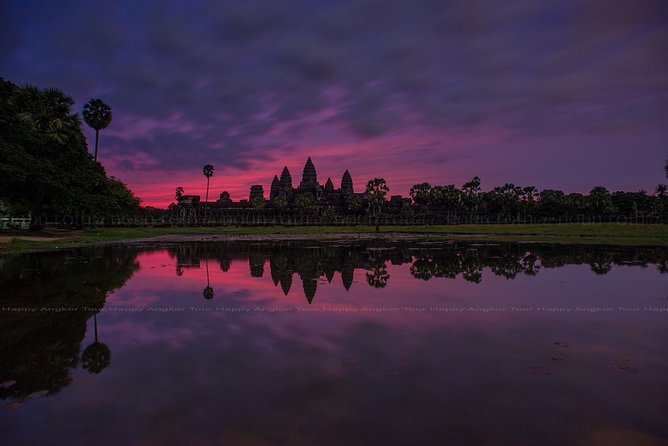
The tour also gives you two classic Angkor moments: sunset from Phnom Bakheng and an early sunrise at Angkor Wat. The main consideration is the pace. Day two begins at 5:00am, includes more than two hours on the road to Kulen, and continues through several temples after a long mountain visit.
In This Review
- Five details that shape the experience
- What the $181.75 price really covers
- Day one begins with Angkor Wat
- Ta Prohm and the power of the trees
- Ta Nei offers a quieter contrast
- Angkor Thom in a compact sequence
- Sunset from Phnom Bakheng requires patience
- Sunrise at Angkor Wat starts at 5:00am
- Phnom Kulen brings water, stone, and sacred carvings
- Banteay Srei rewards close looking
- Banteay Samre and Pre Rup finish the route
- How the private format changes the day
- Who should book this two-day route?
- Final booking advice
- FAQ
- Is the Angkor temple pass included in the tour price?
- Is Phnom Kulen National Park admission included?
- Are meals included?
- What time does the tour begin on the first day?
- What time does the second day begin?
- Is this a private tour?
Five details that shape the experience
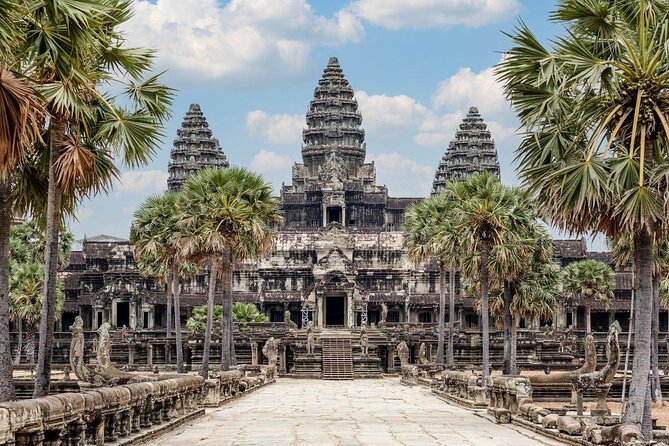
- Ta Nei gives you a quieter temple stop: This small, less-restored ruin is surrounded by large trees and usually feels more removed from the main temple route.
- The tour is private: Your group has its own vehicle and guide, rather than joining a larger shared party.
- Day two starts at 5:00am: You need to be ready before dawn for Angkor Wat sunrise.
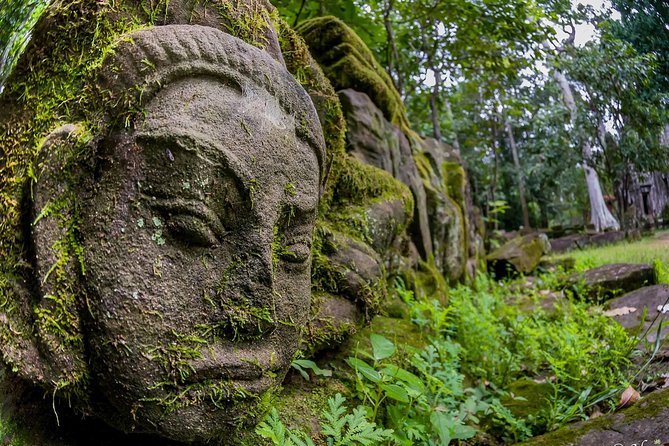
- Kulen adds a different kind of sightseeing: You will see the 1,000 Lingas carved into a riverbed, a large reclining Buddha, and a waterfall instead of visiting temples all day.
- The advertised price is not the full cost: The $181.75 tour price excludes the Angkor pass, Kulen entrance, and meals.
- Guide Chhay receives special praise: One published rating describes him as friendly, informative, good with historical details, and happy to take photographs.
What the $181.75 price really covers
The listed cost is $181.75 per person. It includes a private air-conditioned vehicle with driver, a licensed English-speaking guide, parking fees, road tolls, hotel pickup and return, drinking water, and wet towels.
That is a useful package for a private two-day outing, particularly if you value door-to-door transport and do not want to arrange separate rides between Siem Reap, Angkor, and Kulen. The vehicle matters most on day two, when the tour travels more than 60 kilometers from Angkor Park to Phnom Kulen National Park.
You must add the Angkor temple pass at $62 per person. Phnom Kulen National Park costs another $20, and lunch is not included. A listed meal estimate is about $5 per person, depending on the menu.
That puts the known cost at about $263.75 before meals, or approximately $268.75 with one $5 lunch estimate. Since this is a private tour, the value improves if you are sharing the vehicle with family or friends. For one person, the price is less of a bargain, although the private guide and transport still remove much of the planning work.
The tour offers hotel or guest house pickup and return, with confirmation provided when you book. Free cancellation is available if you cancel at least 24 hours before the local start time. Changes or cancellations inside that window are not accepted.
More Phnom Kulen day trips:
- Kulen Waterfall Join-in Tour (local Picnic lunch)
★ 5.0 · 2,434 reviews - Kulen Mountain: Small-Group Tour and Picnic lunch
★ 4.9 · 1,802 reviews - Siem Reap: Kulen Mountain, Beng Mealea and Tonle Sap Tour
★ 5.0 · 1,483 reviews
Day one begins with Angkor Wat
Pickup is scheduled for 8:00am after breakfast. The guide first takes you to buy the temple pass, then brings you into the Angkor area for a substantial visit to Angkor Wat.
Allow about two and a half hours here. Angkor Wat is not a quick photo stop. Its galleries, towers, courtyards, and carved surfaces reward a slower walk, and a guide can help connect the religious design with the temple’s role as a major Khmer monument.
The timing is sensible for a first morning. You avoid starting the entire trip before dawn, while still giving Angkor Wat enough time. The drawback is that the temple pass is not included, so keep that extra $62 in your budget.
Because sunrise takes place at Angkor Wat the following morning, you will see the same monument under two very different conditions. Day one offers a fuller historical visit, while day two gives you the famous early light.
Ta Prohm and the power of the trees
Next comes Ta Prohm, reached along the small circuit road. Plan on about two hours, which gives you time to look beyond the most photographed doorway and see how the temple’s stone halls, galleries, and giant tree roots fit together.
Ta Prohm is famous for the roots that grip and spill across the ruins. It was also used as a location for the film Tomb Raider, but the movie connection should be treated as a footnote. The real appeal is the uneasy balance between the stonework and the trees.
This stop can feel more crowded than Ta Nei later in the morning, and the roots attract plenty of camera traffic. A guide is helpful here because the visual drama can otherwise reduce the visit to a search for the best photograph.
Ta Nei offers a quieter contrast
Ta Nei takes about 45 minutes. It is smaller and less restored than the major temples, with large trees around the structure and fewer features competing for attention.
I particularly like this inclusion. After Angkor Wat and Ta Prohm, Ta Nei gives you a change of scale and mood. You can look at a weathered ruin without trying to match the biggest monument you have just seen.
Do not expect the same grand towers or broad courtyards found at Angkor Wat. Ta Nei is valuable because it is modest. The uneven preservation is part of the point, not a flaw in the visit.
More Angkor Wat tours we have reviewed:
- Angkor Wat Sunrise or Sunset Tour with Guide from Siem Reap
★ 5.0 · 12,109 reviews - Siem Reap: Angkor Wat: Small-Group Sunrise or Sunset Tour
★ 5.0 · 9,444 reviews - Siem Reap: Angkor Wat 2-Day Tour with Sunrise and Sunset
★ 4.9 · 4,429 reviews - Siem Reap: Full-Day Angkor Wat Guided Tour with Sunset
★ 4.9 · 3,803 reviews
Angkor Thom in a compact sequence
The afternoon moves into Angkor Thom, the old walled city. The first stop is the Victory Gate on the east side, a brief 10-minute photo stop before continuing to Bayon.
The Victory Gate is a short visit, so you will not spend long studying it. It works as an introduction to the scale of Angkor Thom and gives you a quick chance to take photographs before the larger monuments.
Bayon sits at the center of the old city and receives about 45 minutes. Its towers carry the famous carved faces associated with the bodhisattva Avalokitesvara. The tour description counts 49 towers and 196 faces, though the condition and visibility of individual faces vary as you walk around the temple.
Bayon rewards close attention. Look up, turn corners, and check how the faces appear at different angles. Forty-five minutes gives you a useful first look, though anyone fascinated by sculpture may wish for more time.
Baphuon follows. This Hindu temple dates from the 11th century and predates Angkor Wat. The visit is listed at 15 minutes, with attention also given to the large reclining Buddha behind it, built in the 16th century.
That short timing means you should focus on the main structure and the reclining figure rather than expect a long exploration. The contrast between the earlier Hindu temple and the later reclining Buddha is one of the more interesting details in this part of Angkor Thom.
Phimeanakas is another 15-minute stop. This pyramid-shaped Hindu temple dates from the 10th century and sits in the center of the former royal palace area. You also visit the ancient Royal Enclosure Wall in the same stretch.
The Terrace of the Elephants takes about 10 minutes. This raised platform was used by kings to view returning armies, and its wall carries elephant carvings. Nearby, the Terrace of the Leper King receives another 10 minutes.
These final Angkor Thom stops are brief, but they help you understand the city as a royal center rather than a collection of isolated temples. The pace is brisk, so listen closely as the guide explains what you are seeing.
Sunset from Phnom Bakheng requires patience
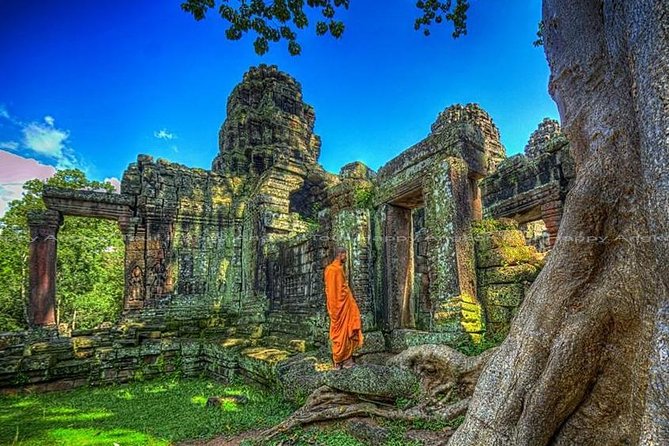
The first day ends at Phnom Bakheng, a hilltop temple with views for sunset. The planned stop lasts about two hours, including the climb and time spent waiting.
The view can be excellent, but sunset here is not a quick add-on. You may spend a significant part of the time waiting for the light to change. If you are tired after a full temple day, the tour allows you to skip this stop.
That flexibility is practical. I would keep Phnom Bakheng if sunset views are a priority and you are comfortable with the climb and wait. If you prefer a shorter day, or if temple details matter more than sunset, skipping it gives you an earlier evening.
Sunrise at Angkor Wat starts at 5:00am
Day two begins very early. Pickup is scheduled for 5:00am so you can reach Angkor Wat for sunrise, with the sunrise visit planned for about one hour and 45 minutes.
This is the tour’s toughest timing choice. You gain the iconic sight of Angkor Wat in the early morning, but you must be ready while it is still dark. The early start also follows a full first day, so the experience asks for stamina.
The sunrise visit is not the same as the longer Angkor Wat tour from day one. Think of it as a return for the changing light and reflection view, followed by breakfast before the long drive to Kulen.
If you want both the major temple interiors and sunrise photographs, this two-visit approach works well. If you dislike early mornings, you should think carefully before booking because the schedule is fixed around the 5:00am pickup.
Phnom Kulen brings water, stone, and sacred carvings
After breakfast, the tour heads to Phnom Kulen National Park, more than 60 kilometers from Angkor Park. The visit lasts about five hours, making it the longest single stop on the second day.
Kulen is not another temple complex. The main sights are natural and religious: a riverbed carved with Lingas, a large reclining Buddha made from a single stone, and a waterfall.
The 1,000 Lingas represent Shiva’s supreme essence. Seeing them carved beneath the river gives you a different way to understand Khmer religious art. Instead of walking through galleries and towers, you are looking at sacred symbols built directly into the riverbed.
The reclining Buddha is another major stop. Its scale and construction from one large stone make it distinct from the carved temple walls seen the previous day.
The waterfall provides a welcome change after hours among ruins. Still, the long drive is the price of reaching Kulen. This portion suits you if you want more than the standard Angkor circuit and are willing to trade some temple time for a mountain and water visit.
Lunch is extra and depends on the menu, with an estimated cost of $5 per person. Since the day covers a large distance and begins before sunrise, plan to make the meal break count.
Banteay Srei rewards close looking
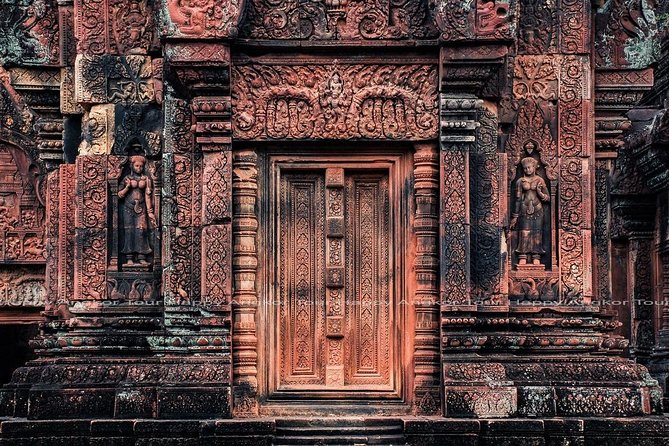
After Kulen and lunch, the tour continues to Banteay Srei, often called the Lady Temple. This pink sandstone Hindu temple dates from the second half of the 10th century and was built under King Rajendravarman II, with dedication to Hindu gods, especially Shiva.
The stop lasts about an hour. Banteay Srei is smaller than Angkor Wat, but its fine pink sandstone carvings make it one of the most visually detailed temples on the route.
This is a good place to slow down and examine the carved surfaces. The temple’s smaller scale also gives you a useful contrast with Angkor Wat and Bayon. You are not simply seeing another large ruin. You are seeing a different material and a more intricate decorative style.
The name Lady Temple can create the wrong expectation, so focus on the architecture and carving rather than the nickname. The tour identifies its Hindu purpose and 10th-century origins, which helps put the monument in context.
Banteay Samre and Pre Rup finish the route
Banteay Samre takes about 45 minutes. This 12th-century Hindu temple is thought to share architectural features with Angkor Wat, although the evidence does not explain every detail of its design.
The stop adds another substantial temple without repeating the exact experience of the main Angkor circuit. After Banteay Srei’s pink sandstone, Banteay Samre brings you back to a larger, more enclosed temple form.
The final stop is Pre Rup, visited for about 30 minutes. Built in the late 10th century and dedicated to Hindu gods, it is associated with the Khmer belief that funerals took place at the temple farthest from the main center.
By this point, you will have spent a long day on the road and among monuments. Thirty minutes is enough for a final look, but you may feel the accumulated heat, walking, and early start. The route ends with variety, though not with a relaxed finish.
How the private format changes the day
This is a private activity, so only your group participates. That gives you more control than a large shared bus tour, even though the overall route is tightly planned.
A private air-conditioned vehicle is especially useful for the transfer to Kulen. The included cold drinking water and wet towels are small details, but they matter after temple walks and a hot outdoor day.
The guide is central to the experience. Chhay is specifically praised for friendly service, historical explanations, interesting facts, and taking photographs, which is useful if you are traveling alone. You should still confirm your guide’s name when booking, since the supplied information identifies Chhay in the feedback but does not promise that every departure uses the same guide.
The private setup also suits families and small groups who want hotel pickup, a dedicated vehicle, and a guide focused on their party. Group discounts are available, though the exact discount is not specified.
Who should book this two-day route?
I would recommend it to you if you want the major Angkor temples plus a substantial side trip. The route covers Angkor Wat, Ta Prohm, Bayon, Angkor Thom, Banteay Srei, Banteay Samre, and Pre Rup, then adds Kulen’s river carvings, reclining Buddha, and waterfall.
It is also a good match if you prefer a private guide to explain what you are seeing. The mix of famous sites and Ta Nei gives the route some breathing room, even though the schedule remains full.
You should hesitate if you want slow, unplanned temple visits. Day one includes many short stops, while day two combines a pre-dawn start, a long road journey, a five-hour park visit, lunch, and three more temples.
The tour has a 4.9 rating from 11 published ratings and a 100 percent recommendation rate. That is encouraging, particularly alongside the positive detail about Chhay, but the small number of ratings means you should still judge the experience by its demanding schedule and extra entrance costs.
Final booking advice
Book this tour if you want efficient coverage, a private vehicle, and a guide-led look at both Angkor and Phnom Kulen. The strongest feature is the variety: giant roots at Ta Prohm, carved faces at Bayon, pink sandstone at Banteay Srei, sacred river carvings at Kulen, and a waterfall to break up the ruins.
Before booking, budget about $263.75 per person before meals, prepare for a 5:00am start on the second day, and decide how much you value sunset at Phnom Bakheng. If you accept the early mornings and long second day, this is a well-rounded way to see far more than Angkor Wat alone.
FAQ
Is the Angkor temple pass included in the tour price?
No. The Angkor pass and all temple admission costs an additional $62 per person.
Is Phnom Kulen National Park admission included?
No. The Phnom Kulen National Park admission fee is an additional $20 per person.
Are meals included?
No. Meals are not included. Lunch is estimated at about $5 per person, depending on the menu.
What time does the tour begin on the first day?
Pickup on day one is scheduled for 8:00am at your hotel or guest house.
What time does the second day begin?
Pickup on day two is scheduled for 5:00am so you can see sunrise at Angkor Wat.
Is this a private tour?
Yes. Only your group participates, and the tour includes a private air-conditioned vehicle with driver and an English-speaking licensed guide.
More 2-Day Experiences
- Angkor 2-Day Sunset & Sunrise Small-Group Tour
★ 5.0 · 2,567 reviews - 2 Days Exclusive Temple Highlights with Sunset and Sunrise Tour
★ 5.0 · 1,157 reviews - Siem Reap: Angkor Sunrise 1- or 2-Day Guided Temples Tour
★ 4.9 · 1,132 reviews - 2 Days Guided Historical Tour in Angkor
★ 5.0 · 855 reviews
Just added around Siem Reap
- Private Battambang Full-Day Guided Tour★ 4.5 · 3 reviews
- Kulen Mountain, Beng Mealea and Banteay Srei Full Day Tour★ 5.0 · 3 reviews
- Kompong Pluk Tour★ 5.0 · 3 reviews
- Private 3 Day Tour to Discover the ancient temples★ 5.0 · 3 reviews
- Kulen National Park Ticket -Waterfall & 1000 Lingas★ 5.0 · 3 reviews
- Cambodia: Absolute Traditional Dance Show with Buffet Dinner★ 5.0 · 3 reviews
- Border Transfer (Siem Reap to Laos/Laos to Siem Reap)★ 3.5 · 3 reviews
- Best Taxi Siem Reap to Battambang – English Speaking Driver★ 4.5 · 3 reviews
Angkor Wat Tours, compared.

Angkor Wat Sunrise or Sunset Tour with Guide from Siem Reap
Read our review →
Angkor Wat: Small-Group Sunrise or Sunset Tour
Read our review →
Angkor Wat 2-Day Tour with Sunrise and Sunset
Read our review →

Angkor Wat Sunrise tour with Small – Group and Guide tours
Read our review →
Angkor Wat Highlights and Sunrise Guided Tour from Siem Reap
Read our review →
Angkor Wat Sunset Small Group Tour with Lunch Included
Read our review →
Full-Day Angkor Wat Sunrise Private Tour with Guide from Siem Reap
Read our review →Browse the lists this tour appears in