
Reviewed · SUNSET TOURS
2 Days Angkor temples with Sunrise & Sunset
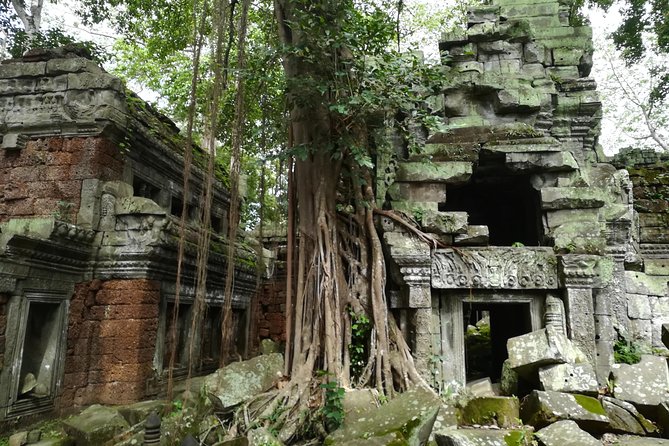
Ancient stones, jungle roots, and early alarms. This two-day private tour gives you a broad introduction to the Angkor Archaeological Park, from the famous towers of Angkor Wat to quieter temples such as Ta Som and Neak Pean. You travel by air-conditioned car, minivan, or minibus with an English-speaking guide and cold drinking water.
I especially like the private format, which lets your group adjust the pace and ask questions without waiting for strangers. I also like the mix of major sights and smaller temples, including pink-sandstone Banteay Srei and the calm ruins around the eastern part of the park. The main drawback is the demanding schedule: sunrise may require a 4:30 or 5am start, and the tour includes many stops across two long days.
Guide Bunpheng has received particularly warm praise for his professionalism, photography, and willingness to adjust plans. That personal service may be the difference between simply collecting temple photos and understanding what you are seeing.
In This Review
- Key points to know before booking
- What $115 gets you in Siem Reap
- Day one: small temples before the grand circuit
- Ta Prohm and Ta Keo: two very different temple moods
- Angkor Thom gives you the big picture
- Sunset at Phnom Bakheng or the South Gate
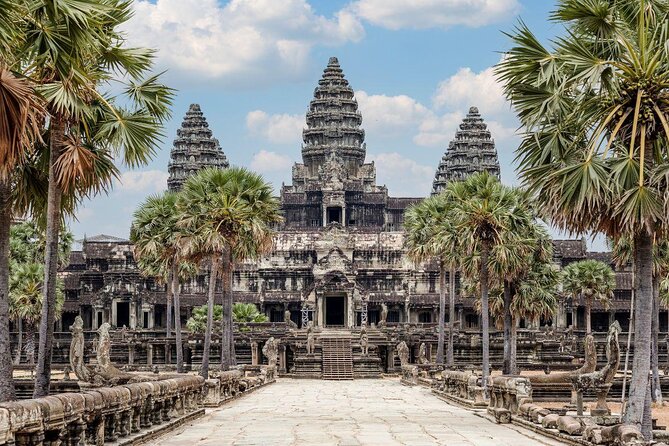
- Day two starts before dawn at Angkor Wat
- East Mebon and the eastern temples
- Banteay Srei, the pink temple
- Banteay Samre and the quieter eastern route
- Preah Khan closes the temple circuit
- How the private guide changes the experience
- Clothing, timing, and who should book
- Should you book this Angkor tour?
- FAQ
- How much does the two-day Angkor temple tour cost?
- Is transportation included?
- Is this a private tour?
- What time does the sunrise visit begin?
- Do I need an Angkor Pass?
- What clothing is required?
- Can I cancel for a full refund?
Key points to know before booking
- Sunrise at Angkor Wat: Day two begins around 4:30 or 5am, depending on the season, followed by about three hours at the main temple.
- A private two-day itinerary: Only your own group participates, so the guide can adapt the pace and answer your questions directly.
- Fourteen major temple stops: You see famous sites such as Ta Prohm and Angkor Thom, along with less familiar places including Ta Som and Neak Pean.
- The Angkor Pass costs extra: The tour price is $115 per person, but a three-day Angkor Pass at $62 per person is not included.
- Air-conditioned transport and water: Transportation is provided by car, minivan, or minibus, with bottled cold water included.
- Strict temple clothing rules: You must cover your thighs and shoulders inside the temple complex or risk being refused entry.
What $115 gets you in Siem Reap
At $115 per person, this is not an all-inclusive trip. The price covers the English-speaking guide, private transportation, and bottled water. You pay separately for the three-day Angkor Pass, listed at $62 per person, as well as meals, drinks, and accommodation.
That brings the basic temple-and-tour cost to about $177 per person before food. The value depends on how much you want from your two days. If you only need a driver to take you between temples, cheaper options may exist. If you want a private guide to explain the sites and adjust the plan, the price is easier to justify.
The private setup matters most when you have limited time. You are not tied to the pace of a large bus group, and you can discuss changes with your guide. The tour provider has also arranged airport pickup and hotel transfers for some customers, but those services should be confirmed before you book because they are not listed among the standard inclusions here.
This is a busy route. You cover much of the central Angkor area on day one, then head farther east and north on day two. The reward is breadth. The tradeoff is that several stops last only 20 or 30 minutes, which may feel quick if you enjoy photography or close study of carvings.
More sunset tours:
- Angkor Wat Sunrise or Sunset Tour with Guide from Siem Reap
★ 5.0 · 12,109 reviews - Siem Reap: Angkor Wat: Small-Group Sunrise or Sunset Tour
★ 5.0 · 9,444 reviews - Sunset tour of Kampong Phluk stilts home village on the Tonle Sap
★ 5.0 · 4,865 reviews
Day one: small temples before the grand circuit
The first day begins with Prasat Kravan, a compact 10th-century temple made from five reddish brick towers on a raised terrace. Its scale is modest, but that is part of its appeal. You can take in the basic shape without the crowds and complexity of a huge temple complex.
Allow about 20 minutes here. The entrance fee is not included, and the site may feel brief compared with the larger stops later in the day.
Next comes Banteay Kdei, whose name means Citadel of Chambers. King Jayavarman VII built this Buddhist temple in the late 12th or early 13th century. Its maze-like plan gives the stop a different mood from the open courtyards and broad terraces elsewhere.
You have about 40 minutes at Banteay Kdei. That is enough for a useful walk-through, though you may want to ask your guide to point out the changes in design from the earlier brick temple at Prasat Kravan.
Ta Prohm and Ta Keo: two very different temple moods
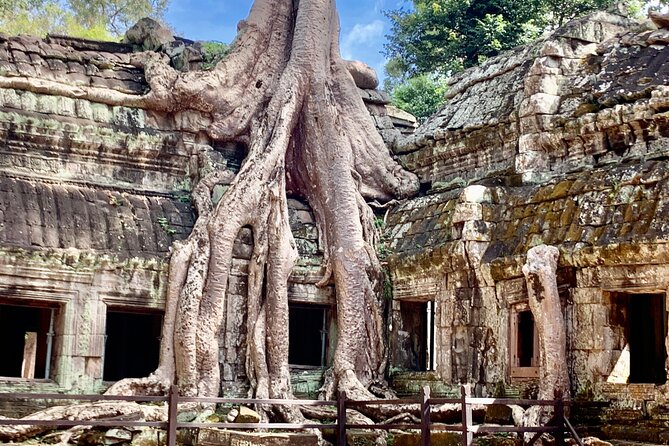
Ta Prohm receives about an hour, making it one of the more generous stops on the first day. Built in the Bayon style under Jayavarman VII, it began as a Buddhist monastery and university. The temple is known for its trees growing through and around the stone structures, giving it a memorable, weathered appearance.
I would use the hour carefully. Ta Prohm is one of the places where it is easy to focus only on dramatic roots and forget the galleries, doorways, and carved details. Your guide can help connect the surviving structures with the temple’s original religious and educational purpose.
The schedule then moves to Ta Keo for around 30 minutes. This was intended as a state temple for Jayavarman V, with construction beginning in 975. It was never completed, and the unfinished surfaces give the temple a more severe look than the heavily decorated sites.
Ta Keo is a good contrast to Ta Prohm. One feels shaped by trees and time, while the other shows the scale and ambition of a project left incomplete. The short visit should be enough to see the main form, but it is not a long exploration.
Angkor Thom gives you the big picture
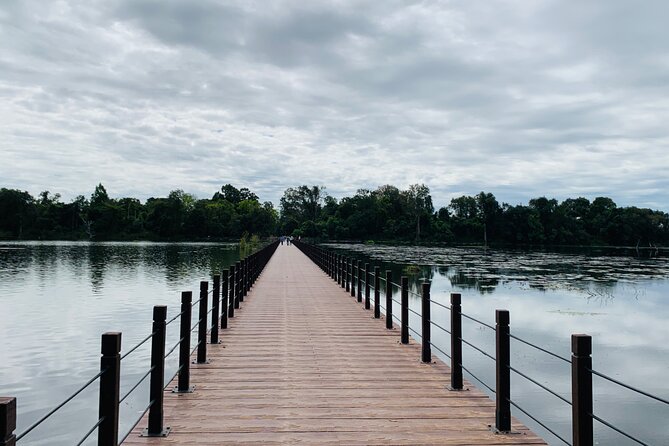
You spend about two hours in Angkor Thom, the former capital of the Khmer Empire. This is not just one temple. It is a large historic complex containing the Royal Palace area, the Terrace of the Elephants, the Terrace of the Leper King, Bayon, and the South Gate.
Two hours is useful because Angkor Thom requires more orientation than a single shrine. You can move through several connected monuments and begin to understand how the capital was arranged.
The South Gate is especially important visually, with its bridge and monumental figures. Bayon is the major temple within Angkor Thom, while the terraces help show how royal ceremonies and public life occupied the capital. I would listen closely here, since a guide can make the difference between seeing disconnected stone structures and understanding how the complex worked together.
Because the area is broad, wear practical shoes and save some energy. The tour provides water, but food is not included, so plan for your own meals around the schedule.
A few more trips worth weighing up
- Siem Reap: Angkor Wat 2-Day Tour with Sunrise and Sunset
★ 4.9 · 4,429 reviews - Siem Reap: Full-Day Angkor Wat Guided Tour with Sunset
★ 4.9 · 3,803 reviews - Angkor Wat Sunset Small Group Tour with Lunch Included
★ 5.0 · 3,059 reviews - Angkor 2-Day Sunset & Sunrise Small-Group Tour
★ 5.0 · 2,567 reviews
Sunset at Phnom Bakheng or the South Gate
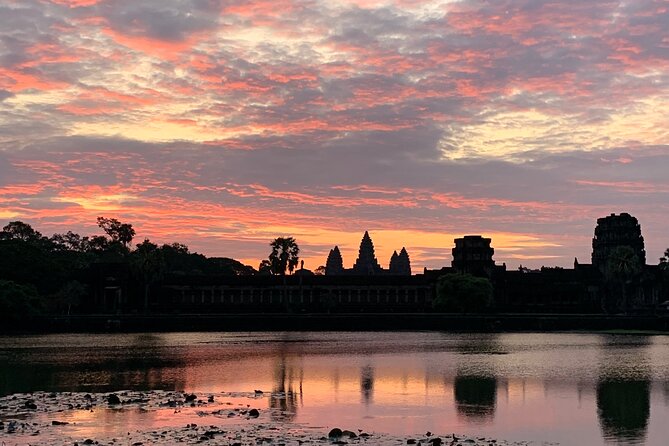
The overview describes sunset at the South Gate of Angkor Thom or Phnom Bakheng, while the detailed itinerary lists Phnom Bakheng for about 40 minutes. Phnom Bakheng is a temple mountain dedicated to Shiva, built by King Yasovarman near the end of the ninth century.
Its name refers to the hill or mountain on which it was built. That setting is the reason it is included at sunset. You may find the late-day view more important here than the temple’s intricate detail.
Ask your guide before the day begins which sunset location is planned. This is one of the itinerary points worth confirming, especially if sunset photography is a priority. The route is already full, and light fades quickly, so a clear plan helps.
Day two starts before dawn at Angkor Wat
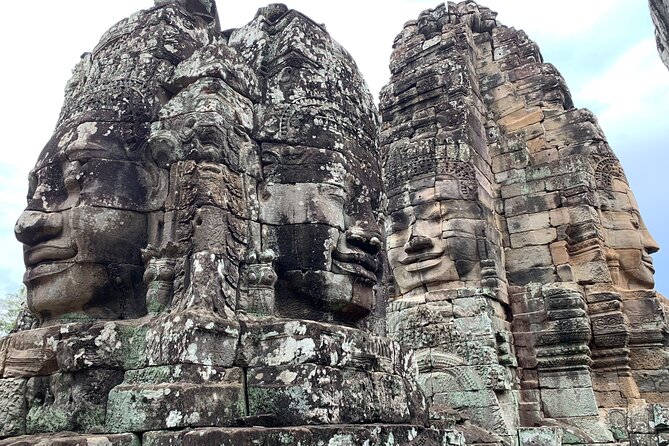
The sunrise morning is the centerpiece of the trip. Pickup is scheduled around 4:30 or 5am depending on the season, so this is not a casual start. You should treat the first morning as an early expedition and arrange your rest accordingly.
After sunrise, you spend about three hours at Angkor Wat itself. The temple is the largest religious monument in the itinerary and needs time. The experience is not only about the first view of its towers reflected in the water. You also have time to enter the main temple and examine its galleries, courtyards, and carved scenes.
Three hours is a sensible allotment, though the early start makes the morning tiring. The guide can help you use the time well instead of wandering without a plan. Remember that the entrance fee is separate, and proper clothing is required.
The listed meeting time says 9am, but the sunrise portion clearly requires a much earlier departure. Confirm the exact pickup time with Angkor Doors after booking. This is the most important practical detail in the entire plan.
East Mebon and the eastern temples
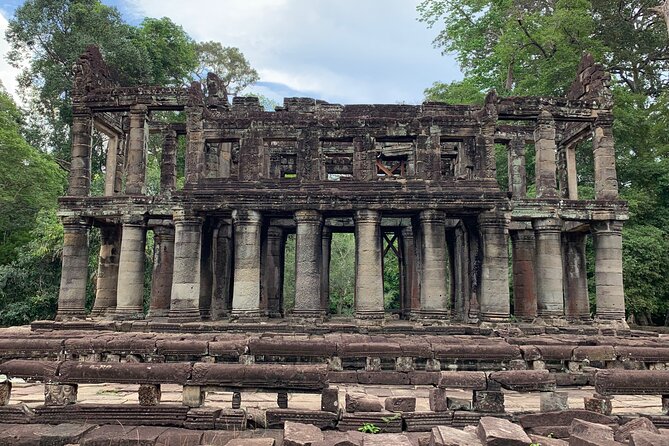
The next part of the route includes Pre Rup and Eastern Mebon, but the descriptions contain a small naming mismatch. The stop labeled Pre Rup is described as East Mebon, and Eastern Mebon appears again later as a separate 20-minute stop.
Pre Rup receives 30 minutes in the schedule, while Eastern Mebon receives 20 minutes. Both are examples of early Khmer architecture from the 10th century, according to the tour details. Before setting out, ask the guide to confirm whether both temples are included and which stop corresponds to each name.
This matters because the eastern group is easy to treat as a blur after the sunrise start. A quick explanation of the difference between the two sites will help you get more from the brief visits.
Banteay Srei, the pink temple
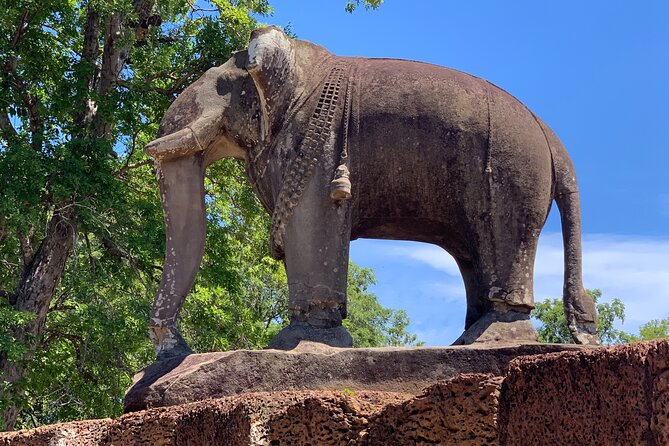
Banteay Srei is one of the most distinctive stops on the second day. Known as the Citadel of the Women, it is noted for its pink sandstone and fine carvings. The temple is smaller than Angkor Wat, but its decoration is unusually delicate.
You have about an hour here, and the tour lists admission as free for this stop. Other temple entrance fees are marked as not included, so you should still rely on the overall Angkor Pass requirement rather than treating this notation as a separate pass-free entry.
Banteay Srei is far enough from the central temple group to make the trip feel more varied. It rewards slow looking. Instead of only checking off another ruin, take time to compare its detailed carvings with the larger, more monumental work at Angkor Wat and Angkor Thom.
Banteay Samre and the quieter eastern route
Banteay Samre takes about 40 minutes. This Hindu temple was built in the early 12th century under Suryavarman II and Yasovarman II and dedicated to Vishnu. Its layout is often compared with a smaller version of Angkor Wat.
That comparison gives you a useful reference point. After seeing Angkor Wat, you can notice similar ideas in a more compact setting. The stop also breaks up the day with a temple that is less overwhelming in scale.
Ta Som follows for about 20 minutes. Jayavarman VII built this Buddhist temple in the late 12th century and dedicated it to Lokesvara Buddha. The short stop works well if you want a quick look at a smaller site, but it may feel rushed if you hope to photograph every corner.
Neak Pean lasts about 30 minutes. This 12th-century Buddhist temple sits on a man-made island in a man-made lake, and its name means Entwined Serpents. The water setting makes it unlike most of the stone temples on the route.
The access and view here are part of the experience. You are not simply walking into another enclosed ruin. You are seeing a temple designed around water and a central island, a welcome change after so many courtyards and towers.
Preah Khan closes the temple circuit
The final stop is Preah Khan, which means Royal Sword. Jayavarman VII built it in the 12th century and dedicated it to his late father. It lies about one kilometer north of the ancient city of Angkor Thom and is large enough to reward a careful visit.
The planned time is about 50 minutes. That gives you a reasonable final look at a major complex, though by this point you may be tired from the early start and long sequence of temples.
Preah Khan is a fitting ending because it brings together several themes from the two days: royal power, Buddhist devotion, long corridors, and a temple complex that feels larger than a single central shrine. If you still have energy, ask your guide to focus on the parts that differ from Ta Prohm and Banteay Kdei.
How the private guide changes the experience
An English-speaking guide is included, and Bunpheng is the named guide associated with the strongest praise in the available feedback. He has been described as punctual, professional, adaptable, friendly, and a capable photographer. Those qualities are useful here because the itinerary involves early starts, many temples, and several short visits.
A good guide also helps with the practical side of Angkor. You can ask for a slower pace at Banteay Srei, more time at Angkor Wat, or a clearer explanation of the difference between the eastern temples. Since this is a private activity, the conversation is limited to your group rather than a bus full of strangers.
The vehicle is an air-conditioned car, minivan, or minibus. That matters in Siem Reap, especially on a schedule that keeps you moving for two days. Cold bottled water is included, but meals and drinks beyond that are not.
Clothing, timing, and who should book
The temple dress code is strict. Your thighs and shoulders must be covered when entering the temple complex. Bring clothing that meets those rules from the start, since incorrect clothing can mean refused entry.
This tour suits you best if you have only two days in Siem Reap and want a strong first look at Angkor without arranging each transfer yourself. It is also a good fit for couples, families, honeymooners, and small groups who value a private guide.
You may want a slower or more specialized plan if you prefer long photography sessions, detailed archaeology, or relaxed mornings. Fourteen stops across two days provide impressive coverage, but they do not leave much room for lingering.
Free cancellation is available if you cancel at least 24 hours before the local start time. Changes or cancellations made inside that window are not accepted for a refund.
Should you book this Angkor tour?
Book it if you want wide coverage, private transport, and a guide-led introduction to Angkor in a short stay. The mix is strong: sunrise at Angkor Wat, sunset near Phnom Bakheng or Angkor Thom, Ta Prohm, Angkor Thom, Banteay Srei, and several quieter eastern temples.
Before paying, confirm the early pickup time, the exact sunset location, and how the Pre Rup and Eastern Mebon entries are handled. Add the $62 Angkor Pass to your budget, bring temple-appropriate clothing, and expect two full, active days.
If you accept the early morning and brisk pace, this is a practical way to see a great deal of Angkor with personal attention. If you want an unhurried temple study, choose a longer stay or ask the private guide to reduce the number of stops.
FAQ
How much does the two-day Angkor temple tour cost?
The tour costs $115 per person. A three-day Angkor Pass, listed at $62 per person, is not included. Food, drinks, and accommodation are also separate.
Is transportation included?
Yes. Transportation is provided by air-conditioned car, minivan, or minibus. Cold bottled water is included as well.
Is this a private tour?
Yes. Only your own group participates in the activity.
What time does the sunrise visit begin?
The sunrise departure begins around 4:30 or 5am, depending on the season. The general meeting information also lists a 9am start, so confirm the exact pickup time with Angkor Doors before the tour.
Do I need an Angkor Pass?
Yes. The tour information states that each visitor needs one three-day Angkor Pass. The listed price is $62 per person, and it is not included in the tour cost.
What clothing is required?
You must cover your thighs and shoulders when entering the temple complex. Visitors wearing clothing that does not meet the rules may be refused entrance.
Can I cancel for a full refund?
Yes, if you cancel at least 24 hours before the experience start time. Cancellations or changes made less than 24 hours before the start are not accepted for a refund.
More 2-Day Experiences
- 2 Days Exclusive Temple Highlights with Sunset and Sunrise Tour
★ 5.0 · 1,157 reviews - Siem Reap: Angkor Sunrise 1- or 2-Day Guided Temples Tour
★ 4.9 · 1,132 reviews - 2 Days Guided Historical Tour in Angkor
★ 5.0 · 855 reviews - 2-Day Angkor Wat With Small, Big Circuit and Banteay Srei Tour
★ 5.0 · 545 reviews
More Morning
- Angkor Wat Sunrise tour with Small – Group and Guide tours
★ 5.0 · 3,655 reviews - Angkor Wat Highlights and Sunrise Guided Tour from Siem Reap
★ 5.0 · 3,213 reviews - Full-Day Angkor Wat Sunrise Private Tour with Guide from Siem Reap
★ 5.0 · 2,920 reviews - Angkor Wat Sunrise & 3 Main Temples with Breakfast – Small Group
★ 5.0 · 2,857 reviews
Just added around Siem Reap
- Private Battambang Full-Day Guided Tour★ 4.5 · 3 reviews
- Kulen Mountain, Beng Mealea and Banteay Srei Full Day Tour★ 5.0 · 3 reviews
- Kompong Pluk Tour★ 5.0 · 3 reviews
- Private 3 Day Tour to Discover the ancient temples★ 5.0 · 3 reviews
- Kulen National Park Ticket -Waterfall & 1000 Lingas★ 5.0 · 3 reviews
- Cambodia: Absolute Traditional Dance Show with Buffet Dinner★ 5.0 · 3 reviews
- Border Transfer (Siem Reap to Laos/Laos to Siem Reap)★ 3.5 · 3 reviews
- Siem Reap Countryside Sunset Vespa Tour or Tuk Tuk★ 4.5 · 3 reviews
Sunset Tours, compared.

Angkor Wat Sunrise or Sunset Tour with Guide from Siem Reap
Read our review →
Angkor Wat: Small-Group Sunrise or Sunset Tour
Read our review →
Sunset tour of Kampong Phluk stilts home village on the Tonle Sap
Read our review →
Angkor Wat 2-Day Tour with Sunrise and Sunset
Read our review →

Angkor Wat Sunset Small Group Tour with Lunch Included
Read our review →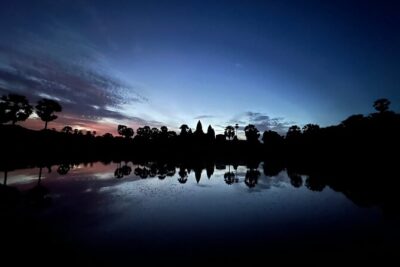
Angkor 2-Day Sunset & Sunrise Small-Group Tour
Read our review →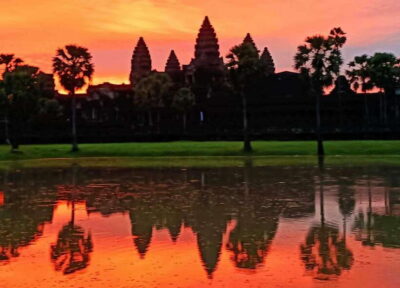
Browse the lists this tour appears in