
Reviewed · HISTORICAL TOURS
2-Days Tour (The Best Historical of Khmer Empire)
Ancient stone, modern comfort, and excellent pacing. This two-day private tour gives you a broad look at the Khmer Empire, from the giant faces of Bayon and the towers of Angkor Wat to quieter temples in the countryside. I like the private vehicle and the chance to adjust the route, and I also like that English-speaking guides such as Veasna, Vutha, and Sophea have earned praise for clear explanations, humor, and practical help with photos. The main catch is that temple admission and lunch are not included, so the $145 price is not your final cost.
The itinerary is ambitious, but it makes good use of two full days. You cover the main Angkor sights, the early Khmer capital at Hariharalaya, Banteay Srei, an evening sunset option, the Old Market, and Artisans Angkor. Strong guiding is the heart of the experience, while the long hours, heat, stairs, and required dress code demand reasonable fitness and preparation.
In This Review
- Key points to know before booking
- Why this two-day route works
- Day one: Angkor Thom and the quieter eastern temples
- The ceremonial terraces of Angkor Thom
- Banteay Srei and Banteay Samre bring fine detail
- Day two: Angkor Wat, Ta Prohm, and the first Khmer capital
- Roluos shows where Angkor began
- Psar Chaa and Artisans Angkor add a modern Siem Reap
- What the $145 price really covers
- Who will enjoy this tour most
- Should you book this two-day Angkor tour?
- FAQ
- Is this tour private?
- Is hotel pickup included?
- Is the Angkor entrance pass included?
- Are meals included?
- What kind of vehicle is used?
- What should I wear to the temples?
- Can the itinerary be changed?
Key points to know before booking
- Private touring with a local guide: Only your group takes part, allowing the schedule to be adjusted around your interests and energy.
- A wide sweep of Khmer history: The route connects Angkor Thom, Angkor Wat, Banteay Srei, and the earlier Roluos temples.
- Comfortable transport included: An air-conditioned vehicle, professional driver, cold water, and cool wet towels help with Cambodia’s heat.
- Sunset at Pre Rup is optional: The temple offers a countryside view, but sunset timing and site conditions can affect the experience.
- Temple admission costs extra: You must buy an Angkor Archaeological Site pass separately in US dollars.
- Markets and crafts add local context: Psar Chaa and Artisans Angkor bring the tour beyond temple walls.
Why this two-day route works
Siem Reap is the base for a huge collection of Khmer monuments. A rushed one-day visit can leave you with grand photographs but little sense of how the temples relate to one another. This route gives you two different views of the empire: the mature royal center around Angkor Thom and Angkor Wat, followed by earlier temples at Hariharalaya, now known as the Roluos Group.
I like that the tour does not stop with only the famous monuments. You see major sites, smaller forest temples, a detailed countryside temple, a traditional market, and a craft-training center. That mix helps you understand Angkor as more than a collection of ruins.
The private format matters here. You are not tied to the pace of a large coach group, and the schedule can be tailored to your needs. Families can ask for a more child-friendly rhythm, while temple enthusiasts can spend longer at a favorite site if time allows. The tour is operated entirely for your party, not mixed with unrelated participants.
Transport is by air-conditioned vehicle with a professional driver. Several visitors singled out the comfort of the vehicle, with one group specifically mentioning a Lexus SUV. The details that matter most in the heat are included: chilled water and cool wet towels. They will not replace sunscreen or a hat, but they make the ride between temples much more pleasant.
More historical sites:
- 2 Days Guided Historical Tour in Angkor
★ 5.0 · 855 reviews - Siem Reap: Banteay Srei and Grand Circuit Heritage Tour
★ 4.9 · 163 reviews - Banteay Srei and Grand Circuit Heritage Tour from Siem Reap
★ 5.0 · 142 reviews
Day one: Angkor Thom and the quieter eastern temples
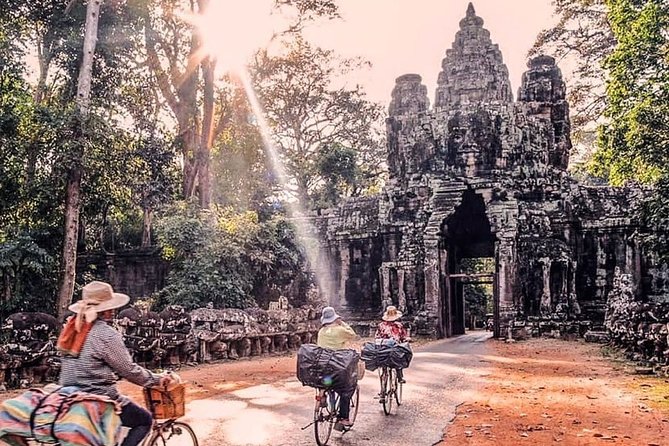
The first day begins inside Angkor Thom, the enormous walled royal city. The focus starts with Bayon, one of the most memorable temples in Cambodia. Its towers carry enormous stone faces, and the site feels different from Angkor Wat because it is more enclosed, crowded with architectural layers, and filled with carved scenes.
You have about 40 minutes at Bayon. That is enough for a guided introduction and a close look at the central towers, though you may want more time if you enjoy photographing details. Ask your guide to explain how the faces fit into the temple’s religious and royal purpose. Guides such as Veasna and Vutha have been praised for answering questions rather than simply reciting dates, which can make a major difference at a site as complex as this.
From Bayon, the route moves to Baphuon for about 30 minutes. This three-tiered temple mountain predates Angkor Wat and was dedicated to Shiva. It gives you a useful contrast with Bayon, showing an earlier architectural style within the same royal city.
Baphuon requires walking and may include uneven surfaces and steps. The dress rules are strict at some Angkor sites, including Baphuon, so wear clothing that covers your shoulders and falls below your knees. Light, loose clothing is the practical choice, provided it meets the requirements.
The ceremonial terraces of Angkor Thom
The Terrace of the Elephants is a long ceremonial platform with carved elephants and garudas. Its wall extends for about 300 meters and reaches roughly 2.5 meters in height. You spend about 20 minutes here, which is enough to see the scale of the structure and understand its place along the former royal center.
The Terrace of the Leper King takes another 15 minutes. Its double walls are covered with nagas, demons, and other mythological figures. The name comes from the figure seated on top and the later legend attached to him, not from a simple description of the terrace itself.
These two stops are best treated as architectural and historical markers rather than full temple visits. The terraces are open and exposed, so your guide’s explanation adds much of the value. In the midday sun, a short visit is sensible.
Preah Palilay offers a welcome change. This sandstone and laterite tower sits in a shaded forest setting, with Buddhist carvings near the eastern entrance. You have about 20 minutes here. The site is smaller and quieter than Bayon, and the trees give it a cooler, more atmospheric feel.
Phimeanakas is another 20-minute stop. This pyramid-shaped Hindu temple dates to the 10th century and sits within the old Royal Enclosure of Angkor Thom. It is less visually intact than Angkor Wat, but it helps you picture the former palace area and the religious buildings that served the royal court.
Banteay Srei and Banteay Samre bring fine detail
After a lunch break at your own expense, the tour heads farther out to Banteay Srei. Plan on about 90 minutes here, because this is one of the most detailed monuments on the route.
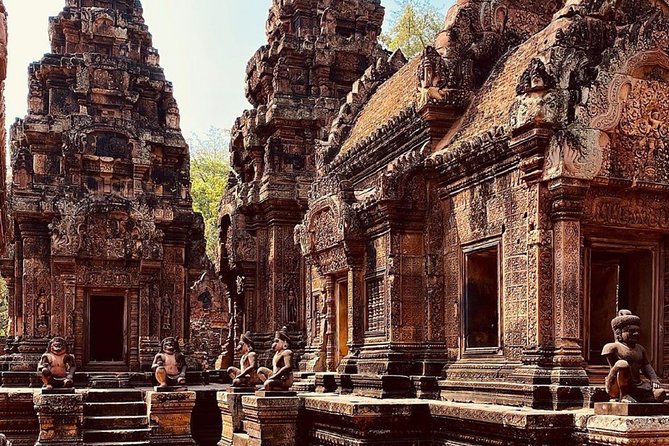
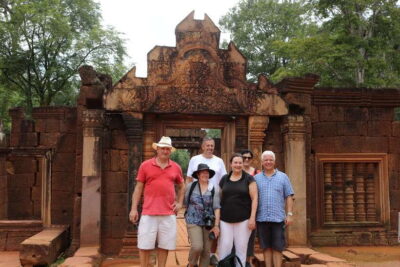
Banteay Srei means citadel of women, a modern name linked to the delicate quality of its carvings. The temple is smaller than Angkor Wat, but its sandstone decoration is unusually fine. Look closely at the lintels, doorways, and figures rather than trying to judge the site by size.
The longer stop is worthwhile, but the drive to the outer temples adds to the day. You will need to balance your interest in detailed carvings against the fact that day one already includes many stops. A private guide can help you spend your time where it matters most.
Banteay Samre follows for about 45 minutes. It is a broad, flat temple with Angkor Wat-style design and artwork. The site gives you another chance to compare Khmer building styles without the same scale as the main monument.
The day ends, optionally, at Pre Rup. You have about an hour here, with the possibility of watching sunset over the countryside. Pre Rup is a temple mountain with carved false doors on its upper level and broad views from the higher sections.
Sunset is a popular idea, so do not expect complete solitude. Still, the location offers a satisfying end to a long day, especially if you enjoy seeing how the temples change in late light. The schedule calls this stop optional, which is useful if you are tired or prefer to return to Siem Reap earlier.
A few more trips worth weighing up
- Siem Reap: Angkor Wat 2-Day Tour with Sunrise and Sunset
★ 4.9 · 4,429 reviews - Angkor 2-Day Sunset & Sunrise Small-Group Tour
★ 5.0 · 2,567 reviews - 2 Days Exclusive Temple Highlights with Sunset and Sunrise Tour
★ 5.0 · 1,157 reviews - Siem Reap: Angkor Sunrise 1- or 2-Day Guided Temples Tour
★ 4.9 · 1,132 reviews
Day two: Angkor Wat, Ta Prohm, and the first Khmer capital
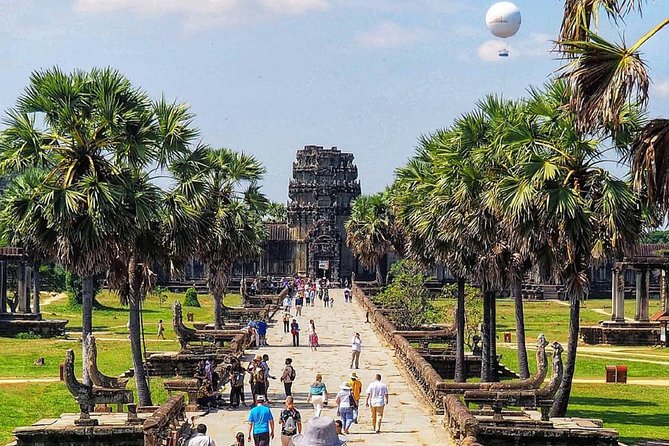
Day two opens with Angkor Wat, the monument most people associate with Cambodia. The planned visit lasts about two hours, giving you time to see the major galleries, outer areas, and central architectural form with a guide’s help.
Angkor Wat is not simply a large temple. Its scale, towers, galleries, decorative carving, and carefully planned layout show the power and ambition of the Khmer state. Two hours is a reasonable starting visit, but the site can easily absorb more time. Comfortable shoes and sun protection are essential, since the complex involves substantial walking.
Your guide’s role is especially important here. Without context, the size can become overwhelming. With a good explanation, you can connect the temple’s religious purpose, royal symbolism, and design rather than spending the whole visit chasing the next photograph.
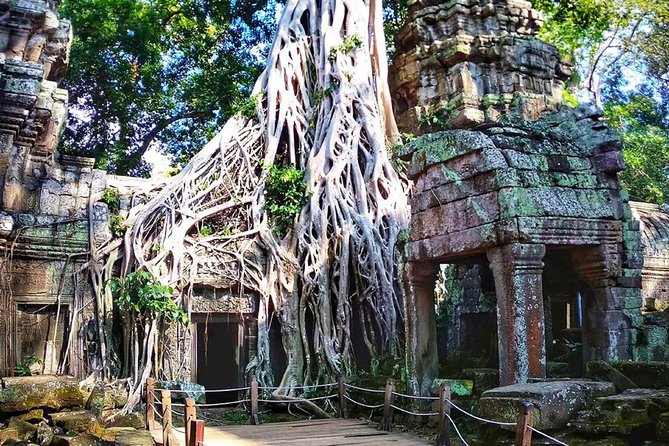
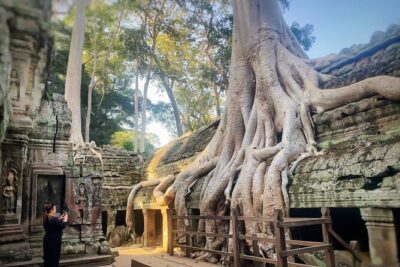
Ta Prohm receives about two hours and offers a different mood. Jungle growth remains around parts of the sprawling monastic complex, producing the famous tree-and-stone scenes. The appeal is not only the trees. Ta Prohm also shows how a large religious complex can feel fragmented, enclosed, and partly reclaimed by nature.
The site can be uneven underfoot, and some sections are narrow. Give yourself time to look at the carved doorways and galleries instead of treating Ta Prohm as a quick photo stop. Your guide can also help with photographs. One account of the tour specifically praised Vutha for learning how to take better pictures for the couple he was guiding, a small service that can be genuinely useful at busy monuments.
Roluos shows where Angkor began
After lunch, the route turns toward the Roluos Group, the remains of the early Khmer capital of Hariharalaya. This part of the day is valuable because it moves the story backward. Instead of seeing only the empire at its height, you encounter some of its earlier major temples.
Bakong is the main stop, with about an hour planned. It is the largest and most impressive member of the group, built as a temple mountain and associated with the first major sandstone temple mountains constructed by Khmer rulers. Its design helps you see the architectural ideas that later developed into grander Angkor monuments.
Lolei takes about 20 minutes. It was an island temple built in the middle of a now-dry baray, or reservoir. The baray was an important form of Khmer engineering, and even the remains of the setting help explain how water management supported royal centers.
Preah Ko, or Sacred Bull, receives about 15 minutes. It is one of the empire’s first major temples and sits within the early capital of Hariharalaya. The stop is brief, but it completes the progression from early Khmer religious architecture to the larger royal works seen on day one.
The Roluos temples are not as instantly famous as Angkor Wat or Ta Prohm. That is part of their value. If you want only the iconic sights, this portion may feel less urgent. If you want a clearer picture of the empire’s development, do not skip it.
Psar Chaa and Artisans Angkor add a modern Siem Reap
The final part of the tour leaves the ancient temples behind. At Psar Chaa, the Old Market, you have about an hour to browse souvenirs and local curios. The market offers a large selection, so it helps to have a clear idea of what you want before you start buying.
Shopping is not included, and purchases are your responsibility. Keep an eye on your belongings, compare prices, and leave room in your bag. The stop is also a useful break from stonework and heat, especially after two long days outdoors.
Artisans Angkor follows for about an hour. This organization provides training for rural young people in handicraft skills that can support a livelihood. The visit gives you a chance to see a modern social and economic side of Cambodia, rather than ending the tour with another monument.
This is a thoughtful final stop for anyone interested in local craft production. It also gives you a better reason to buy a souvenir than simply picking something from the first stall you pass.
What the $145 price really covers
At $145 per person, the tour offers solid value for a private two-day service, especially if you are sharing it with family or friends. Your price includes private transportation, a professional driver, a licensed English-speaking guide, water, cool wet towels, taxes, and service charges.
The largest extra expense is the Angkor Archaeological Site pass. It is not included, and you must buy it at the main gate in US dollars. Passes range from one day to seven days, and the pass must be visible while you visit the sites. Children under 12 enter free of charge.
Lunch, drinks beyond the supplied water, tips, shopping, portage fees, accommodation, travel insurance, and possible single supplements are also excluded. You should budget for these before deciding that $145 is your total trip cost.
The value improves if you care about interpretation and flexibility. A private vehicle and guide cost more than a basic shared outing, but you gain a schedule built around your group. The strongest praise has gone to guides including Veasna, Vutha, Sophea, and Bunthe, with special attention to their historical explanations, humor, patience, and ability to help families.
Who will enjoy this tour most
I would choose this tour if you want the main Angkor landmarks but also want the earlier Roluos temples and the finely carved Banteay Srei. It suits couples, families, and small groups who prefer a private schedule over a fixed large-group departure.
Families may appreciate the ability to adjust the pace. One family specifically valued the way the guide adapted the outing for children. You should still be realistic: two days of temple visits means heat, walking, stairs, and repeated time outdoors.
This is also a good fit if you want a guide who can explain Khmer architecture and help you understand what you are seeing. The experience is less suitable if you dislike long sightseeing days, want every meal included, or prefer a slow itinerary with only one or two sites each day.
Wear clothing that covers shoulders and knees, bring sunglasses, a hat, high-SPF sunblock, and protection for cameras and phones. The tour provider warns that natural conditions can damage electronic equipment, so keep devices properly wrapped and protected.
Hotel pickup and return apply to accommodations inside Siem Reap. Give accurate hotel details, especially if your accommodation changes close to departure. Other languages may be available on request, subject to availability and extra charges.
Free cancellation is available up to 24 hours before the start time. Inside that window, the payment is not refunded, and changes are not accepted. Poor weather may lead to another date or a full refund.
Should you book this two-day Angkor tour?
Book it if you want a well-supported private introduction to the Khmer Empire, with the famous temples balanced by quieter monuments and a modern craft visit. The guide quality appears to be the strongest reason to choose it, so ask about guide language and availability when arranging the tour.
Think twice if you are counting every dollar, since the temple pass and meals cost extra. Also, do not underestimate the schedule. For most people, the best approach is to accept the full route but ask your guide to adjust the pace when heat or fatigue starts to take over.
FAQ
Is this tour private?
Yes. The tour operates on a full private basis, and only your group participates.
Is hotel pickup included?
Pickup and return transfers are included for customers staying inside Siem Reap. You are responsible for providing correct hotel information.
Is the Angkor entrance pass included?
No. You must purchase the Angkor Archaeological Site pass separately at the main gate. Fees are charged in US dollars, and children under 12 enter free of charge.
Are meals included?
No. Lunch is excluded on both days, and meals and drinks beyond the supplied water are personal expenses.
What kind of vehicle is used?
Transportation is provided in an air-conditioned vehicle with a professional driver. Some parties have been transported in a comfortable Lexus SUV.
What should I wear to the temples?
Wear clothing that covers your shoulders and falls below your knees. Some sites, including Baphuon, enforce a strict dress code.
Can the itinerary be changed?
The private format allows the itinerary to be tailored to your needs. Other language guides may be available on request, subject to availability and additional charges.
Just added around Siem Reap
- Private Battambang Full-Day Guided Tour★ 4.5 · 3 reviews
- Kulen Mountain, Beng Mealea and Banteay Srei Full Day Tour★ 5.0 · 3 reviews
- Kompong Pluk Tour★ 5.0 · 3 reviews
- Private 3 Day Tour to Discover the ancient temples★ 5.0 · 3 reviews
- Kulen National Park Ticket -Waterfall & 1000 Lingas★ 5.0 · 3 reviews
- Cambodia: Absolute Traditional Dance Show with Buffet Dinner★ 5.0 · 3 reviews
- Border Transfer (Siem Reap to Laos/Laos to Siem Reap)★ 3.5 · 3 reviews
- Beng Melea, Rolous Group & Kompong Phluk Floating Village★ 5.0 · 3 reviews
Historical Tours, compared.
Banteay Srei and Grand Circuit Heritage Tour from Siem Reap
Read our review →
Bokor Mountain Adventure – History, Sights and Waterfalls
Read our review →
Angkor World Heritage with Sunrise – Small Group
Read our review →
Browse the lists this tour appears in