
Reviewed · 2-DAY EXPERIENCES
Highlight of Angkor Complex 2 Days Private Tour
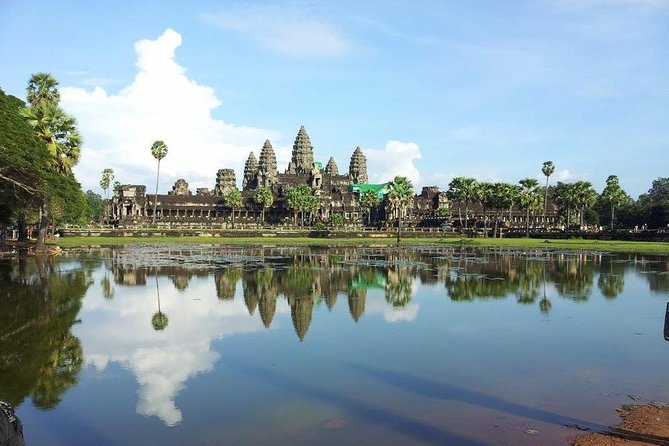
Angkor rewards a little extra time. This private two-day tour covers the grand temples and several quiet ruins around Siem Reap, with an English-speaking licensed guide, private transport, hotel pickup, and cold water included. I especially like the mix of famous sights such as Angkor Wat and Ta Prohm with less-visited places such as Ta Nei and Banteay Prei.
I also like the flexible private format. Your own group can move at a sensible pace, and the tour has already shown that it can adapt, including a requested stop at the worthwhile Land Mine Museum. The main caution is the packed schedule, especially on day one, and the Angkor Pass, meals, and tips cost extra.
In This Review
- Key points to know before booking
- What the $149.46 price really covers
- Day one begins with Angkor Thom’s royal scale
- Baphuon, Phimeanakas, and the ceremonial terraces
- Ta Prohm brings the famous tree-covered ruins
- Angkor Wat deserves its three-hour appointment
- Ta Nei adds quiet jungle atmosphere
- Day two shifts toward detailed carving and the Grand Circuit
- Neak Pean and Preah Khan show a different Angkor
- Banteay Prei and Preah Dak keep the final hours local
- Why the private format matters here
- Practical advice for a smoother two days
- Should you book this Angkor tour?
- FAQ
- How long is the Angkor Complex private tour?
- Is this a private tour?
- Is hotel pickup included?
- Is the Angkor Pass included?
- Are meals included?
- Is a tour guide included?
- Is private transportation included?
- Are drinks provided?
- What clothing is appropriate?
- Can I cancel for a full refund?
Key points to know before booking
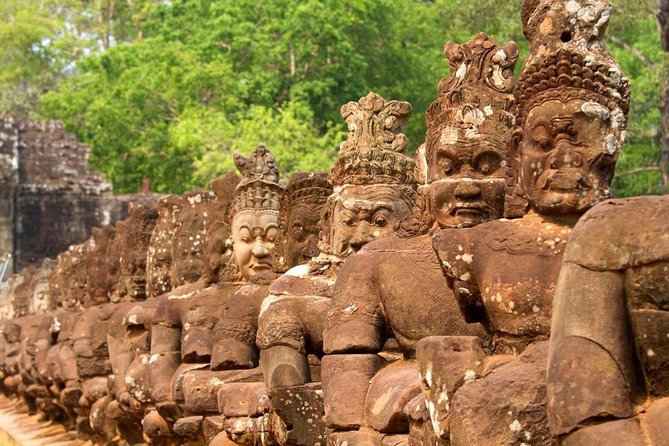
- Nearly 20 temples in two days: You will see Angkor Wat, Bayon, Ta Prohm, Banteay Srei, Preah Khan, and many smaller monuments.
- Private transport and guiding: Only your group takes part, with hotel pickup, drop-off, a driver, and a licensed English-speaking guide.
- A strong mix of major and minor sites: The route combines headline monuments with quiet ruins that receive far less attention.
- Day one is long: The listed stops add up to more than eight hours before driving time, so comfortable shoes and steady energy matter.
- The temple pass is separate: Your guide helps you purchase the Angkor Pass at the park entrance, but it is not included in the tour price.
- A highly rated service record: The tour has a 4.9 rating from 13 ratings, with particular praise for planning, timing, comfort, guide Mr. Sara, and the driver.
What the $149.46 price really covers
At $149.46 per person, this tour is best judged as a private guiding and transport package, not as an all-inclusive ticket. Your price includes hotel pickup and drop-off, private vehicle transport, a professional English-speaking licensed guide, drinking water, and cool fresh tissues throughout the two days.
That arrangement can be good value for a couple, family, or small group. You are not paying for a seat on a large coach, and you have a guide available to explain the monuments rather than simply dropping you at the gates. Group discounts may also improve the per-person cost when several people book together.
The missing costs matter. The Angkor Pass is not included, and lunch is also on your own. Local restaurant meals are listed at about $3 to $10 per dish, with vegetarian and non-vegetarian choices. You should also budget for tips for both guide and driver.
The price makes the most sense if you value convenience and interpretation. If you only want a driver to take you between temples, a cheaper arrangement may be possible. If you want historical context, a route planned around both famous and obscure ruins, and the freedom of a private group, the package is more convincing.
A few more trips worth weighing up
- Siem Reap: Angkor Wat 2-Day Tour with Sunrise and Sunset
★ 4.9 · 4,429 reviews - Angkor 2-Day Sunset & Sunrise Small-Group Tour
★ 5.0 · 2,567 reviews - 2 Days Exclusive Temple Highlights with Sunset and Sunrise Tour
★ 5.0 · 1,157 reviews
Day one begins with Angkor Thom’s royal scale
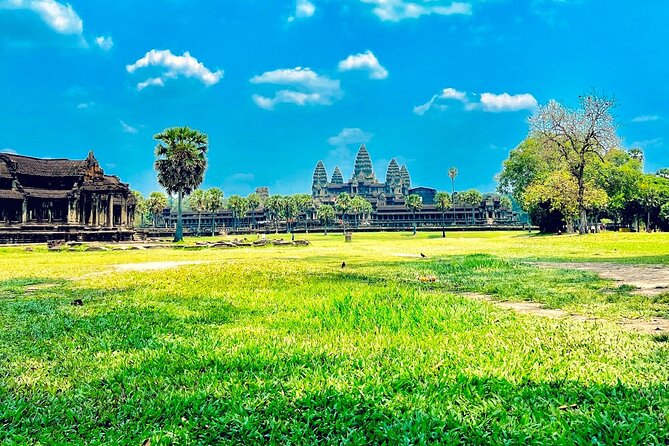
The first morning starts at the South Gate of Angkor Thom, the best-known entrance to the ancient royal city. Many of the carved heads remain in place, and the gate has been restored, making it an easy introduction to the scale and symbolism of Angkor.
You get about 25 minutes here. That is enough for photographs and a first explanation, though it is not a long stop. The gate lies on the main road from Angkor Wat, so it also serves as a natural entry into the day’s central group of monuments.
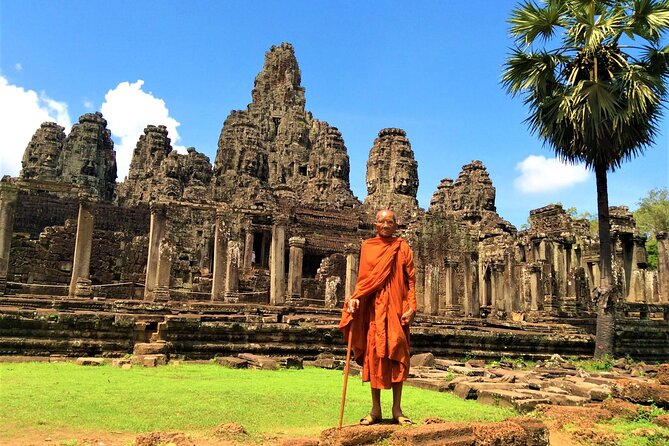
Next comes Bayon Temple, with about an hour to explore. Built nearly a century after Angkor Wat, Bayon is known for its enormous carved faces and unusual structure. Its original design is not fully understood, and its location at the center of Angkor Thom gives the temple a strong connection to the royal city around it.
This is one of the places where a guide earns the fee. Bayon can feel like a maze of towers, galleries, and carvings. A good explanation helps you see how the temple works as more than a collection of stone faces.
You then spend about 30 minutes within Angkor Thom itself. The stop gives you a broader sense of the city, rather than treating each temple as an isolated ruin. The schedule is brisk, so your guide’s ability to point out the important sections will matter.
Baphuon, Phimeanakas, and the ceremonial terraces
Baphuon follows with a 45-minute stop. The temple sits on a long sandstone base with five levels of roughly similar size, a design that differs from the more common shape of narrowing tiers. It is a useful contrast with Bayon, and the approach helps you appreciate how much stone and labor went into these royal monuments.
Phimeanakas receives about half an hour. Located near the center of the area once enclosed by the Royal Palace walls, it is tied to the royal heart of Angkor Thom. The temple was once thought to have carried a golden pinnacle, according to the account of Zhou Daguan, a Chinese visitor to Angkor.
The Terrace of the Elephants is next, with 45 minutes. Its long carved frontage once served royal ceremonies, and the elephant imagery gives the terrace its name. You will see it as part of the wider ceremonial center of Angkor Thom, where architecture, procession, and royal power were closely linked.
The Terrace of the Leper King adds another 30 minutes. Its interior and exterior walls carry dramatic bas-reliefs connected with the grandeur of King Jayavarman VII’s reign. This is a compact stop, but it rewards close attention to the carvings rather than a quick photograph from the road.
Ta Prohm brings the famous tree-covered ruins
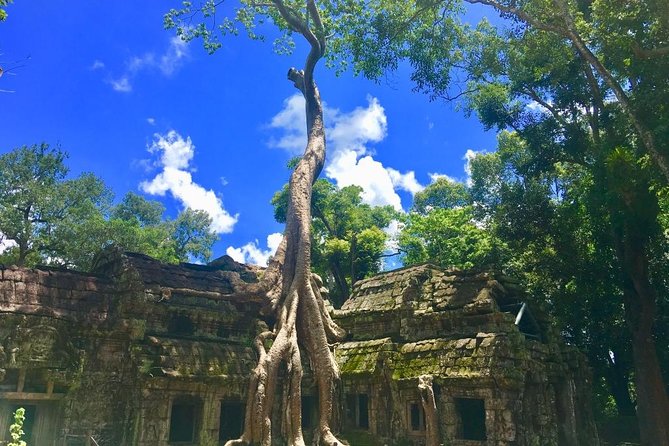
Ta Prohm is allotted 90 minutes, making it one of the day’s most substantial stops. It is often called the kingdom of the trees because huge roots have grown across walls and galleries. Archaeologists have largely left its appearance intact, apart from clearing visitor paths and strengthening unstable sections.
The attraction is not just the trees. Ta Prohm shows the tension between nature and architecture, with corridors, carved stone, and roots competing for space. It is also one of the busiest temples on the route, so the private format may help your group pause when the guide finds a good place to explain the site.
The practical drawback is that the ground can be uneven around the ruins. Wear shoes with a firm grip, and expect the stop to involve plenty of walking and standing.
A completely different kind of day out from Siem Reap:
- Angkor Wat Sunrise or Sunset Tour with Guide from Siem Reap
★ 5.0 · 12,109 reviews - Siem Reap: Angkor Wat: Small-Group Sunrise or Sunset Tour
★ 5.0 · 9,444 reviews - From Siem Reap: Kampong Phluk Floating Village Tour by Boat
★ 4.9 · 6,979 reviews - Sunset tour of Kampong Phluk stilts home village on the Tonle Sap
★ 5.0 · 4,865 reviews
Angkor Wat deserves its three-hour appointment
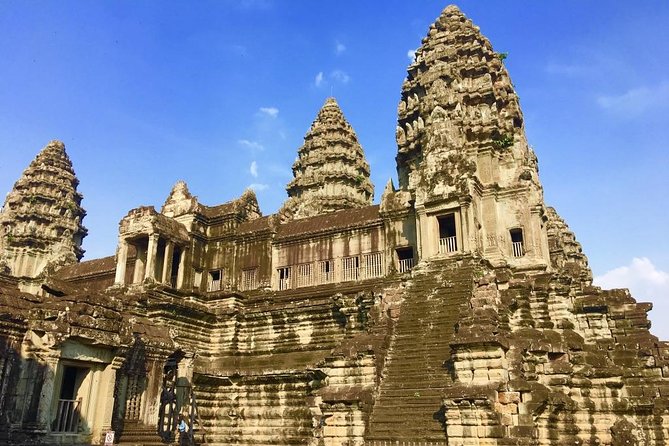
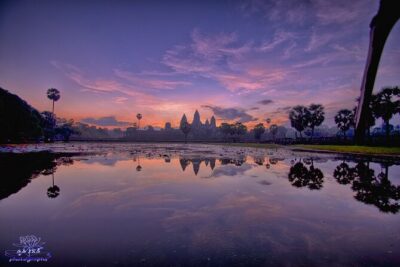
The schedule gives three hours to Angkor Wat, the largest and best-preserved monument in the Angkor complex. Its balanced layout, long galleries, sculpture, and reliefs explain why it has become Cambodia’s best-known symbol.
Three hours is a sensible amount of time, but the day has already been full by this point. You will have a better visit if you treat Angkor Wat as the main event rather than rushing through every earlier stop. Listen to the explanation of the galleries and reliefs, then leave room to look carefully at the building itself.
This is also the point where pacing becomes important. The listed stops for day one total more than eight hours before driving time. A private tour gives your guide some room to adjust, but you should not expect a slow, leisurely visit at every temple.
Ta Nei adds quiet jungle atmosphere
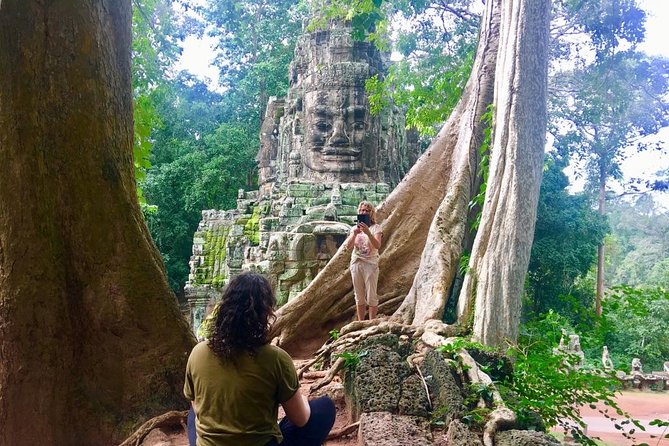
The final stop on day one is Ta Nei, a small temple deep in the Cambodian jungle. It is difficult to find and not a regular stop for most visitors, which gives it a very different feel from Angkor Wat, Bayon, and Ta Prohm.
You have about 45 minutes here. Ta Nei is best for people who enjoy ruins for their own sake and like seeing a less polished side of Angkor. It may not impress you as much as the major temples, but its obscurity is exactly why it earns a place on this route.
The first day is ambitious. I would choose it for someone who wants broad coverage and accepts that the experience will feel like a temple marathon, not a relaxed two-site outing.
Day two shifts toward detailed carving and the Grand Circuit
Day two opens at Banteay Srei, about 1 hour and 20 minutes from the schedule. French archaeologists famously praised this small temple as a precious work of Khmer art, and its fine carvings are the main reason to make the trip.
Banteay Srei is different from the huge royal monuments. Its appeal comes from detail, proportion, and carefully worked decoration. The longer stop allows your guide to explain the carved scenes and gives you time to study the stone without treating the temple as a quick roadside pause.
Banteay Samre follows for 45 minutes. It is among the more complete complexes at Angkor, thanks in part to restoration using anastylosis, a method that reassembles original architectural pieces. The lack of maintenance over recent years is visible, so you should expect both impressive restoration and areas that look weathered.
Pre Rup comes next, with about 50 minutes. Its bold design, strong proportions, and high brick-and-stone form give it a powerful presence. It is closely related in style to Eastern Mebon, although it was built several years later.
Eastern Mebon receives 30 minutes. Look for the free-standing stone elephants at the corners of the first and second levels. The temple also includes religious scenes such as the god Indra riding on his elephant, making this a particularly useful stop for anyone interested in sculpture.
Neak Pean and Preah Khan show a different Angkor
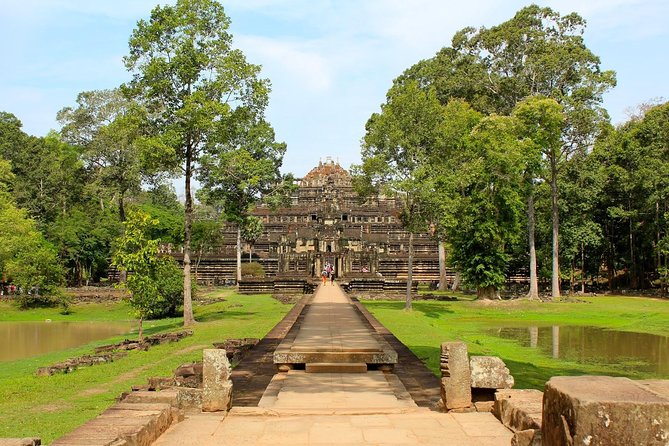
Neak Pean is scheduled for 45 minutes. The temple sits within a large square man-made pond, about 70 meters on each side, with smaller pools around it. The water-centered design gives the site a calmer, more unusual character than the mountain temples and long galleries elsewhere on the route.
The approach and setting are part of the appeal, but the amount you can see may depend on conditions around the pond. Your guide can help explain how the pools shaped the monument’s design.
Preah Khan receives an hour. Built in the late 12th century by King Jayavarman VII and dedicated to his father, it is one of the major monuments on the Grand Circuit. Long corridors, courtyards, carved details, and partially restored sections make it an especially rewarding place to explore with context.
Preah Khan also helps explain why a two-day route is useful. Angkor is not only about one perfect temple. It is a large network of religious, royal, and ceremonial buildings, and Preah Khan gives you a fuller sense of that scale.
Banteay Prei and Preah Dak keep the final hours local
Banteay Prei is a minor, rarely visited temple near Prasat Prei. The itinerary allows 45 minutes, which is generous for a small ruin but useful if you want to study Angkor beyond the standard circuit.
I would not rank Banteay Prei above Bayon, Ta Prohm, or Angkor Wat. Its value is quieter. It suits visitors with a particular interest in smaller temples and those who would rather see one more obscure site than spend the whole day at headline monuments.
The final stop is the Om Pich steamed toddy palm cake experience at Preah Dak Market, with about 30 minutes. The market is known for souvenirs, objects, and local arts, while the steamed toddy palm cake adds a small food-focused touch to a tour otherwise dominated by stone temples.
This ending is welcome. After two days of monuments, a village market provides a change of pace and a chance to see something connected with everyday local commerce. The description does not promise a full cooking class or a large meal, so think of it as a brief local stop rather than a major culinary activity.
Why the private format matters here
The private setup is one of the strongest reasons to choose this tour. Only your group participates, so you are not tied to strangers who want a different pace or a shorter explanation. You can also ask for changes when practical.
One useful example is a requested stop at the Land Mine Museum, which was added during a previous tour. That does not guarantee every request can be included, but it shows the value of speaking with your guide early about priorities.
Guide Mr. Sara received special praise for clear planning, historical explanations, timing, and attention to comfort. The driver was also praised for being on time and reliable. Those details matter in Angkor, where long hours in the heat and repeated vehicle transfers can make poor organization tiring.
The tour is offered in several languages, but the included guide is specifically described as English-speaking. If you need another language, confirm availability before booking.
Practical advice for a smoother two days
Dress for religious sites. Your shirt should cover your shoulders, and trousers or knee-length pants or skirts are permitted. This is not just a style suggestion, since the temples are ancient religious grounds.
Bring comfortable walking shoes, sun protection, and patience for the full schedule. Water and cool fresh tissues are supplied, which is a useful comfort on long temple days, but meals are not included.
Hotel pickup and drop-off are included, and you need to provide your hotel name. Confirmation is received at booking, and free cancellation is available if you cancel at least 24 hours before the start time. Changes made inside that window are not accepted, and the local time controls the cutoff.
The tour is near public transportation, and most people can participate. Still, the itinerary includes extensive walking, steps, uneven temple surfaces, and long periods outdoors, so judge the pace against your own fitness.
Should you book this Angkor tour?
Book it if you want serious coverage in two days, private transport, and a guide who can connect the temples to Khmer royal and Buddhist history. It is especially well suited to first-time visitors who want Angkor Wat and Ta Prohm but also want Ta Nei, Banteay Prei, Eastern Mebon, and other smaller monuments.
Skip it if you prefer slow mornings, long lunches, or a single temple each day. The route is packed, and the Angkor Pass, food, and tips add to the advertised price.
For couples and small groups who value planning and flexibility, the $149.46 starting price offers a fair package. The strongest reasons to book are the broad route, private service, included transport, and the careful organization praised by previous customers. Just arrive ready for two very full days.
FAQ
How long is the Angkor Complex private tour?
The tour lasts approximately two days.
Is this a private tour?
Yes. Only your own group participates in the activity.
Is hotel pickup included?
Yes. Hotel pickup and drop-off are included. You need to provide your hotel name for pickup arrangements.
Is the Angkor Pass included?
No. The Angkor Pass is an additional cost. Your guide assists with purchasing it at the entrance to Angkor Park.
Are meals included?
No. Lunches are not included. Local restaurants offer vegetarian and non-vegetarian dishes, with menu prices listed at about $3 to $10 per dish.
Is a tour guide included?
Yes. A professional English-speaking licensed tour guide is included.
Is private transportation included?
Yes. Private transfers by comfortable vehicle are included according to the tour schedule.
Are drinks provided?
Yes. Drinking water and cool fresh tissues are provided throughout the tour.
What clothing is appropriate?
Wear a shirt that covers your shoulders. Trousers or knee-length pants and skirts are permitted at the religious sites.
Can I cancel for a full refund?
Yes, if you cancel at least 24 hours before the experience start time. Cancellations or changes made less than 24 hours in advance are not accepted for a refund.
Just added around Siem Reap
- Private Battambang Full-Day Guided Tour★ 4.5 · 3 reviews
- Kulen Mountain, Beng Mealea and Banteay Srei Full Day Tour★ 5.0 · 3 reviews
- Kompong Pluk Tour★ 5.0 · 3 reviews
- Private 3 Day Tour to Discover the ancient temples★ 5.0 · 3 reviews
- Kulen National Park Ticket -Waterfall & 1000 Lingas★ 5.0 · 3 reviews
- Cambodia: Absolute Traditional Dance Show with Buffet Dinner★ 5.0 · 3 reviews
- Border Transfer (Siem Reap to Laos/Laos to Siem Reap)★ 3.5 · 3 reviews
- Best Taxi Siem Reap to Battambang – English Speaking Driver★ 4.5 · 3 reviews
2-Day Experiences, compared.

Angkor Wat 2-Day Tour with Sunrise and Sunset
Read our review →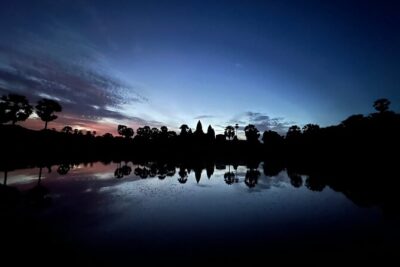
Angkor 2-Day Sunset & Sunrise Small-Group Tour
Read our review →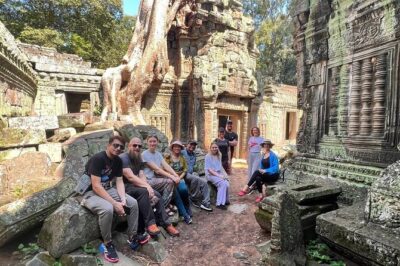
2 Days Exclusive Temple Highlights with Sunset and Sunrise Tour
Read our review →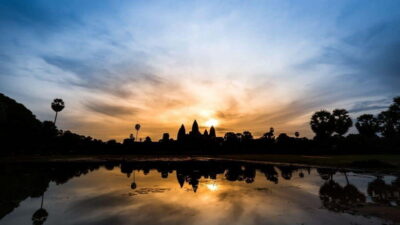
Angkor Sunrise 1- or 2-Day Guided Temples Tour
Read our review →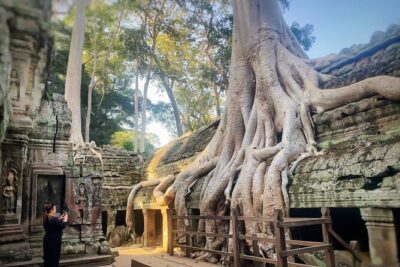
2-Day Angkor Wat With Small, Big Circuit and Banteay Srei Tour
Read our review →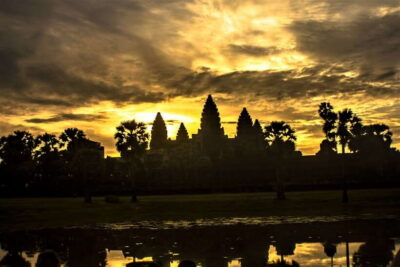
2-Day Temple Highlights Sunrise and Sunset Option
Read our review →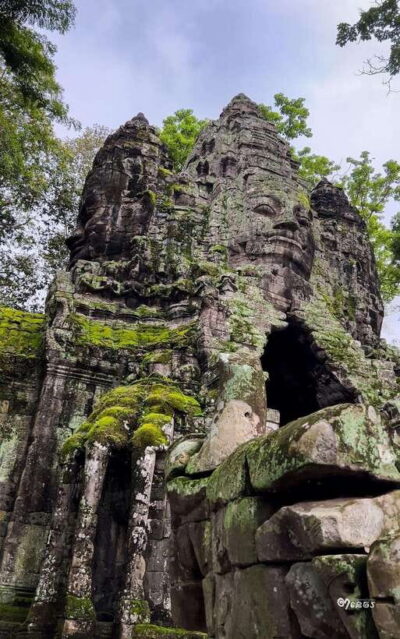
Angkor Wat 2-Day complex Sun rise & Sun set with Guided Tour
Read our review →Browse the lists this tour appears in