
Reviewed · SUNSET TOURS
Siem Reap: 2-Day Temple Highlights Sunrise and Sunset Option
Angkor rewards a slower look. This two-day tour gives you the big names, including Angkor Wat, Ta Prohm, Bayon, and Banteay Srei, while also making time for smaller temples that many first-time visitors miss. I like the thoughtful split between the distant temples on day one and the Angkor Thom area on day two, and I like the practical care from the guide and driver, especially cold water, chilled towels, and air conditioning.
The main thing to consider is the early start and the amount of walking. You will leave before dawn for Angkor Wat, climb uneven temple steps, and spend long hours outdoors. The $46 tour price is fair, but the required temple pass costs another $62 per person, and meals are not included.
In This Review
- Key points at a glance
- What this two-day Angkor tour is really like
- Day one: Pre Rup begins the outer-temple circuit
- Banteay Srei: small scale, exceptional stonework
- Neak Pean: a temple on water
- Preah Khan: corridors, roots, and a quieter mood
- Choosing the first-day sunset
- Day two: the pre-dawn journey to Angkor Wat
- Ta Prohm: the famous jungle temple
- Ta Nei: a smaller temple with a different feel
- Angkor Thom and the Bayon faces
- The guide and driver make the difference
- Price, comfort, and who gets good value
- What to bring and what to expect physically
- Should you book this two-day tour?
- FAQ
- How long does the tour last?
- What temples are included?
- Is sunrise at Angkor Wat included?
- Is a sunset experience included?
- Is hotel pickup provided?
- Is transportation air conditioned?
- Is an English-speaking guide included?
- Is the temple entry fee included?
- Are meals included?
- What should I wear?
- Is the tour wheelchair accessible?
- Can I cancel the booking?
Key points at a glance
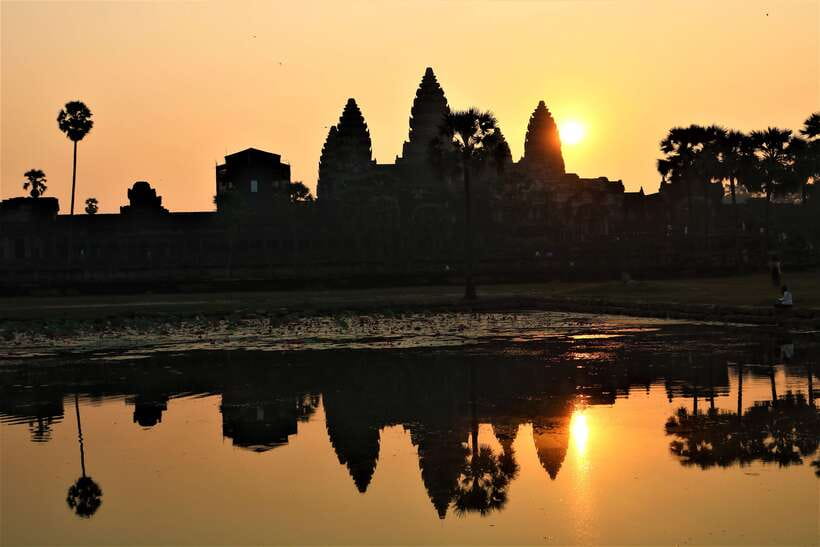
- Sunrise from Angkor Wat’s eastern entrance: Entering in the dark from the quieter eastern side offers a different approach to Cambodia’s most famous temple.
- Banteay Srei’s fine carvings: This smaller sandstone temple is the artistic high point of day one, though its distance from Siem Reap makes for a long drive.
- A useful mix of major and minor sites: Ta Nei, Neak Pean, and Preah Khan add variety beyond the usual Angkor Wat circuit.
- Guides who add real context: Guides such as Chhay, Pi, Sak, Bun, and Pal are praised for clear explanations of Khmer religion, symbolism, and culture.
- Cool-down service in the heat: Drivers regularly provide bottled water and cold towels, a small touch that matters after a hot walk.
- Two sunset formats: Private tours include a rice-field sunset drink, while the small-group option includes sunset at Bakheng Temple.
What this two-day Angkor tour is really like
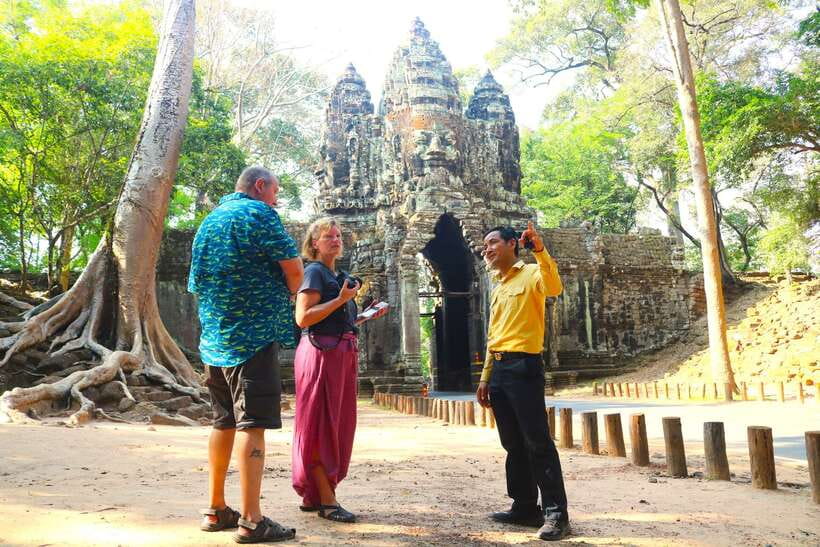
Siem Reap’s temple park is too large for a rushed single visit. This outing gives you two full days, hotel pickup and drop-off, an English-speaking guide, and air-conditioned transport between sites. That arrangement lets you focus on the stones rather than on route planning, ticket questions, or finding a tuk-tuk in the midday heat.
The strongest part is the pacing. Day one reaches the temples farther from Angkor Thom, including Banteay Srei, then returns toward the central park. Day two begins before sunrise and concentrates on Angkor Wat, Ta Prohm, Ta Nei, and Angkor Thom.
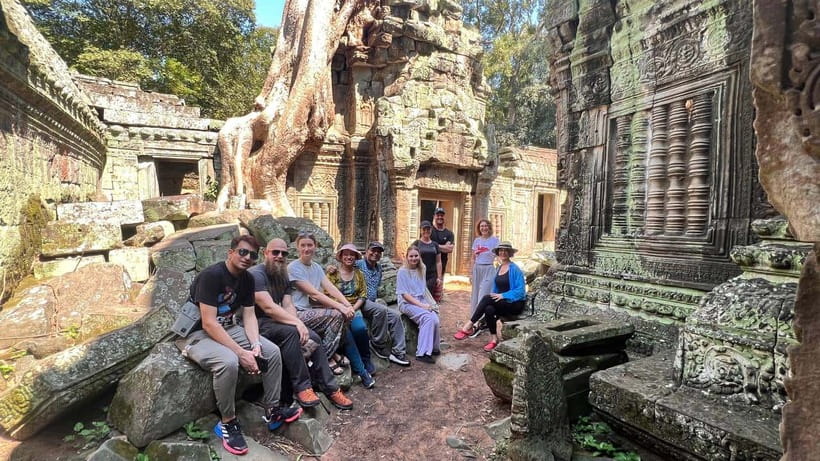
You should expect a small-group setting when that option is selected. Group sizes vary, with examples ranging from about six to 15 people. That is large enough to share the experience but usually small enough for questions and personal help with photos. A private option is also available, with the rice-field sunset drink included.
More sunset tours:
- Angkor Wat Sunrise or Sunset Tour with Guide from Siem Reap
★ 5.0 · 12,109 reviews - Siem Reap: Angkor Wat: Small-Group Sunrise or Sunset Tour
★ 5.0 · 9,444 reviews - Sunset tour of Kampong Phluk stilts home village on the Tonle Sap
★ 5.0 · 4,865 reviews
Day one: Pre Rup begins the outer-temple circuit
Pre Rup is the first stop, and it gives you an early lesson in how Khmer temple mountains were built. Constructed from brick, laterite, and sandstone, it served as the state temple of King Rajendravarman and was dedicated in 961 or early 962.
I like Pre Rup as an opening site because it feels more structured than the later jungle temples. Its tiered form helps you understand the idea of a temple mountain, a sacred architectural model that appears again across Angkor. The brickwork also gives the site a different color and texture from the gray sandstone used at many better-known temples.
The drawback is that the first day covers a lot of ground. You will see several important sites, but the day can feel full, especially in hot weather. Your guide controls the pace, and several people praised guides who adjusted walking time when the group became tired.
Banteay Srei: small scale, exceptional stonework
After Pre Rup, the route heads to Banteay Srei. This temple is smaller than Angkor Wat, but its sandstone carvings are among the most finely worked in Cambodia. The reliefs are crisp, detailed, and easy to appreciate at close range.
Banteay Srei is dedicated to Hindu traditions and is known for its careful decoration rather than its sheer size. I would pay attention here to the carved figures, floral patterns, and mythological scenes. A good guide can explain the religious stories instead of leaving you to see only a beautiful wall.
This is also the day one stop that requires the most patience. Banteay Srei lies well beyond the central Angkor group, so reaching it adds driving time. Still, I think the journey earns its place in the schedule if you care about sculpture and design. The temple was only accessible from the late 1990s after the Khmer Rouge left the area, which adds a difficult modern chapter to its story.
Your guide may use maps, photographs, or other visual material during the drives. Pal, Pi, and Sak were repeatedly praised for explaining the next stop before arrival, while Chhay was especially appreciated for combining history with humor and questions about Cambodian life today.
Neak Pean: a temple on water
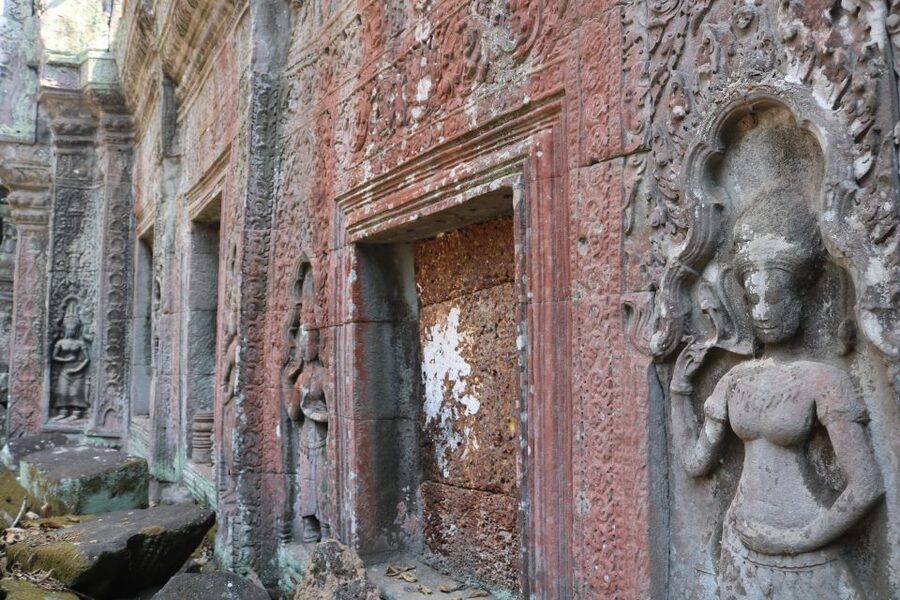
The route returns toward Neak Pean, an artificial island temple set in the circular Jayatataka Baray reservoir. The approach is different from the steep climbs and enclosed galleries found at other sites. You cross toward the island and see the temple framed by water.
Neak Pean was a Buddhist site, and its design is closely tied to ideas of healing and sacred water. The setting gives you a welcome visual break after the long drive to Banteay Srei. It is not the largest temple of the day, but its arrangement makes it memorable.
You should keep expectations realistic. Neak Pean is more about the setting and overall design than a long exploration of chambers. It can also feel exposed in the sun, so carry the provided water and use the shaded vehicle between stops.
A few more trips worth weighing up
- Siem Reap: Angkor Wat 2-Day Tour with Sunrise and Sunset
★ 4.9 · 4,429 reviews - Siem Reap: Full-Day Angkor Wat Guided Tour with Sunset
★ 4.9 · 3,803 reviews - Angkor Wat Sunset Small Group Tour with Lunch Included
★ 5.0 · 3,059 reviews - Angkor 2-Day Sunset & Sunrise Small-Group Tour
★ 5.0 · 2,567 reviews
Preah Khan: corridors, roots, and a quieter mood
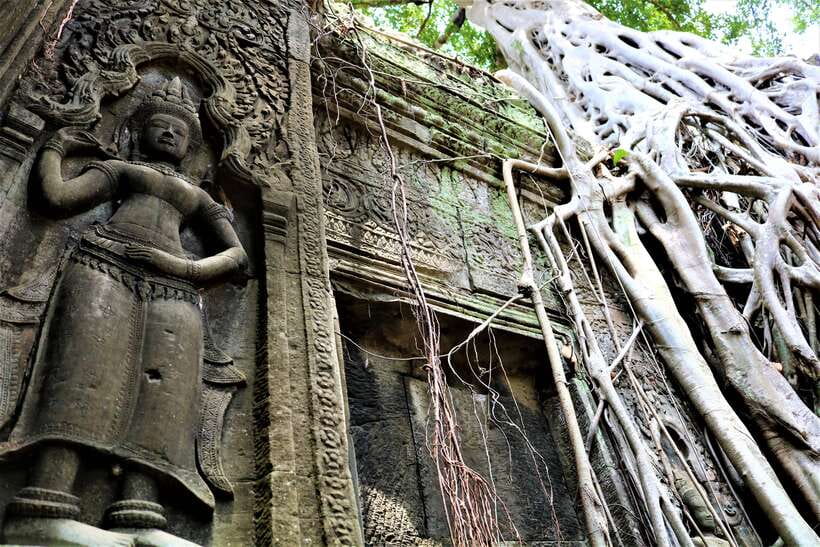
Preah Khan offers one of the best contrasts with Angkor Wat. It was commissioned by King Jayavarman VII in honor of his father and once served a large religious community. Today, its long corridors, damaged stonework, and encroaching roots create a quiet, unsettled mood.
I like Preah Khan because it rewards wandering. You can notice doorways, carvings, and layers of construction without the same sense of scale that can make Angkor Wat feel overwhelming. Parts of the temple are in remarkably good condition, while other sections show the effects of time and vegetation.
Restoration work is ongoing, including work associated with the World Monuments Fund. That means some areas may look unfinished or restricted, but it also helps you see that Angkor is not a frozen monument. It is a living conservation project with difficult choices about how much to repair and how much to leave intact.
The guide matters here. A quick walk through Preah Khan can become a blur of stone. Guides such as Pi and Sok were praised for pointing out details that are easy to miss, while other guides helped groups find quieter corners for explanations and photographs.
Choosing the first-day sunset
The final portion of day one depends on the tour format. The private option includes a rice-field sunset drink, giving you a calm finish away from the temple crowds. It is a pleasant change after a day of ruins and long drives, and it offers a glimpse of the countryside around Siem Reap.
The small-group option includes sunset at Bakheng Temple. Phnom Bakheng is a hilltop temple with broad sunset views, but access and viewing conditions can be busy. Your guide’s timing matters, and several people valued guides who positioned the group well for sunset photographs.
Check the exact sunset arrangement when booking. The two options are not identical. If a quiet drink among rice fields sounds more appealing than a hilltop temple, the private format may suit you better. If you want a classic Angkor sunset viewpoint and prefer a small group, choose accordingly.
Day two: the pre-dawn journey to Angkor Wat
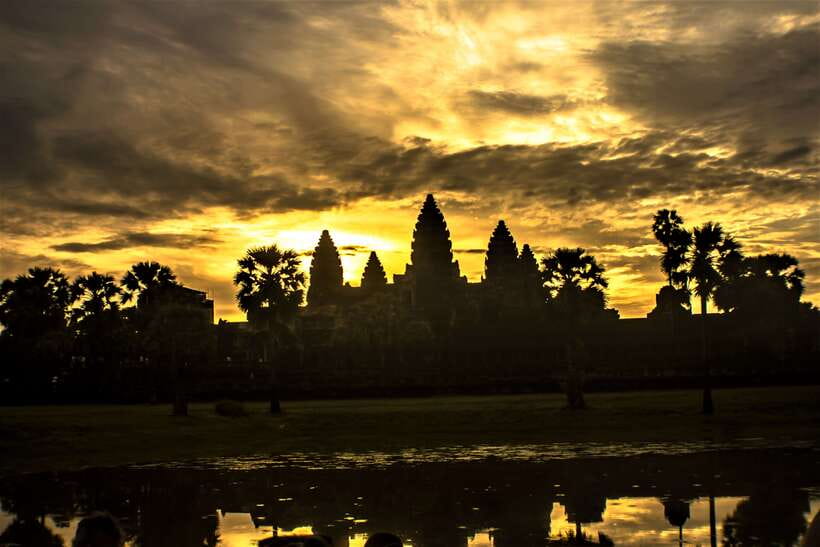
Day two starts before sunrise. You enter Angkor Wat in darkness from the eastern side, carrying a torch or phone light. This approach takes you through cloistered corridors and past extensive bas-relief carvings before the main morning crowds build.
The early departure is tiring, but it is the right trade for this temple. Watching the sky brighten around Angkor Wat gives the stonework a changing quality that daylight alone does not provide. Guides such as Sak and Pi were praised for knowing where to stand for a clear view, though no guide can remove the fact that sunrise is a popular event.
Bring your own torch. That detail is easy to overlook, and the eastern approach is specifically described as dark. Wear shoes with a firm sole, since you will be walking through temple passages and over uneven ground.
After exploring, you have breakfast outside the temple. Meals are not included, so budget for this stop and for lunch on day one. The break also gives you a chance to rest before the next temple.
Ta Prohm: the famous jungle temple
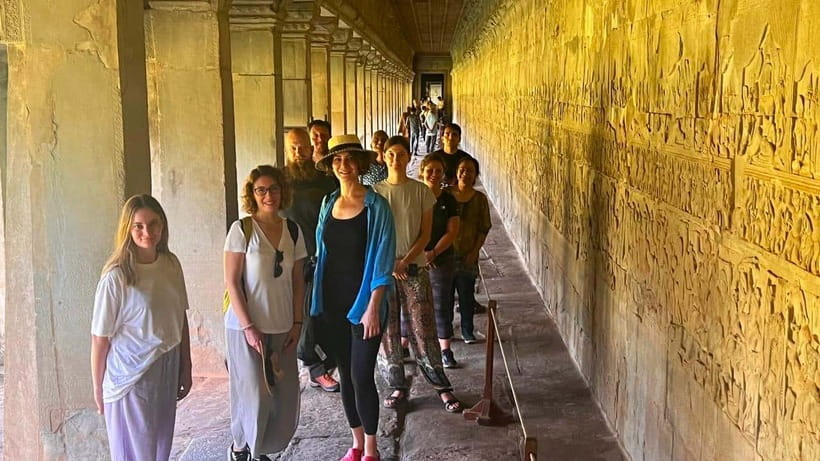
Ta Prohm is the temple many people recognize from photographs and films. Trees press against the stone, roots cross walls, and galleries open into courtyards that look partly reclaimed by the forest.
The temple was once home to 2,740 monks. Today, its appeal comes from the tension between architecture and vegetation. It reportedly looked much as it did when French explorer Henri Mouhot described it in the early 1850s, though conservation work continues and certain areas may be managed for safety.
Ta Prohm can be crowded, especially around the most photographed sections. The tour helps by placing it within a longer morning rather than treating it as the only attraction. I would listen to the guide first, then take a few minutes to look around on your own. Several guides are also happy to take photographs, which is useful when the group is traveling as a pair or family.
Ta Nei: a smaller temple with a different feel
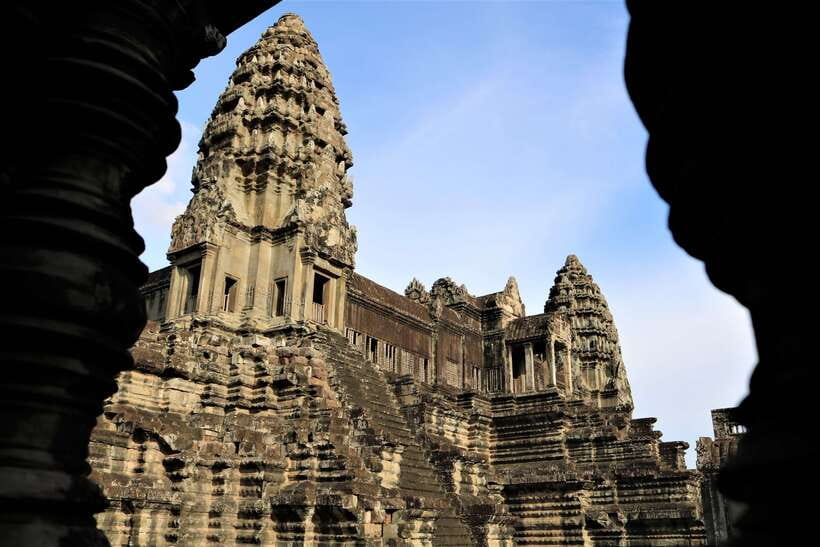
Ta Nei is a late 12th-century stone temple inside Angkor. It is less imposing than Ta Prohm and far less famous than Angkor Wat, but that is exactly why it earns a place here.
This stop gives you room to compare the sites. Ta Nei does not depend on grand scale or a famous film connection. Instead, it offers a more modest ruin and a chance to consider how many temples are scattered through the Angkor area.
If you are already tired by this point, Ta Nei may feel like one stop too many. That is where the guide’s judgment helps. Several people praised guides who offered choices, changed the pace, or adjusted plans when the group needed more rest.
Angkor Thom and the Bayon faces
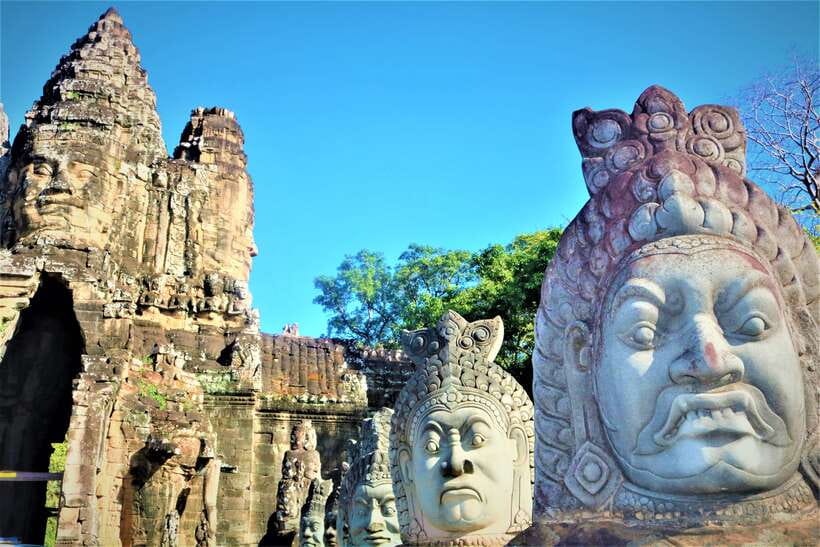
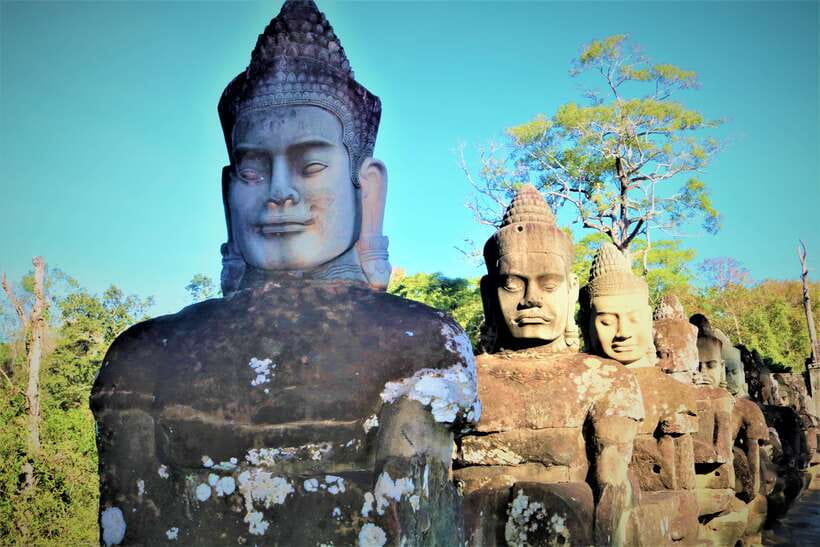
The tour then enters Angkor Thom through the southern gate. Fifty-four stone figures line each side, with gods on the left and demons on the right. The causeway gives you a strong first view of the city’s religious symbolism before you reach the fortified center.
Inside Angkor Thom, the Bayon is the main event. More than 200 enormous faces cover its central towers, creating one of the most striking scenes in the entire park. The faces are difficult to grasp from a distance, so take time to move through the upper levels and look at how the towers overlap.
The Bayon can be confusing without explanation. Its crowded plan, narrow passages, and many carved surfaces do not reveal their meaning at a glance. A guide who can explain Buddhist and Hindu connections, royal imagery, and the role of Jayavarman VII adds real value here.
The day continues to the Terrace of the Elephants and the Terrace of the Leper King. These are not simply quick photo stops. They help show how public and ceremonial spaces functioned within Angkor Thom, and their carvings reward a slower look at ground level.
The guide and driver make the difference
The temples are extraordinary on their own, but the quality of the guide shapes how much you take away. The strongest guide names in the feedback include Chhay, Pi, Sak, Bun, Pal, Yuth, So, and Sokpee. They are praised for clear English, humor, patient answers, photo help, and explanations of Hinduism, Buddhism, Khmer kings, architecture, and modern Cambodian culture.
Some guides also use maps, photographs, and visual aids in the vehicle. That is useful because the temple names can blur together after several hours. I especially like the guides who explain what you will see before you arrive, then leave enough quiet time for you to explore independently.
The driver is just as important in this climate. Names such as Vichet, Keal, Mao, Naroo, and Seyha appear repeatedly in praise for safe driving, punctual pickup, cold water, and chilled towels. The air-conditioned van gives you a proper reset between sites, not just transportation from one ruin to another.
Price, comfort, and who gets good value
The tour costs $46 per person, but the Angkor temple pass is separate at $62 per person for two or three days. That brings the basic combined cost to $108 per person before meals and any other personal spending.
I consider that reasonable for two days of hotel transfers, an English-speaking licensed guide, air-conditioned transport, bottled water, and cool towels. The price is especially useful if you want a guide but do not want to arrange separate transport and temple routing yourself.
The value is less clear if you prefer to move at your own pace or spend an entire morning at one temple. This is a planned itinerary with many stops. You get variety, but not unlimited time at every site.
The tour suits adults, couples, families with older children, and first-time visitors who want a guided introduction to Angkor. It is not suitable for children under eight, wheelchair users, or people with mobility impairments. Covered shoulders and knees are required, and comfortable shoes and insect repellent are sensible.
What to bring and what to expect physically
Pack light, but bring:
- Comfortable walking shoes
- Insect repellent
- A torch for the pre-dawn Angkor Wat entrance
- Clothing that covers shoulders and knees
- Water, even though more is supplied
The heat is a serious part of the experience. You may find the walking manageable in the morning and much harder later in the day. The van, water, and cold towels help, but they do not remove the need for sun protection, steady pacing, and realistic expectations.
Feeding animals is not allowed. The activity is also not wheelchair accessible, and uneven temple surfaces make mobility a central consideration rather than a minor inconvenience.
Should you book this two-day tour?
I would book it if you want the main Angkor temples plus several quieter and smaller sites, and if you value a guide who can explain religion, symbolism, and Cambodian culture. The sunrise is worth the lost sleep, Banteay Srei adds exceptional carving, and the mix of air conditioning, water, and cold towels makes the heat easier to handle.
I would skip it if you dislike early mornings, long driving periods, group schedules, or temple visits that require walking over uneven ground. Before paying, confirm whether you are choosing the private rice-field sunset drink or the small-group Bakheng sunset.
With free cancellation up to 24 hours ahead and the option to reserve now and pay later, the booking terms are flexible. The tour’s 4.9 rating from 445 ratings and a 96 percent perfect score for transport support its strong reputation, but the real reason to choose it is simpler: it gives you two well-planned days and a human guide to help the stones make sense.
FAQ
How long does the tour last?
The tour lasts two days.
What temples are included?
The route includes Pre Rup, Banteay Srei, Neak Pean, Preah Khan, Angkor Wat, Ta Prohm, Ta Nei, Angkor Thom, Bayon, the Terrace of the Leper King, and the Terrace of the Elephants.
Is sunrise at Angkor Wat included?
Yes. Day two begins with a pre-dawn departure for sunrise at Angkor Wat.
Is a sunset experience included?
Yes, but the format depends on the booking. The private option includes a rice-field sunset drink, while the small-group option includes sunset at Bakheng Temple.
Is hotel pickup provided?
Yes. Pickup and drop-off are available from hotels throughout Siem Reap city.
Is transportation air conditioned?
Yes. Transportation is provided in an air-conditioned vehicle.
Is an English-speaking guide included?
Yes. A licensed and experienced English-speaking guide is included.
Is the temple entry fee included?
No. The temple pass costs $62 per person for a two or three-day pass.
Are meals included?
No. Meals are not included, though the itinerary includes a breakfast stop outside Angkor Wat and a lunch stop may be made during the tour.
What should I wear?
Wear clothing that covers your shoulders and knees. Comfortable walking shoes are recommended.
Is the tour wheelchair accessible?
No. The activity is not suitable for wheelchair users or people with mobility impairments.
Can I cancel the booking?
You can cancel up to 24 hours in advance for a full refund. You can also reserve now and pay later.
More 2-Day Experiences
- 2 Days Exclusive Temple Highlights with Sunset and Sunrise Tour
★ 5.0 · 1,157 reviews - Siem Reap: Angkor Sunrise 1- or 2-Day Guided Temples Tour
★ 4.9 · 1,132 reviews - 2 Days Guided Historical Tour in Angkor
★ 5.0 · 855 reviews - 2-Day Angkor Wat With Small, Big Circuit and Banteay Srei Tour
★ 5.0 · 545 reviews
More Morning
- Angkor Wat Sunrise tour with Small – Group and Guide tours
★ 5.0 · 3,655 reviews - Angkor Wat Highlights and Sunrise Guided Tour from Siem Reap
★ 5.0 · 3,213 reviews - Full-Day Angkor Wat Sunrise Private Tour with Guide from Siem Reap
★ 5.0 · 2,920 reviews - Angkor Wat Sunrise & 3 Main Temples with Breakfast – Small Group
★ 5.0 · 2,857 reviews
Just added around Siem Reap
- Private Battambang Full-Day Guided Tour★ 4.5 · 3 reviews
- Kulen Mountain, Beng Mealea and Banteay Srei Full Day Tour★ 5.0 · 3 reviews
- Kompong Pluk Tour★ 5.0 · 3 reviews
- Private 3 Day Tour to Discover the ancient temples★ 5.0 · 3 reviews
- Kulen National Park Ticket -Waterfall & 1000 Lingas★ 5.0 · 3 reviews
- Cambodia: Absolute Traditional Dance Show with Buffet Dinner★ 5.0 · 3 reviews
- Border Transfer (Siem Reap to Laos/Laos to Siem Reap)★ 3.5 · 3 reviews
- Best Taxi Siem Reap to Battambang – English Speaking Driver★ 4.5 · 3 reviews
Sunset Tours, compared.

Angkor Wat Sunrise or Sunset Tour with Guide from Siem Reap
Read our review →
Angkor Wat: Small-Group Sunrise or Sunset Tour
Read our review →
Sunset tour of Kampong Phluk stilts home village on the Tonle Sap
Read our review →
Angkor Wat 2-Day Tour with Sunrise and Sunset
Read our review →

Angkor Wat Sunset Small Group Tour with Lunch Included
Read our review →
Angkor 2-Day Sunset & Sunrise Small-Group Tour
Read our review →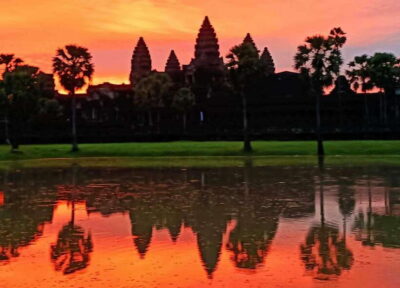
Browse the lists this tour appears in