
Reviewed · 2-DAY EXPERIENCES
2-Day Eight Temple Tour with Optional Sunrise
Temples reward patience here. I like the private format, which lets you linger at a carving or move on without waiting for a busload of strangers. I also like the range: pink sandstone at Banteay Srei, jungle-wrapped Ta Prohm, and the giant face towers of Bayon all appear in one two-day plan.
The main catch is cost clarity. The $98 tour price does not include the required three-day temple pass, listed at $62 per person, or food and drinks. Add those costs before booking, and remember that the steep climb at Pre Rup and long walks through large temple grounds may test your legs.
In This Review
- Key points about this two-day temple tour
- Why two days works well around Siem Reap
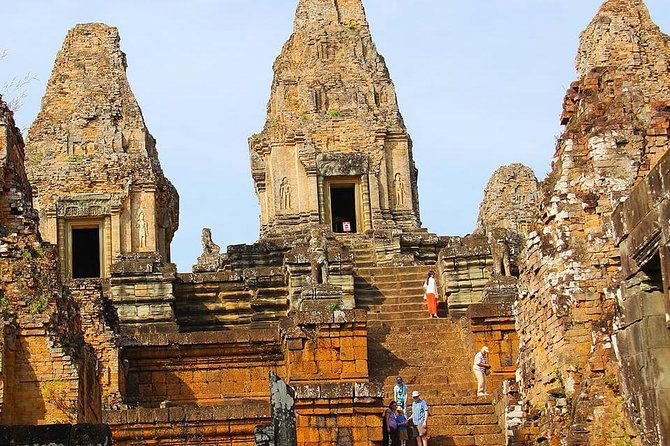
- Day one begins with the steep towers of Pre Rup
- Banteay Samre offers Angkor Wat style on a smaller scale
- Banteay Srei brings fine pink sandstone carvings
- Ta Prohm puts the jungle at center stage
- Banteay Kdei closes a full first day
- Day two starts with Angkor Wat’s enormous scale
- Preah Khan keeps the rougher side of Angkor
- Bayon finishes with giant stone faces
- What the $98 price really covers
- Who will get the most from this itinerary
- Should you book the Eight Temple Tour?
- FAQ
- Is the temple pass included in the $98 price?
- Which temples are visited?
- Is transportation provided?
- Is this a private tour?
- Are food and drinks included?
- What clothing is required?
Key points about this two-day temple tour
- Eight major temples in two days: The route includes Pre Rup, Banteay Samre, Banteay Srei, Ta Prohm, Banteay Kdei, Angkor Wat, Preah Khan, and Bayon.
- A private guide and private transport: Your group travels together, with pickup from your Siem Reap hotel and transport suited to the group size.
- A strong first day outside the usual Angkor Wat circuit: Banteay Srei and Banteay Samre add smaller, more detailed architecture to the famous jungle temples.
- The second day focuses on Angkor’s big names: Angkor Wat, Preah Khan, and Bayon provide scale, atmosphere, and some of the park’s most memorable carvings.
- Guide quality matters: Guide Sam is praised for strong storytelling and photography skills, while another guest describes the guide as personable and well informed.
- The pass is extra: The advertised price is not the full trip cost, since the three-day temple pass is excluded.
Why two days works well around Siem Reap
Angkor Archaeological Park is not one temple. It is a wide area filled with monuments from different periods of Khmer history, and the sites do not all offer the same kind of visit. Angkor Wat is monumental. Banteay Srei is delicate. Ta Prohm is atmospheric. Bayon is strange and compelling.
That variety is the best reason to choose this tour. You are not spending two days looking at similar towers. You move from mountain temples and pink sandstone carvings to Buddhist monastic complexes and giant stone faces.
The private setup is useful here. You can ask your guide to explain a carving, pause for photographs, or keep moving when your attention starts to fade. That matters because eight temples in two days is a full schedule. You will see a lot, but you will not have unlimited time at every stop.
The tour includes hotel pickup in Siem Reap, cold water, a guide, and transport appropriate for the size of your group. Those basics remove much of the work involved in arranging drivers and deciding which temples fit together.
There is also an optional sunrise mentioned for the experience. The supplied details do not specify the exact meeting time, location, or whether sunrise changes the order of the itinerary. Ask about those details before booking, especially if you want to plan your sleep and meals around an early start.
A few more trips worth weighing up
- Angkor Wat Sunrise or Sunset Tour with Guide from Siem Reap
★ 5.0 · 12,109 reviews - Siem Reap: Angkor Wat: Small-Group Sunrise or Sunset Tour
★ 5.0 · 9,444 reviews - Siem Reap: Angkor Wat 2-Day Tour with Sunrise and Sunset
★ 4.9 · 4,429 reviews
Day one begins with the steep towers of Pre Rup
Pre Rup is an early Khmer temple built as a mountain temple. Its upper towers sit above a broad base, reached by a steep climb. The effort pays off with a view across the countryside around Siem Reap.
This is a good opening stop because it immediately shows you how Khmer rulers used height and symmetry to create a sacred mountain in stone. The climb also gives the first day some physical variety. You are not simply walking from one flat courtyard to another.
Still, take the stairs seriously. The description calls the climb steep, and you should use care on the way up and down. If you dislike heights or uneven stone, Pre Rup may be more about the view from below than reaching every upper level.
Pre Rup is popular, so a private tour does not mean you will have the monument to yourself. What the private arrangement does provide is freedom from a fixed group pace.
Banteay Samre offers Angkor Wat style on a smaller scale
From Pre Rup, the route continues to Banteay Samre, a temple praised for its Khmer architecture and its similarity to Angkor Wat. It is a useful contrast with the larger monuments later in the trip.
You can spend about an hour here exploring the towers and studying the carvings. That suggested amount of time gives you room to look closely instead of treating the temple as a quick photo stop.
Banteay Samre is especially worthwhile if you want to see how familiar Khmer design elements appear outside Angkor Wat itself. The site gives your guide space to explain architectural patterns without the sheer scale and crowds associated with the main temple.
The drawback is simple: after Pre Rup, another temple with towers and carvings may begin to feel repetitive if you are not interested in architectural detail. Listen closely to the guide here. The stories and comparisons help separate one site from the next.
Banteay Srei brings fine pink sandstone carvings
Banteay Srei is one of the most distinctive stops on the route. It was built from pink sandstone brought from the Kulen Mountain range, and its carvings are unusually intricate.
The smaller scale makes Banteay Srei feel different from Angkor Wat. Instead of being impressed mainly by size, you look at the precision of the decoration. This is the place to slow down and examine doorways, figures, and patterns.
A long-running local legend says the carvings were too beautiful to have been made by men, so women must have carved them. It is a charming story, but treat it as legend rather than established fact. The real point is that Banteay Srei rewards close attention.
This stop is popular, and the fine detail can draw many people into the same viewing areas. Your private guide can help you understand what you are looking at, but you may need patience for clear photographs.
Banteay Srei also sits apart from the central group of temples, so its inclusion adds transport time to the day. That is a worthwhile trade for many people, since it is not merely a smaller version of another stop.
A completely different kind of day out from Siem Reap:
- From Siem Reap: Kampong Phluk Floating Village Tour by Boat
★ 4.9 · 6,979 reviews - Sunset tour of Kampong Phluk stilts home village on the Tonle Sap
★ 5.0 · 4,865 reviews - Siem Reap: Kampong Phluk Floating Village Tour with Boat
★ 4.9 · 3,843 reviews - Siem Reap: Full-Day Angkor Wat Guided Tour with Sunset
★ 4.9 · 3,803 reviews
Ta Prohm puts the jungle at center stage
Ta Prohm is the temple many people recognize from the Tomb Raider film starring Angelina Jolie. The movie connection brings attention, but the real appeal is the way the old temple has been left partly to the elements.
Trees grow through the structure, roots press against stone, and the boundary between building and jungle feels unusually close. The site offers a different kind of beauty from Banteay Srei. There, you study deliberate carving. At Ta Prohm, you watch nature and architecture occupy the same space.
The temple has been made safe for visitors, though little restoration work has taken place compared with more heavily repaired monuments. That gives Ta Prohm its rough, weathered character.
The same quality creates a practical limitation. Paths and doorways can be uneven, and popular photo locations may slow your progress. You may also find the site visually confusing without a guide, since courtyards, galleries, and collapsed sections run into one another.
A guide who can tell the temple’s story is especially useful here. Guide Sam receives particularly strong praise for storytelling and photography, so if he is assigned to your group, you can reasonably hope for help both with interpretation and pictures. Guide assignments can change, so do not assume he is guaranteed.
Banteay Kdei closes a full first day
Banteay Kdei means Citadel of Chambers or Citadel of Monks’ Cells. This Buddhist temple lies near Ta Prohm and makes practical sense as the final stop of the day.
Its location keeps the route efficient, while its identity gives you another angle on the religious life of the Angkor period. After Ta Prohm’s famous tree roots, Banteay Kdei offers a quieter chance to focus on chambers, courtyards, and the shape of a Buddhist temple complex.
By this point, fatigue is the main concern. Day one includes five temples, and several sites require extended walking. If you want to appreciate Banteay Kdei rather than simply endure it, wear practical shoes, keep water close, and tell your guide if you need a short pause.
Cold water is included, which is helpful in Cambodia’s heat. Food and drinks beyond the included water are not included, so plan for that separately.
Day two starts with Angkor Wat’s enormous scale
Angkor Wat is the centerpiece of the second day and the reason many people come to Siem Reap. It is the largest temple built during the Khmer Empire and receives more than two million visitors per year.
The scale is immediate. Long galleries, towers, courtyards, and carved walls require time to absorb. You will want your guide to help connect the architecture with the religious ideas and royal power behind it, rather than leaving you with a collection of impressive photographs.
Because Angkor Wat is the best-known site in the park, it can also be the most demanding. There is a lot of ground to cover, and the temple’s size can make a rushed visit feel unsatisfying. A private tour helps because your guide can set the pace around your group, but it cannot remove the distance you need to walk or guarantee quiet conditions.
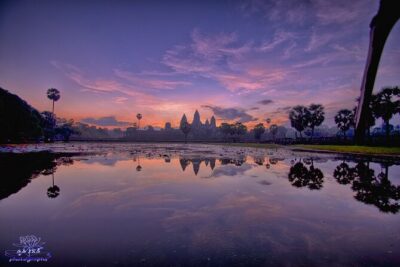
The optional sunrise may be the reason you are considering this tour. Since no timing details are provided, ask exactly how the sunrise option works. Find out whether it replaces another part of the schedule, adds time to the day, or requires an especially early hotel pickup.
Preah Khan keeps the rougher side of Angkor
Preah Khan is a 12th-century temple built by King Jayavarman VII. Unlike many major monuments, it has seen little restoration. It has been made safe for visitors, but much of the original weathered appearance remains.
That limited restoration gives you a clearer sense of age and decay. Stones are not all presented as neat, complete walls. Instead, you see a monument shaped by time, vegetation, and selective conservation.
Preah Khan is a fine follow-up to Angkor Wat because the contrast is so strong. Angkor Wat feels ordered and monumental. Preah Khan feels more open-ended, with the old structure still showing its scars.
The site can be confusing to explore alone. There are plenty of corners and corridors, and the temple’s scale is large enough to blur together without a good explanation. This is one of the places where a private guide earns his keep, especially if you want more than a quick walk through.
Bayon finishes with giant stone faces
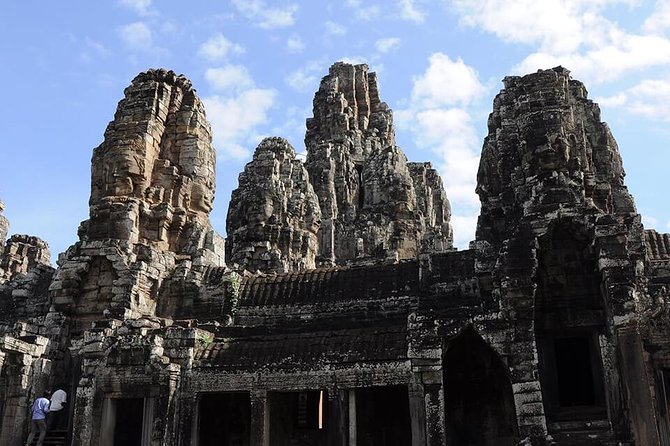
Bayon is often the favorite stop on this route, and it is easy to understand why. The temple contains remnants of Hindu inscriptions as well as Mahayana and Theravada Buddhist inscriptions, reflecting the changing religious life of the Khmer world.
Its most famous feature is the collection of large carved faces looking out from the towers. You can spend a few hours exploring the temple’s corners, galleries, and upper areas. That extra time matters because Bayon is not a monument you understand from one viewpoint.
The faces appear from different angles as you move through the structure. Some are obvious at first glance; others reveal themselves only after you turn into another passage. A guide can help you notice details that would otherwise be lost among the stone corridors.
Bayon is a strong finale because it combines architecture, sculpture, and religious change. It also leaves you with a more personal image than the broad grandeur of Angkor Wat.
What the $98 price really covers
At $98, the tour offers a private two-day structure with a guide, cold water, hotel pickup, and suitable transport. For a group sharing the booking, that can be fair value, particularly if arranging separate transport and guiding would cost more or create extra decisions.
The value improves when you care about context. Eight temples can become a blur if you only take photographs. A guide who explains the temples and keeps the route moving helps turn a busy schedule into a connected experience.
The listed price is not your final temple budget. The three-day temple pass costs $62 per person and is excluded. Food, drinks, personal expenses, and accommodation are also excluded.
That pass is still useful for a two-day tour because the attraction requires the three-day option listed in the tour details. Build it into your calculations from the start. At minimum, the stated tour and pass total $160 per person before meals and other personal spending.
Group discounts are available, though the details are not given. Ask how the discount is calculated for your party size. Since this is a private activity, the price may make the most sense for couples, families, or friends who can share the cost rather than for one person booking alone.
Who will get the most from this itinerary
I would choose this tour if you want to see a broad selection of Angkor temples without organizing drivers, routes, and daily pickups yourself. It suits people who value explanation, flexible pacing, and a private setting more than the lowest possible price.
It is also a good fit if you want more than Angkor Wat. Banteay Srei adds delicate carving, Ta Prohm adds jungle atmosphere, and Bayon adds some of the park’s most recognizable sculpture.
You should think twice if you prefer slow travel at one or two sites. Eight temples in two days is ambitious, and the route includes long walks plus the climb at Pre Rup. The plan gives you range, not endless time at each monument.
Dress for temple rules. Your shoulders and knees must be covered to enter the temples. Confirmation arrives at booking, and most people can participate, but the supplied details do not provide specific accessibility information for every site. Ask the operator about stairs, uneven ground, and walking distances if those points matter to you.
Cancellation is flexible as long as you act early. You can cancel for a full refund up to 24 hours before the start time. Changes or cancellations inside that 24-hour window are not accepted for a refund.
Should you book the Eight Temple Tour?
Book it if you want an efficient, private introduction to the major Siem Reap temples and you are comfortable with a busy two-day schedule. The mix of Angkor Wat, Bayon, Ta Prohm, Banteay Srei, and four additional sites gives you a strong spread of styles and moods.
Before paying, confirm the sunrise option, guide availability, exact pickup time, and group discount. Also add the $62 temple pass, meals, and personal costs to the advertised $98.
The strongest reason to choose this tour is the guide-led format. A skilled storyteller, such as Sam, can make the carvings and ruins easier to read, while private transport keeps the days practical. If you want a relaxed pace with long breaks, choose a shorter itinerary. If you want to see a lot and leave Siem Reap with a clear sense of Angkor’s variety, this is a solid choice.
FAQ
Is the temple pass included in the $98 price?
No. The three-day temple pass costs $62 per person and is not included in the tour price.
Which temples are visited?
The named temples are Pre Rup, Banteay Samre, Banteay Srei, Ta Prohm, Banteay Kdei, Angkor Wat, Preah Khan, and Bayon.
Is transportation provided?
Yes. Private transport is provided, with pickup from your Siem Reap hotel and a vehicle suitable for the group size.
Is this a private tour?
Yes. Only your group participates in the activity.
Are food and drinks included?
Food and drinks are not included. Cold water is included.
What clothing is required?
You must cover your shoulders and knees to enter the temples.
Just added around Siem Reap
- Private Battambang Full-Day Guided Tour★ 4.5 · 3 reviews
- Kulen Mountain, Beng Mealea and Banteay Srei Full Day Tour★ 5.0 · 3 reviews
- Kompong Pluk Tour★ 5.0 · 3 reviews
- Private 3 Day Tour to Discover the ancient temples★ 5.0 · 3 reviews
- Kulen National Park Ticket -Waterfall & 1000 Lingas★ 5.0 · 3 reviews
- Cambodia: Absolute Traditional Dance Show with Buffet Dinner★ 5.0 · 3 reviews
- Border Transfer (Siem Reap to Laos/Laos to Siem Reap)★ 3.5 · 3 reviews
- Best Taxi Siem Reap to Battambang – English Speaking Driver★ 4.5 · 3 reviews
2-Day Experiences, compared.

Angkor Wat 2-Day Tour with Sunrise and Sunset
Read our review →
Angkor 2-Day Sunset & Sunrise Small-Group Tour
Read our review →
2 Days Exclusive Temple Highlights with Sunset and Sunrise Tour
Read our review →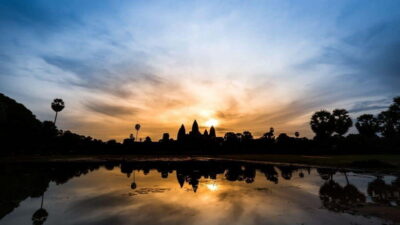
Angkor Sunrise 1- or 2-Day Guided Temples Tour
Read our review →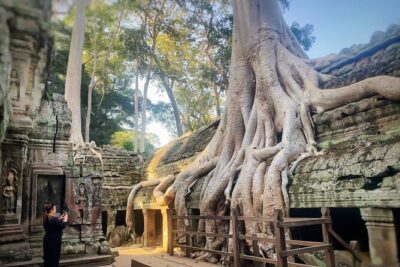
2-Day Angkor Wat With Small, Big Circuit and Banteay Srei Tour
Read our review →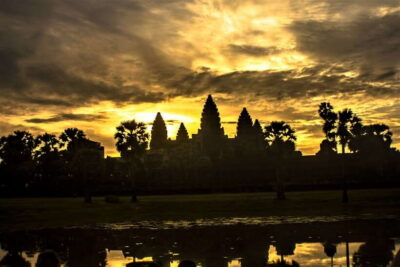
2-Day Temple Highlights Sunrise and Sunset Option
Read our review →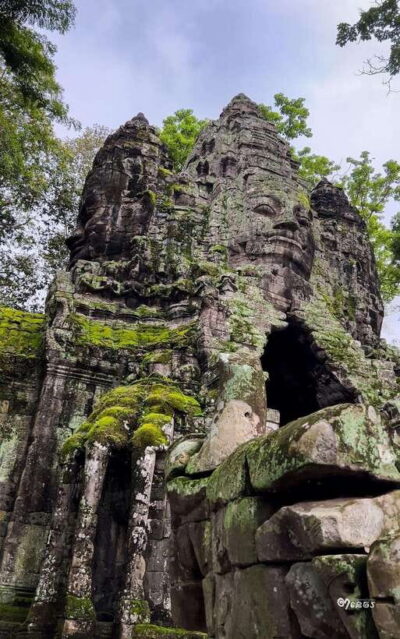
Angkor Wat 2-Day complex Sun rise & Sun set with Guided Tour
Read our review →Browse the lists this tour appears in